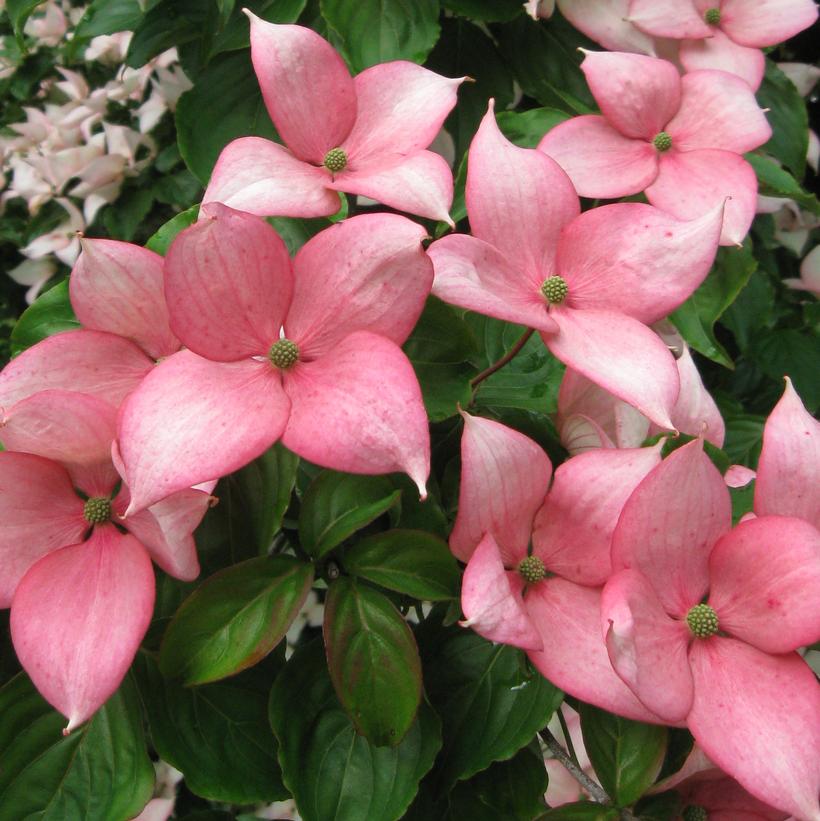
Rosy Teacups Flowering Dogwood

CORNUS FLORIDA ‘ROSY TEACUPS’

What if you could have the classic elegance of a flowering dogwood—those signature spring blooms that make Connecticut gardens come alive—but with something extra special tucked inside? ROSY TEACUPS takes the beloved native dogwood and reimagines it with rose-pink bracts that deepen to an even richer magenta on the inside, like precious teacups filled with springtime magic. This is a plant that stops people mid-stride on their morning walk, and we’re not exaggerating.

What it looks like

ROSY TEACUPS is a refined, deciduous shrub or small tree that grows with a naturally graceful, layered branching structure. In spring, before the leaves even emerge, it puts on a show with four-petaled flower bracts that open in soft rose-pink, then reveal deeper magenta interiors—hence the enchanting common name. The actual flowers are tiny and chartreuse, nestled in the center of those spectacular bracts, which persist for weeks. Come summer, the foliage is a fresh, deep green with an almost velvety texture. In fall, the leaves shift to burgundy and plum tones before dropping, and if you’re lucky, small red fruit clusters appear for the birds. Even in winter, the fine branching structure of ROSY TEACUPS has a sculptural quality that adds garden architecture to the dormant landscape.

Growing it in your garden

ROSY TEACUPS dogwood is a Connecticut-compatible plant that appreciates the dappled shade of tall trees—think of it nestled under mature oaks or maples the way it would grow naturally in woodland edges throughout New England. While it can handle some morning sun, it truly thrives with afternoon shade that protects those delicate pink bracts from intense heat. The plant prefers rich, well-draining soil with good organic matter worked in. Unlike some dogwoods that can be fussy about soil pH, ROSY TEACUPS is reasonably flexible, though it does prefer slightly acidic to neutral conditions, which is perfect for most Connecticut gardens. Plant it in spring for best establishment, spacing it where it has room to develop its naturally graceful form without crowding.

Through the seasons

Spring is undoubtedly ROSY TEACUPS’ moment of glory. In Connecticut, expect those stunning rose-and-magenta bracts to appear in mid to late April, and they’ll hold strong through May. Summer brings lush green foliage and a restful presence in the garden. The plant doesn’t demand attention during the warm months, but it quietly provides structure and shade for shade-loving companions. Autumn rewards patient gardeners with burgundy and plum-toned leaves and those charming red fruit clusters. Winter reveals the elegant branch structure, which is particularly beautiful against snow or the morning frost that lingers in New England gardens.

Where it shines

This is your go-to dogwood for woodland gardens, shaded borders, and the transitional spaces between your sunny lawn and the mature trees at the property line. It’s perfect for cottage-style gardens where that romantic spring show sets the tone for the entire season. Use ROSY TEACUPS as a specimen plant where its spring display and layered form can be fully appreciated, or group three plants at varying distances to create a more naturalistic effect. It works beautifully along a woodland path, at the edge of a patio under tall trees, or as a focal point in a shade garden. The height and structure also make it excellent for creating privacy screens with other spring bloomers.

Perfect companions

Pair ROSY TEACUPS with shade-tolerant perennials like hellebores, epimediums, and woodland phlox that will bloom just as the dogwood reaches its peak. Hostas, ferns, and Japanese forest grass make excellent foliage companions that won’t compete for attention. Evergreen shrubs like ILEX CRENATA and shade-tolerant rhododendrons provide winter structure around it. Bulbs like Virginia bluebells and trilliums bloom right alongside the dogwood bracts, creating a layered spring tapestry.

Care tips

ROSY TEACUPS prefers consistently moist (but not waterlogged) soil, particularly during establishment and through hot Connecticut summers. A 2-3 inch layer of mulch keeps the roots cool and retains moisture without packing around the trunk. Prune only to remove crossing branches or shape the plant in late winter; this dogwood naturally develops a beautiful form with minimal intervention. Watch for powdery mildew in humid summers—good air circulation and avoiding overhead watering help prevent issues. Anthracnose can occasionally affect dogwoods in our region, so choose a planting spot with reasonable air movement and avoid planting where water sits.

Quick facts

  • Hardiness Zone: Zones 5-9
  • Mature Height & Spread: 15-25 feet tall and 15-25 feet wide
  • Bloom Season: Mid to late April through May
  • Light Requirements: Dappled shade to partial shade; afternoon shade preferred
  • Water Needs: Moderate; consistent moisture, especially during establishment
  • Available at: Both our retail and wholesale locations

Rosy Teacups Flowering Dogwood

Breathtaking deep rose pink, overlapping flower bracts with red toned edges late May to early June. Bred to be more disease resistant, more drought resistant, and more floriferous than the Dogwood you’re used to! Long lasting bloom time for 3 or more weeks for a long show of spring color. Bright burgundy autumn foliage will light up your landscape for another blast of color in the fall.

Pot Size (gallons), Height: 4-6′

Description

Rosy Teacups Flowering Dogwood

CORNUS FLORIDA ‘ROSY TEACUPS’

What if you could have the classic elegance of a flowering dogwood—those signature spring blooms that make Connecticut gardens come alive—but with something extra special tucked inside? ROSY TEACUPS takes the beloved native dogwood and reimagines it with rose-pink bracts that deepen to an even richer magenta on the inside, like precious teacups filled with springtime magic. This is a plant that stops people mid-stride on their morning walk, and we’re not exaggerating.

What it looks like

ROSY TEACUPS is a refined, deciduous shrub or small tree that grows with a naturally graceful, layered branching structure. In spring, before the leaves even emerge, it puts on a show with four-petaled flower bracts that open in soft rose-pink, then reveal deeper magenta interiors—hence the enchanting common name. The actual flowers are tiny and chartreuse, nestled in the center of those spectacular bracts, which persist for weeks. Come summer, the foliage is a fresh, deep green with an almost velvety texture. In fall, the leaves shift to burgundy and plum tones before dropping, and if you’re lucky, small red fruit clusters appear for the birds. Even in winter, the fine branching structure of ROSY TEACUPS has a sculptural quality that adds garden architecture to the dormant landscape.

Growing it in your garden

ROSY TEACUPS dogwood is a Connecticut-compatible plant that appreciates the dappled shade of tall trees—think of it nestled under mature oaks or maples the way it would grow naturally in woodland edges throughout New England. While it can handle some morning sun, it truly thrives with afternoon shade that protects those delicate pink bracts from intense heat. The plant prefers rich, well-draining soil with good organic matter worked in. Unlike some dogwoods that can be fussy about soil pH, ROSY TEACUPS is reasonably flexible, though it does prefer slightly acidic to neutral conditions, which is perfect for most Connecticut gardens. Plant it in spring for best establishment, spacing it where it has room to develop its naturally graceful form without crowding.

Through the seasons

Spring is undoubtedly ROSY TEACUPS’ moment of glory. In Connecticut, expect those stunning rose-and-magenta bracts to appear in mid to late April, and they’ll hold strong through May. Summer brings lush green foliage and a restful presence in the garden. The plant doesn’t demand attention during the warm months, but it quietly provides structure and shade for shade-loving companions. Autumn rewards patient gardeners with burgundy and plum-toned leaves and those charming red fruit clusters. Winter reveals the elegant branch structure, which is particularly beautiful against snow or the morning frost that lingers in New England gardens.

Where it shines

This is your go-to dogwood for woodland gardens, shaded borders, and the transitional spaces between your sunny lawn and the mature trees at the property line. It’s perfect for cottage-style gardens where that romantic spring show sets the tone for the entire season. Use ROSY TEACUPS as a specimen plant where its spring display and layered form can be fully appreciated, or group three plants at varying distances to create a more naturalistic effect. It works beautifully along a woodland path, at the edge of a patio under tall trees, or as a focal point in a shade garden. The height and structure also make it excellent for creating privacy screens with other spring bloomers.

Perfect companions

Pair ROSY TEACUPS with shade-tolerant perennials like hellebores, epimediums, and woodland phlox that will bloom just as the dogwood reaches its peak. Hostas, ferns, and Japanese forest grass make excellent foliage companions that won’t compete for attention. Evergreen shrubs like ILEX CRENATA and shade-tolerant rhododendrons provide winter structure around it. Bulbs like Virginia bluebells and trilliums bloom right alongside the dogwood bracts, creating a layered spring tapestry.

Care tips

ROSY TEACUPS prefers consistently moist (but not waterlogged) soil, particularly during establishment and through hot Connecticut summers. A 2-3 inch layer of mulch keeps the roots cool and retains moisture without packing around the trunk. Prune only to remove crossing branches or shape the plant in late winter; this dogwood naturally develops a beautiful form with minimal intervention. Watch for powdery mildew in humid summers—good air circulation and avoiding overhead watering help prevent issues. Anthracnose can occasionally affect dogwoods in our region, so choose a planting spot with reasonable air movement and avoid planting where water sits.

Quick facts

  • Hardiness Zone: Zones 5-9
  • Mature Height & Spread: 15-25 feet tall and 15-25 feet wide
  • Bloom Season: Mid to late April through May
  • Light Requirements: Dappled shade to partial shade; afternoon shade preferred
  • Water Needs: Moderate; consistent moisture, especially during establishment
  • Available at: Both our retail and wholesale locations