
Description

MAGNOLIA ‘ROYAL STAR’ (MAGNOLIA STELLATA ‘ROYAL STAR’)
What if you could have a magnolia that actually thrives in Connecticut? The Royal Star Magnolia is your answer—a stunning, cold-hardy variety that blooms reliably even when late spring frosts threaten to spoil the show. Unlike those temperamental Southern magnolias that tease us with their beauty only to disappoint, Royal Star performs season after season in New England gardens, rewarding patient gardeners with masses of pristine white flowers that appear before the leaves even think about unfurling.
What it looks like
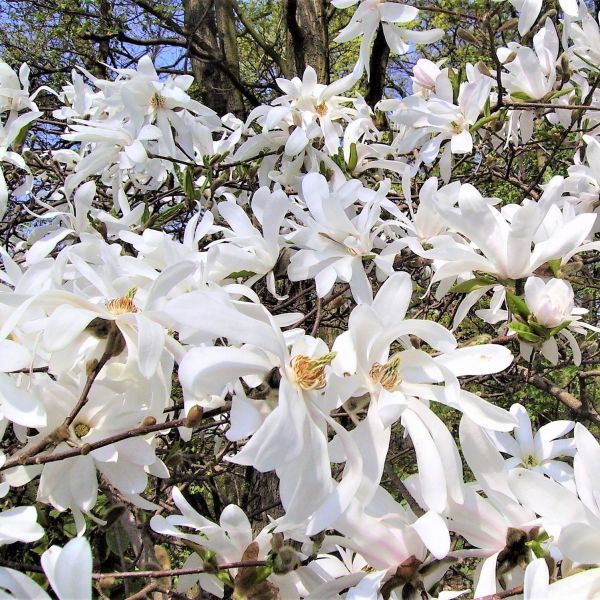
The Royal Star is a vision of spring elegance. Its flowers are pure white with a subtle blush of pink on the reverse of the petals, creating a delicate two-tone effect that’s absolutely captivating. These blooms are semi-double, meaning they have multiple layers of petals—typically 25 to 30 per flower—giving them a full, luxurious appearance that looks almost like someone scattered stars across the branches. The flowers are generously sized (about 3 to 4 inches across) and emerge singly along the branches in a profusion that can nearly obscure the stems. Once the flowering show concludes, the tree develops attractive deep green foliage with an elegant, fine-textured appearance that remains ornamental throughout the growing season. The overall form is naturally vase-shaped and refined, making it a sophisticated focal point even when not in bloom.
Growing it in your garden
Here’s the beautiful part: Royal Star Magnolia is genuinely easy to grow in Connecticut. It’s far more flexible than its temperamental cousins, though it does appreciate thoughtful placement. Give it full sun to partial shade—at least 4 to 6 hours of direct sunlight will ensure the best flowering performance. The real key to success is soil preparation. Magnolias prefer slightly acidic, well-draining soil rich in organic matter. If your garden is heavy clay (and let’s be honest, much of Connecticut is), amend planting holes generously with compost or peat moss to create a friable, hospitable environment. Magnolias have shallow, somewhat brittle roots, so handle them gently at planting time and apply mulch to protect and conserve moisture. Avoid planting in low-lying areas where cold air settles and late spring frosts are severe—choose an elevated location if possible, as this gives delicate buds a better chance against unpredictable New England springs.
Through the seasons
Royal Star announces spring’s arrival with breathless enthusiasm, typically blooming in mid to late April in Connecticut—early enough to feel like a celebration, late enough that devastating frosts are generally behind us. The floral display lasts 2 to 3 weeks depending on weather, providing an extended period of beauty. Following flowering, fresh foliage emerges in a warm bronze tone before maturing to a rich forest green. The summer landscape features this elegant deciduous foliage, providing shade and structure to the garden. By autumn, the leaves turn a pleasant golden-yellow before dropping, revealing an attractive branch structure that has ornamental value through winter. The form itself—with its upright yet graceful silhouette—remains attractive year-round, never becoming gangly or awkward.
Where it shines
Royal Star Magnolia is the ultimate New England specimen tree. Use it as the featured player in a foundation planting near an entry, where its spring blooms will greet you each morning. It’s outstanding in smaller gardens and urban settings where its modest mature size won’t overwhelm the space. Plant it where the early morning sun can greet those precious white flowers—the backlighting effect is absolutely magical. It’s excellent for creating seasonal focal points, and it photographs beautifully, making it a favorite for properties where curb appeal matters. Royal Star also works beautifully in mixed shrub borders, where its fine texture and elegant form provide structure and sophistication.
Perfect companions
Pair Royal Star with spring bulbs—daffodils, tulips, and flowering onions create a coordinated show below its branches. Combine it with shade-tolerant perennials like hellebores, bleeding heart, and early-blooming PULMONARIA for a layered spring display. Underplant with ornamental grasses or fine-textured hostas to echo its elegant silhouette. Nearby plantings of fragrant VIBURNUM or SERVICEBERRY create a spring spectacle, while later bloomers like CLETHRA or hydrangeas take over the seasonal spotlight as magnolia flowers fade.
Care tips
Pruning is rarely necessary—Royal Star naturally develops a pleasing form. If you must prune, do so immediately after flowering to avoid removing next year’s flower buds. Water regularly during the first growing season and during drought stress thereafter; magnolias prefer consistent moisture. Fertilizing is usually unnecessary if soil was properly prepared at planting. Remove lower branches if desired to showcase the attractive trunk. Late spring frosts occasionally damage flower buds, but this is simply part of gardening in Connecticut—the tree will recover beautifully.
Quick facts
- Hardiness Zone: 4-8
- Mature Height & Spread: 15-20 feet tall and equally wide
- Bloom Season: Mid to late April
- Light Requirements: Full sun to partial shade (4-6+ hours direct sunlight)
- Water Needs: Moderate; consistent moisture, especially during establishment
- Available at: Both our retail and wholesale locations