ROSA RUGOSA

Here’s the honest truth about Rugosa Roses: they’re the tough-as-nails plant you’ve been waiting for, disguised in blooms so fragrant and beautiful you’ll forget they’re practically indestructible. These aren’t delicate tea roses that demand your constant attention—they’re genuine survivors that thrive in Connecticut’s unpredictable weather, salty soils, and challenging conditions where other roses simply give up. Yet somehow, they manage to be absolutely gorgeous while doing it.

What it looks like

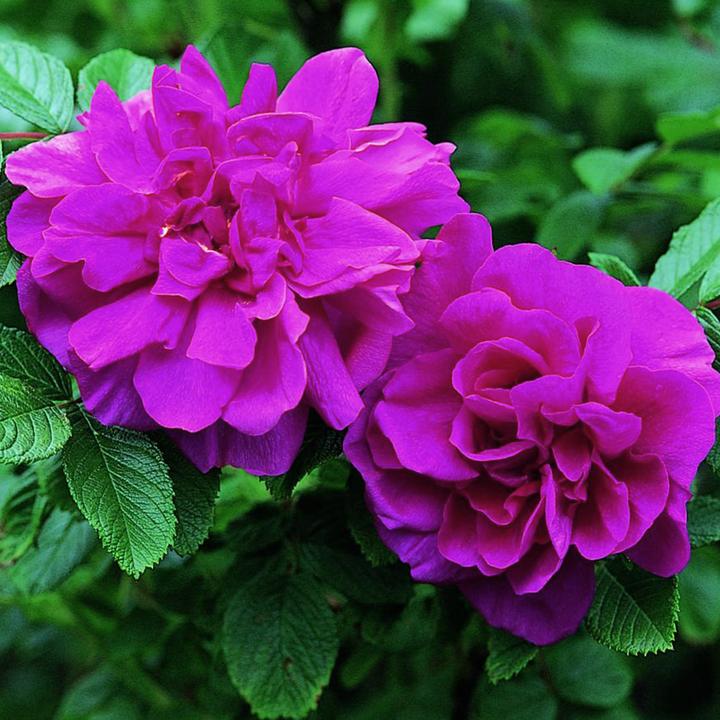
ROSA RUGOSA is instantly recognizable by its deeply textured, almost quilted foliage that looks like someone ran their fingers across crinkled fabric. The leaves are small, dark green, and wonderfully wrinkled—a distinctive feature that immediately sets it apart from hybrid roses. The flowers appear in loose clusters, typically single or semi-double forms in shades of magenta, pink, white, or bicolor combinations, depending on the variety. Each bloom is intensely fragrant, the kind of rose scent that makes you close your eyes and breathe deeply. After flowering, the plant produces large, tomato-like hips in brilliant orange-red—ornamental treasures that persist well into winter and feed hungry birds.

Growing it in your garden

If you’ve been hesitant about roses because you think they’re high-maintenance divas, RUGOSA varieties are your permission slip to relax. These roses are phenomenally adaptable. They’ll grow in poor soil, sandy soil, even soil with salt spray—a trait that makes them invaluable along roadsides or in coastal New England gardens. They’re not fussy about pH and actually seem to smile at the sort of conditions that would make other roses sulk. Plant them in full sun for best blooming, though they’ll tolerate partial shade and still perform admirably. The plant grows as an upright, suckering shrub with a naturally dense habit, so it requires minimal pruning beyond removing dead wood in early spring.

Through the seasons

Spring arrives and RUGOSA roses are among the first to leaf out, their crinkled foliage unfurling with enthusiasm. By early summer, flowers begin appearing in waves—and here’s the gift: many varieties bloom repeatedly throughout the season into fall, rather than putting on one spectacular show and calling it quits. The fragrance in your garden becomes almost intoxicating during peak bloom times. As temperatures cool in autumn, the foliage may turn a pleasant golden yellow before dropping, and those glorious hips really shine, providing vital food sources for wildlife heading into winter. Even when dormant, the stems are attractive, often with a reddish tone that adds winter interest.

Where it shines

RUGOSA roses are the answer to so many Connecticut gardening challenges. Plant them in a hedge or screen for a living wall that flowers, handles wind without complaint, and looks beautiful year-round. Use them at the edge of a property where salt spray or road salt is a concern—they’ll thrive where nothing else survives. They’re perfect for cottage gardens, pollinator gardens, and landscape borders. Because they sucker moderately, they’re excellent for stabilizing slopes or difficult banks. In containers on a sunny deck or patio, they’ll reward you with flowers and fragrance all summer long. Their informal, generous growth habit makes them feel abundant and lush, never fussy or over-manicured.

Perfect companions

Plant RUGOSA roses with robust perennials that match their can-do attitude. Coneflowers, black-eyed Susans, and daylilies are perfect partners, their stronger forms complementing the rose’s dense growth. Ornamental grasses like PANICUM or MISCANTHUS add movement and texture beside the quilted foliage. For a softer look, underplant with catmint or Russian sage. Blue-flowering companions like veronica or salvia create stunning color echoes. These roses play well with others and aren’t the sort to demand center stage while everything else fades to background.

Care tips

Prune RUGOSA roses in early spring, cutting back to about 12 inches to encourage bushier, denser growth. Remove any dead, damaged, or diseased wood first. They rarely need fertilizing—in fact, too much nitrogen encourages excessive vegetative growth at the expense of blooms. One early-season application of balanced fertilizer is plenty. These roses are notably disease-resistant and rarely troubled by the fungal issues that plague other rose types in humid New England summers. They need regular water their first year to establish deep roots, then become quite drought-tolerant. If you want to control their spreading habit, remove sucker growth from the base as it appears.

Quick facts

  • Hardiness Zone: 2–9 (exceptionally cold-hardy for Connecticut)
  • Mature Height & Spread: 3–6 feet tall and wide, depending on variety
  • Bloom Season: Early summer through fall, often repeat-blooming
  • Light Requirements: Full sun (6+ hours daily) for best blooming; tolerates partial shade
  • Water Needs: Moderate; drought-tolerant once established
  • Available at: Both our retail and wholesale locations
Rugusa Rose

Category:

One of the easiest classes of roses to grow is the rugosa rose. Rugosas are low-maintenance, with great cold-tolerance and pest-resistance

Pot Size (gallons), Height: #3

Description

ROSA RUGOSA

Here’s the honest truth about Rugosa Roses: they’re the tough-as-nails plant you’ve been waiting for, disguised in blooms so fragrant and beautiful you’ll forget they’re practically indestructible. These aren’t delicate tea roses that demand your constant attention—they’re genuine survivors that thrive in Connecticut’s unpredictable weather, salty soils, and challenging conditions where other roses simply give up. Yet somehow, they manage to be absolutely gorgeous while doing it.

What it looks like

ROSA RUGOSA is instantly recognizable by its deeply textured, almost quilted foliage that looks like someone ran their fingers across crinkled fabric. The leaves are small, dark green, and wonderfully wrinkled—a distinctive feature that immediately sets it apart from hybrid roses. The flowers appear in loose clusters, typically single or semi-double forms in shades of magenta, pink, white, or bicolor combinations, depending on the variety. Each bloom is intensely fragrant, the kind of rose scent that makes you close your eyes and breathe deeply. After flowering, the plant produces large, tomato-like hips in brilliant orange-red—ornamental treasures that persist well into winter and feed hungry birds.

Growing it in your garden

If you’ve been hesitant about roses because you think they’re high-maintenance divas, RUGOSA varieties are your permission slip to relax. These roses are phenomenally adaptable. They’ll grow in poor soil, sandy soil, even soil with salt spray—a trait that makes them invaluable along roadsides or in coastal New England gardens. They’re not fussy about pH and actually seem to smile at the sort of conditions that would make other roses sulk. Plant them in full sun for best blooming, though they’ll tolerate partial shade and still perform admirably. The plant grows as an upright, suckering shrub with a naturally dense habit, so it requires minimal pruning beyond removing dead wood in early spring.

Through the seasons

Spring arrives and RUGOSA roses are among the first to leaf out, their crinkled foliage unfurling with enthusiasm. By early summer, flowers begin appearing in waves—and here’s the gift: many varieties bloom repeatedly throughout the season into fall, rather than putting on one spectacular show and calling it quits. The fragrance in your garden becomes almost intoxicating during peak bloom times. As temperatures cool in autumn, the foliage may turn a pleasant golden yellow before dropping, and those glorious hips really shine, providing vital food sources for wildlife heading into winter. Even when dormant, the stems are attractive, often with a reddish tone that adds winter interest.

Where it shines

RUGOSA roses are the answer to so many Connecticut gardening challenges. Plant them in a hedge or screen for a living wall that flowers, handles wind without complaint, and looks beautiful year-round. Use them at the edge of a property where salt spray or road salt is a concern—they’ll thrive where nothing else survives. They’re perfect for cottage gardens, pollinator gardens, and landscape borders. Because they sucker moderately, they’re excellent for stabilizing slopes or difficult banks. In containers on a sunny deck or patio, they’ll reward you with flowers and fragrance all summer long. Their informal, generous growth habit makes them feel abundant and lush, never fussy or over-manicured.

Perfect companions

Plant RUGOSA roses with robust perennials that match their can-do attitude. Coneflowers, black-eyed Susans, and daylilies are perfect partners, their stronger forms complementing the rose’s dense growth. Ornamental grasses like PANICUM or MISCANTHUS add movement and texture beside the quilted foliage. For a softer look, underplant with catmint or Russian sage. Blue-flowering companions like veronica or salvia create stunning color echoes. These roses play well with others and aren’t the sort to demand center stage while everything else fades to background.

Care tips

Prune RUGOSA roses in early spring, cutting back to about 12 inches to encourage bushier, denser growth. Remove any dead, damaged, or diseased wood first. They rarely need fertilizing—in fact, too much nitrogen encourages excessive vegetative growth at the expense of blooms. One early-season application of balanced fertilizer is plenty. These roses are notably disease-resistant and rarely troubled by the fungal issues that plague other rose types in humid New England summers. They need regular water their first year to establish deep roots, then become quite drought-tolerant. If you want to control their spreading habit, remove sucker growth from the base as it appears.

Quick facts

  • Hardiness Zone: 2–9 (exceptionally cold-hardy for Connecticut)
  • Mature Height & Spread: 3–6 feet tall and wide, depending on variety
  • Bloom Season: Early summer through fall, often repeat-blooming
  • Light Requirements: Full sun (6+ hours daily) for best blooming; tolerates partial shade
  • Water Needs: Moderate; drought-tolerant once established
  • Available at: Both our retail and wholesale locations