SCAEVOLA AEMULA ‘WHIRLWIND BLUE’

What if one plant could deliver non-stop color from late spring straight through the first frost, require virtually no deadheading, and handle the unpredictable New England weather with absolute grace? Meet Whirlwind Blue Scaevola—a tender annual that’s quietly become the secret weapon of Connecticut gardeners who’ve grown tired of fussy petunias and temperamental impatiens. This is the plant that makes you look like a genius without actually trying.

What it looks like

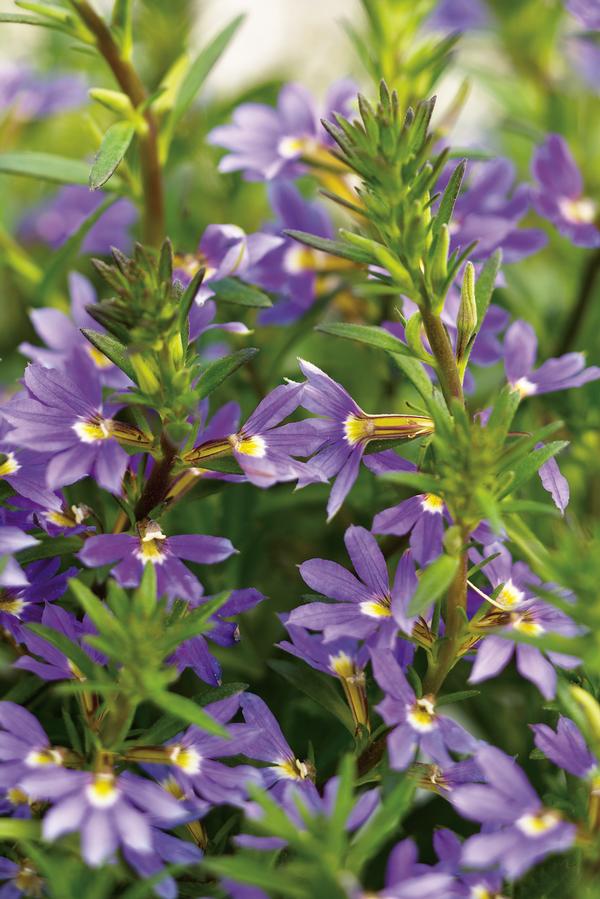
Whirlwind Blue is a study in delicate charm. Imagine hundreds of tiny fan-shaped flowers, each one a soft periwinkle-blue with a lighter center, crowding along gracefully trailing stems. The flowers are modest in size but audacious in quantity—they practically smother the fine-textured, bright green foliage. Unlike some trailing annuals that get sparse and leggy by midsummer, Whirlwind Blue maintains a naturally full, cascading mound that looks intentional and lush. The overall effect is so airy and cloud-like that it almost seems to glow in evening light.

Growing it in your garden

This is where Whirlwind Blue truly shines for Connecticut gardeners. SCAEVOLA AEMULA thrives in full sun to partial shade—it’s genuinely unfussy about light, which makes it invaluable for those trickier spots on your property. More importantly, it absolutely tolerates the humidity and occasional heavy rains that characterize New England summers. While it prefers well-draining soil, it won’t throw a tantrum if things get slightly soggy, making it far more forgiving than many trailing annuals. It’s also notably heat-tolerant, meaning those scorching July and August days that wilt other plants barely faze it.

Through the seasons

Plant Whirlwind Blue after your last frost date (typically around May 15th in Connecticut) and you’re looking at reliable performance until the first hard freeze in autumn. Unlike annuals that hit their peak in early summer then peter out, this one literally gets stronger as the season progresses. By August and September, when many container gardens look tired and sparse, your Whirlwind Blue will be absolutely loaded with flowers. The continuous blooming habit means you’ll never have bare stems or disappointing gaps—it’s the botanical equivalent of a dependable friend who shows up every single time.

Where it shines

Container gardens are where Whirlwind Blue performs its magic. Use it as a thriller-filler-spiller combination in mixed planters, positioned at the edge where those trailing stems can cascade freely over the rim. It’s exceptional in hanging baskets—the kind you can actually enjoy looking at in July and August, not just from April to June. It also works beautifully softening the hard edges of stone walls, spilling from window boxes, or trailing through raised beds and border edges. In the landscape, use it to create drifts of continuous color in spots where you need something light and airy rather than bold and architectural.

Perfect companions

Whirlwind Blue plays well with others. Pair it with upright forms—try tall dusty miller, narrow-leaved salvias, or spiky pentas for textural contrast. It bridges beautifully between deep-colored foliage plants like purple-leaved sweet potato vine and lighter flowers like white diascia. In mixed containers, it works as a visual bridge between multiple colors, softening the transitions and creating a cohesive whole. The gentle blue tone is particularly flattering next to silver foliage or warm-toned flowering companions.

Care tips

Here’s the thing about Whirlwind Blue that makes it genuinely low-maintenance: it doesn’t actually need deadheading to keep flowering. Yes, you read that correctly. Unlike petunias that demand constant attention or impatiens that sulk without regular pinching, this plant is self-cleaning and naturally compact. Water regularly during establishment and throughout hot, dry spells, but don’t lose sleep over occasional dryness—it’s tougher than it looks. Fertilize monthly with a balanced, water-soluble fertilizer (or a light feeding every two weeks if you’re the attentive type), and you’re essentially done. No fussing required.

Quick facts

  • Hardiness Zone: Tender annual; treat as frost-sensitive and replant each season
  • Mature Height & Spread: 8–10 inches tall; 12–18 inches wide (trailing)
  • Bloom Season: Late spring through frost (May–October in Connecticut)
  • Light Requirements: Full sun to partial shade
  • Water Needs: Regular moisture; moderate drought tolerance once established
  • Available at: Both our retail and wholesale locations

Scaevola aemula ‘ Whirlwind Blue ‘

Scaevola is a great plant to add to any floral environment. Its high versatility makes it a wise choice for potted combinations or garden ground coverage. Create beautiful potted combinations and garden landscapes with these unique fan flowers.

Pot Size (gallons), Height: #1

Description

SCAEVOLA AEMULA ‘WHIRLWIND BLUE’

What if one plant could deliver non-stop color from late spring straight through the first frost, require virtually no deadheading, and handle the unpredictable New England weather with absolute grace? Meet Whirlwind Blue Scaevola—a tender annual that’s quietly become the secret weapon of Connecticut gardeners who’ve grown tired of fussy petunias and temperamental impatiens. This is the plant that makes you look like a genius without actually trying.

What it looks like

Whirlwind Blue is a study in delicate charm. Imagine hundreds of tiny fan-shaped flowers, each one a soft periwinkle-blue with a lighter center, crowding along gracefully trailing stems. The flowers are modest in size but audacious in quantity—they practically smother the fine-textured, bright green foliage. Unlike some trailing annuals that get sparse and leggy by midsummer, Whirlwind Blue maintains a naturally full, cascading mound that looks intentional and lush. The overall effect is so airy and cloud-like that it almost seems to glow in evening light.

Growing it in your garden

This is where Whirlwind Blue truly shines for Connecticut gardeners. SCAEVOLA AEMULA thrives in full sun to partial shade—it’s genuinely unfussy about light, which makes it invaluable for those trickier spots on your property. More importantly, it absolutely tolerates the humidity and occasional heavy rains that characterize New England summers. While it prefers well-draining soil, it won’t throw a tantrum if things get slightly soggy, making it far more forgiving than many trailing annuals. It’s also notably heat-tolerant, meaning those scorching July and August days that wilt other plants barely faze it.

Through the seasons

Plant Whirlwind Blue after your last frost date (typically around May 15th in Connecticut) and you’re looking at reliable performance until the first hard freeze in autumn. Unlike annuals that hit their peak in early summer then peter out, this one literally gets stronger as the season progresses. By August and September, when many container gardens look tired and sparse, your Whirlwind Blue will be absolutely loaded with flowers. The continuous blooming habit means you’ll never have bare stems or disappointing gaps—it’s the botanical equivalent of a dependable friend who shows up every single time.

Where it shines

Container gardens are where Whirlwind Blue performs its magic. Use it as a thriller-filler-spiller combination in mixed planters, positioned at the edge where those trailing stems can cascade freely over the rim. It’s exceptional in hanging baskets—the kind you can actually enjoy looking at in July and August, not just from April to June. It also works beautifully softening the hard edges of stone walls, spilling from window boxes, or trailing through raised beds and border edges. In the landscape, use it to create drifts of continuous color in spots where you need something light and airy rather than bold and architectural.

Perfect companions

Whirlwind Blue plays well with others. Pair it with upright forms—try tall dusty miller, narrow-leaved salvias, or spiky pentas for textural contrast. It bridges beautifully between deep-colored foliage plants like purple-leaved sweet potato vine and lighter flowers like white diascia. In mixed containers, it works as a visual bridge between multiple colors, softening the transitions and creating a cohesive whole. The gentle blue tone is particularly flattering next to silver foliage or warm-toned flowering companions.

Care tips

Here’s the thing about Whirlwind Blue that makes it genuinely low-maintenance: it doesn’t actually need deadheading to keep flowering. Yes, you read that correctly. Unlike petunias that demand constant attention or impatiens that sulk without regular pinching, this plant is self-cleaning and naturally compact. Water regularly during establishment and throughout hot, dry spells, but don’t lose sleep over occasional dryness—it’s tougher than it looks. Fertilize monthly with a balanced, water-soluble fertilizer (or a light feeding every two weeks if you’re the attentive type), and you’re essentially done. No fussing required.

Quick facts

  • Hardiness Zone: Tender annual; treat as frost-sensitive and replant each season
  • Mature Height & Spread: 8–10 inches tall; 12–18 inches wide (trailing)
  • Bloom Season: Late spring through frost (May–October in Connecticut)
  • Light Requirements: Full sun to partial shade
  • Water Needs: Regular moisture; moderate drought tolerance once established
  • Available at: Both our retail and wholesale locations