
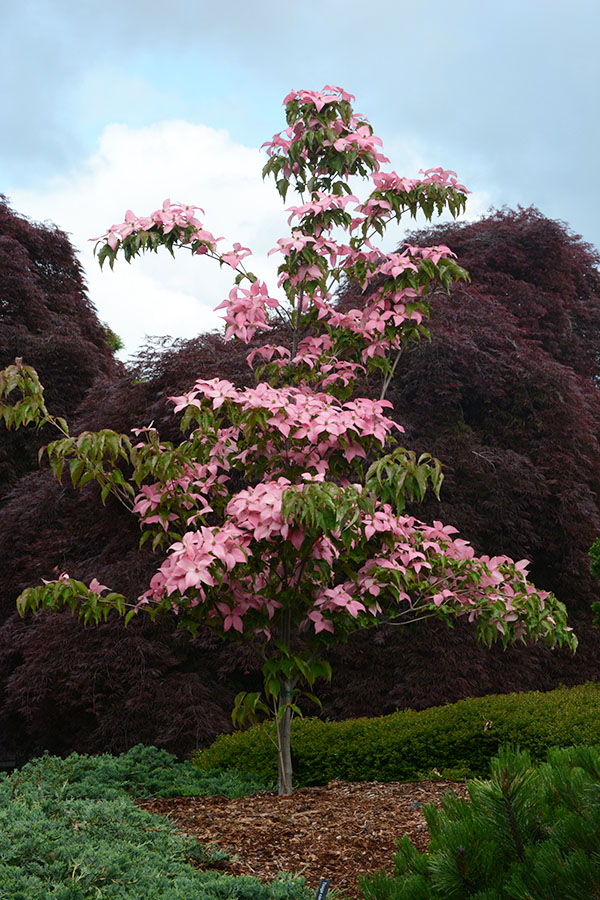
Scarlett Fire Dogwood

CORNUS ALBA ‘SCARLETT FIRE’

If you’ve been searching for a plant that delivers serious winter interest without being boring the rest of the year, Scarlett Fire Dogwood arrives like an answer to your prayers. This is the shrub that turns Connecticut’s coldest months into a reason to look out the window. While most plants are sleeping, Scarlett Fire is putting on a show that rivals any spring bloomer—except this performance happens when you need it most.

What it looks like

Scarlett Fire is a deciduous shrub that typically grows into an upright, multi-stemmed form with a naturally tidy silhouette. The magic happens in the branches themselves. During the growing season, you’ll see attractive medium green foliage that’s nothing to dismiss—it’s clean, healthy-looking, and provides a nice neutral backdrop. But when autumn arrives and the leaves drop, that’s when this shrub’s true identity emerges.

The stems—and here’s the star of the show—are a brilliant crimson-scarlet color that intensifies as temperatures drop. In January and February, when your garden is mostly shades of brown and gray, Scarlett Fire absolutely glows. In early spring, tiny white flowers appear in small clusters along the branches before the new leaves emerge, adding another layer of seasonal interest.

Growing it in your garden

Scarlett Fire is remarkably adaptable, which is exactly what you want in a New England shrub. It tolerates both sun and part shade, though it will develop the most vibrant stem color in at least three to four hours of direct sunlight daily. It’s not fussy about soil—it handles clay, loam, and sandy conditions with equal grace, and it’s even tolerant of the somewhat alkaline soils common in Connecticut yards.

This is also a shrub that appreciates consistent moisture, especially during its first growing season as it’s establishing itself. Once settled in, it’s quite hardy and resilient. It shrugs off Connecticut’s temperature swings, humidity, and unpredictable springs without complaint.

Through the seasons

Spring brings those delicate white flower clusters—subtle but lovely—followed by the emergence of fresh green foliage. Summer is when Scarlett Fire plays a supporting role, providing structure and form to your borders while other plants take center stage. The leaves remain attractive throughout warm weather, never getting stressed or tired-looking even during dry spells.

Fall is when things get interesting again. As temperatures cool, the foliage turns shades of burgundy and plum before dropping, revealing those stunning crimson stems beneath. Winter is the real showstopper—those bare branches are practically luminous in afternoon light, especially beautiful after a fresh snowfall. By late winter and early spring, the white flowers return, bridging the seasons and signaling renewal.

Where it shines

Scarlett Fire is absolutely at home in mixed shrub borders where its winter color becomes a focal point. It’s spectacular planted in groups of three or more where the massed stem color creates real visual impact. It’s also wonderful as a standalone specimen where you can really admire those crimson branches from multiple angles.

In smaller Connecticut gardens, Scarlett Fire works beautifully as a backdrop planting where it provides height and structure without overwhelming the space. It’s particularly valuable in front yards and entry gardens where you can appreciate the winter color display when you’re coming and going during the darkest months of the year.

Perfect companions

Scarlett Fire pairs beautifully with evergreens that provide a contrasting backdrop—consider pairing it with dwarf conifers or broadleaf evergreens like ILEX or BOXWOOD. Winter-blooming plants like winter-blooming HEATHER or WINTER JASMINE extend the seasonal interest. For spring and summer color, combine it with shade-tolerant perennials like HELLEBORES or HEUCHERA, whose foliage colors often complement rather than compete with Scarlett Fire’s structural role in the garden.

Care tips

Scarlett Fire responds beautifully to renewal pruning. In late winter—ideally February or early March in Connecticut—you can cut back a third of the oldest stems to the ground. This encourages new, more vibrantly colored growth while maintaining the plant’s natural form. Don’t shear it into a ball; instead, prune selectively to enhance its natural branching structure.

Water regularly during the first season to help establish a deep root system. Once established, it’s quite drought-tolerant, though it performs best with consistent moisture during hot, dry spells. A light application of mulch keeps the roots happy, but keep it away from the base of the stems to prevent rot.

Quick facts

  • Hardiness Zone: Zones 2-8 (thrives in Connecticut)
  • Mature Height & Spread: 6-8 feet tall and wide
  • Bloom Season: Early spring white flowers; winter stem color (November-March)
  • Light Requirements: Full sun to part shade (full sun gives best stem color)
  • Water Needs: Moderate; consistent moisture preferred, becomes drought-tolerant once established
  • Available at: Both our retail and wholesale locations

Scarlett Fire Dogwood

The dramatic bracts glow pink from a distance unlike any other dogwood we have seen.

Description

Scarlett Fire Dogwood

CORNUS ALBA ‘SCARLETT FIRE’

If you’ve been searching for a plant that delivers serious winter interest without being boring the rest of the year, Scarlett Fire Dogwood arrives like an answer to your prayers. This is the shrub that turns Connecticut’s coldest months into a reason to look out the window. While most plants are sleeping, Scarlett Fire is putting on a show that rivals any spring bloomer—except this performance happens when you need it most.

What it looks like

Scarlett Fire is a deciduous shrub that typically grows into an upright, multi-stemmed form with a naturally tidy silhouette. The magic happens in the branches themselves. During the growing season, you’ll see attractive medium green foliage that’s nothing to dismiss—it’s clean, healthy-looking, and provides a nice neutral backdrop. But when autumn arrives and the leaves drop, that’s when this shrub’s true identity emerges.

The stems—and here’s the star of the show—are a brilliant crimson-scarlet color that intensifies as temperatures drop. In January and February, when your garden is mostly shades of brown and gray, Scarlett Fire absolutely glows. In early spring, tiny white flowers appear in small clusters along the branches before the new leaves emerge, adding another layer of seasonal interest.

Growing it in your garden

Scarlett Fire is remarkably adaptable, which is exactly what you want in a New England shrub. It tolerates both sun and part shade, though it will develop the most vibrant stem color in at least three to four hours of direct sunlight daily. It’s not fussy about soil—it handles clay, loam, and sandy conditions with equal grace, and it’s even tolerant of the somewhat alkaline soils common in Connecticut yards.

This is also a shrub that appreciates consistent moisture, especially during its first growing season as it’s establishing itself. Once settled in, it’s quite hardy and resilient. It shrugs off Connecticut’s temperature swings, humidity, and unpredictable springs without complaint.

Through the seasons

Spring brings those delicate white flower clusters—subtle but lovely—followed by the emergence of fresh green foliage. Summer is when Scarlett Fire plays a supporting role, providing structure and form to your borders while other plants take center stage. The leaves remain attractive throughout warm weather, never getting stressed or tired-looking even during dry spells.

Fall is when things get interesting again. As temperatures cool, the foliage turns shades of burgundy and plum before dropping, revealing those stunning crimson stems beneath. Winter is the real showstopper—those bare branches are practically luminous in afternoon light, especially beautiful after a fresh snowfall. By late winter and early spring, the white flowers return, bridging the seasons and signaling renewal.

Where it shines

Scarlett Fire is absolutely at home in mixed shrub borders where its winter color becomes a focal point. It’s spectacular planted in groups of three or more where the massed stem color creates real visual impact. It’s also wonderful as a standalone specimen where you can really admire those crimson branches from multiple angles.

In smaller Connecticut gardens, Scarlett Fire works beautifully as a backdrop planting where it provides height and structure without overwhelming the space. It’s particularly valuable in front yards and entry gardens where you can appreciate the winter color display when you’re coming and going during the darkest months of the year.

Perfect companions

Scarlett Fire pairs beautifully with evergreens that provide a contrasting backdrop—consider pairing it with dwarf conifers or broadleaf evergreens like ILEX or BOXWOOD. Winter-blooming plants like winter-blooming HEATHER or WINTER JASMINE extend the seasonal interest. For spring and summer color, combine it with shade-tolerant perennials like HELLEBORES or HEUCHERA, whose foliage colors often complement rather than compete with Scarlett Fire’s structural role in the garden.

Care tips

Scarlett Fire responds beautifully to renewal pruning. In late winter—ideally February or early March in Connecticut—you can cut back a third of the oldest stems to the ground. This encourages new, more vibrantly colored growth while maintaining the plant’s natural form. Don’t shear it into a ball; instead, prune selectively to enhance its natural branching structure.

Water regularly during the first season to help establish a deep root system. Once established, it’s quite drought-tolerant, though it performs best with consistent moisture during hot, dry spells. A light application of mulch keeps the roots happy, but keep it away from the base of the stems to prevent rot.

Quick facts

  • Hardiness Zone: Zones 2-8 (thrives in Connecticut)
  • Mature Height & Spread: 6-8 feet tall and wide
  • Bloom Season: Early spring white flowers; winter stem color (November-March)
  • Light Requirements: Full sun to part shade (full sun gives best stem color)
  • Water Needs: Moderate; consistent moisture preferred, becomes drought-tolerant once established
  • Available at: Both our retail and wholesale locations