Skyline Locust

GLEDITSIA TRIACANTHOS VAR. INERMIS ‘SKYLINE’

What if one tree could offer everything a New England gardener craves? The Skyline Locust arrives like an answer to a question you didn’t quite know how to ask. It’s elegant without being fussy, tough without looking harsh, and it performs beautifully through Connecticut’s unpredictable seasons without demanding much in return. This is the kind of tree that earns its place in your landscape year after year.

What it looks like

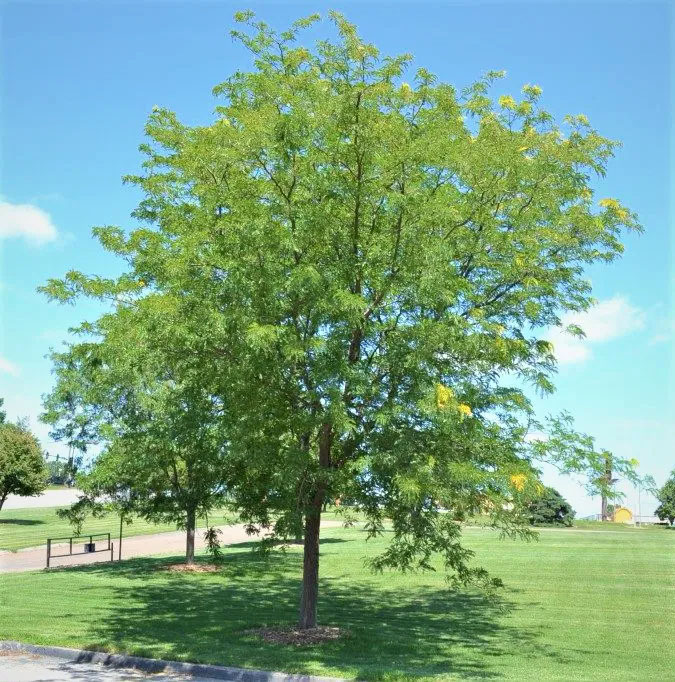
The Skyline Locust is a study in refined grace. Its pyramidal form is naturally symmetrical and architectural—the kind of shape that looks intentional without requiring you to prune it into submission. The foliage is fine and delicate, composed of tiny leaflets that create an airy, almost feathery appearance. Come spring and summer, the canopy glows in soft, warm green. The texture is so refined that light filters through beautifully, creating dappled shade rather than dense shadow. In autumn, those tiny leaflets turn a glorious golden yellow before dropping cleanly away, revealing an attractive, sinuous branching structure that adds winter interest to your garden.

Growing it in your garden

The Skyline Locust is remarkably adaptable. It tolerates poor, compacted soil with barely a complaint—a real asset if you’re working with challenging Connecticut clay or disturbed landscape soil. It handles urban conditions, air pollution, and salt spray without flinching, making it an excellent choice for yards near roads or in established neighborhoods. The tree grows at a moderate pace, never becoming so vigorous that it requires constant management. It’s an excellent choice if you’ve ever been intimidated by faster-growing trees that seem to take over the landscape within a few years. This one develops at a thoughtful pace, giving you time to plan its companions and adjust as your garden matures.

Through the seasons

Spring brings fresh, light green foliage that practically glows in the new season’s sunshine. Summer is when the Skyline Locust truly shines—the fine-textured canopy creates perfect dappled shade for shade-tolerant plants beneath, and its open branching pattern means you won’t feel like you’re gardening in a cave. Early summer may bring small, fragrant flowers (though they’re modest and easy to overlook), followed by the development of long, flat seed pods that some gardeners appreciate for their sculptural quality. Autumn transforms the canopy into warm gold before the tree stands bare and beautiful through winter, its branching pattern and smooth gray bark creating quiet architectural appeal during the dormant months.

Where it shines

Think of the Skyline Locust as a tree for situations where you want grace without drama. It’s perfect as a specimen tree in a moderate-sized yard, where its pyramidal form and airy canopy can be appreciated from all angles. It excels as a street tree or avenue tree—many communities throughout New England have discovered its reliability for lining walkways and roads. Plant it where you want to create dappled shade for a shade garden or sitting area. It’s also wonderful in mixed borders where its fine texture and light canopy complement other plantings without overwhelming them. Use it to create a sense of structure in a landscape without the visual weight of denser trees.

Perfect companions

The Skyline Locust’s dappled shade and fine texture pair beautifully with shade-tolerant perennials like hellebores, coral bells (HEUCHERA), and astilbe. Its clean branching pattern and airy canopy make it an excellent backdrop for flowering shrubs like viburnums or oakleaf hydrangeas. Underplant with hostas, ferns, or shade-tolerant groundcovers for a layered, sophisticated look. The tree’s refined appearance complements more formal landscape styles while remaining versatile enough for naturalistic settings.

Care tips

Once established, the Skyline Locust needs surprisingly little fussing. Water regularly during the first growing season to help develop a strong root system, then it becomes quite drought-tolerant. It rarely needs pruning beyond removing any crossing or damaged branches—the tree naturally develops its attractive pyramidal form. The fine foliage decomposes quickly when it drops in autumn, so cleanup is minimal compared to trees with larger leaves. The seed pods are not a serious litter problem, though some gardeners remove them if tidiness is paramount. The tree has no significant pest or disease problems in Connecticut, making it a genuinely low-maintenance choice.

Quick facts

  • Hardiness Zone: 3–8 (thoroughly winter-hardy throughout Connecticut)
  • Mature Height & Spread: 40–50 feet tall, 25–35 feet wide at maturity
  • Bloom Season: Early summer (flowers are fragrant but inconspicuous)
  • Light Requirements: Full sun to part shade
  • Water Needs: Moderate; drought-tolerant once established
  • Available at: Both our retail and wholesale locations
Skyline Locust

Gleditsia triacanthos, commonly called honey locust, is native from Pennsylvania to Iowa south to Georgia and Texas. It typically grows 60-80’ (less frequently to 120’) tall with a rounded spreading crown.

Description

Skyline Locust

GLEDITSIA TRIACANTHOS VAR. INERMIS ‘SKYLINE’

What if one tree could offer everything a New England gardener craves? The Skyline Locust arrives like an answer to a question you didn’t quite know how to ask. It’s elegant without being fussy, tough without looking harsh, and it performs beautifully through Connecticut’s unpredictable seasons without demanding much in return. This is the kind of tree that earns its place in your landscape year after year.

What it looks like

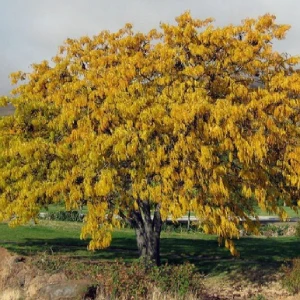
The Skyline Locust is a study in refined grace. Its pyramidal form is naturally symmetrical and architectural—the kind of shape that looks intentional without requiring you to prune it into submission. The foliage is fine and delicate, composed of tiny leaflets that create an airy, almost feathery appearance. Come spring and summer, the canopy glows in soft, warm green. The texture is so refined that light filters through beautifully, creating dappled shade rather than dense shadow. In autumn, those tiny leaflets turn a glorious golden yellow before dropping cleanly away, revealing an attractive, sinuous branching structure that adds winter interest to your garden.

Growing it in your garden

The Skyline Locust is remarkably adaptable. It tolerates poor, compacted soil with barely a complaint—a real asset if you’re working with challenging Connecticut clay or disturbed landscape soil. It handles urban conditions, air pollution, and salt spray without flinching, making it an excellent choice for yards near roads or in established neighborhoods. The tree grows at a moderate pace, never becoming so vigorous that it requires constant management. It’s an excellent choice if you’ve ever been intimidated by faster-growing trees that seem to take over the landscape within a few years. This one develops at a thoughtful pace, giving you time to plan its companions and adjust as your garden matures.

Through the seasons

Spring brings fresh, light green foliage that practically glows in the new season’s sunshine. Summer is when the Skyline Locust truly shines—the fine-textured canopy creates perfect dappled shade for shade-tolerant plants beneath, and its open branching pattern means you won’t feel like you’re gardening in a cave. Early summer may bring small, fragrant flowers (though they’re modest and easy to overlook), followed by the development of long, flat seed pods that some gardeners appreciate for their sculptural quality. Autumn transforms the canopy into warm gold before the tree stands bare and beautiful through winter, its branching pattern and smooth gray bark creating quiet architectural appeal during the dormant months.

Where it shines

Think of the Skyline Locust as a tree for situations where you want grace without drama. It’s perfect as a specimen tree in a moderate-sized yard, where its pyramidal form and airy canopy can be appreciated from all angles. It excels as a street tree or avenue tree—many communities throughout New England have discovered its reliability for lining walkways and roads. Plant it where you want to create dappled shade for a shade garden or sitting area. It’s also wonderful in mixed borders where its fine texture and light canopy complement other plantings without overwhelming them. Use it to create a sense of structure in a landscape without the visual weight of denser trees.

Perfect companions

The Skyline Locust’s dappled shade and fine texture pair beautifully with shade-tolerant perennials like hellebores, coral bells (HEUCHERA), and astilbe. Its clean branching pattern and airy canopy make it an excellent backdrop for flowering shrubs like viburnums or oakleaf hydrangeas. Underplant with hostas, ferns, or shade-tolerant groundcovers for a layered, sophisticated look. The tree’s refined appearance complements more formal landscape styles while remaining versatile enough for naturalistic settings.

Care tips

Once established, the Skyline Locust needs surprisingly little fussing. Water regularly during the first growing season to help develop a strong root system, then it becomes quite drought-tolerant. It rarely needs pruning beyond removing any crossing or damaged branches—the tree naturally develops its attractive pyramidal form. The fine foliage decomposes quickly when it drops in autumn, so cleanup is minimal compared to trees with larger leaves. The seed pods are not a serious litter problem, though some gardeners remove them if tidiness is paramount. The tree has no significant pest or disease problems in Connecticut, making it a genuinely low-maintenance choice.

Quick facts

  • Hardiness Zone: 3–8 (thoroughly winter-hardy throughout Connecticut)
  • Mature Height & Spread: 40–50 feet tall, 25–35 feet wide at maturity
  • Bloom Season: Early summer (flowers are fragrant but inconspicuous)
  • Light Requirements: Full sun to part shade
  • Water Needs: Moderate; drought-tolerant once established
  • Available at: Both our retail and wholesale locations