Spiderwort

If you’re looking for a cheerful, low-fuss perennial that practically thrives on neglect, spiderwort (TRADESCANTIA × ANDERSONIANA) might just become your new garden best friend. I absolutely adore this plant—it’s the kind of reliable performer that shows up year after year with minimal coaxing, producing masses of delicate, three-petaled flowers in jewel tones that seem to glow in the garden. Here in Connecticut, it’s perfect for gardeners who want something beautiful without the demanding diva attitude. Trust me, once you grow spiderwort, you’ll wonder how you ever gardened without it.

What it looks like

Spiderwort is such a charming plant, with its distinctive three-petaled flowers that remind me of tiny fireworks bursting open in your garden beds. The blooms come in gorgeous shades of blue, purple, pink, and white—depending on the variety—and they’re held on branching stems that rise above graceful, grass-like foliage. The leaves are long and arching, with an almost fountainous quality that adds texture even when the plant isn’t flowering. Each delicate flower only lasts a day, but here’s the magic: the plant produces so many buds that you’ll have continuous blooms for weeks and weeks. The overall effect is airy and romantic, never heavy-handed or fussy-looking.

Growing it in your garden

Here’s what I love most about spiderwort: it’s genuinely adaptable. In our Connecticut gardens, it grows well in full sun to partial shade, though it tends to prefer some afternoon shade during our hot summer months. If you give it afternoon protection from intense heat, the blooms will last longer and display better color. The plant isn’t fussy about soil—it’ll establish itself in average, well-draining garden soil just fine. It’s actually quite drought-tolerant once it’s settled in, which makes it excellent for those busy seasons when watering falls off your priority list. I’ve seen spiderwort thrive in foundation plantings, perennial borders, and even cottage garden settings around the state.

Through the seasons

Spiderwort emerges fairly early in spring, which means it’s one of the first signs that your garden is truly waking up. By late spring through early summer, it’s absolutely covered in blooms—I’m talking abundant flowering that brightens up the entire garden bed. As summer progresses, you can deadhead spent flowers to encourage even more blooming, or let it be and enjoy the relaxed, naturalistic look. Here’s a helpful trick: many gardeners cut back their spiderwort by half in mid-June to encourage denser, bushier growth and often get a second flush of flowers in late summer. Come fall, it gradually fades back and dies down for the winter, making way for spring again. It’s completely winter-hardy here in New England—no fussing required.

Where it shines

I use spiderwort in several different ways throughout my own garden, and it really does excel in multiple settings. It’s absolutely lovely in perennial borders mixed with other spring and summer bloomers, where its light, airy texture prevents the bed from ever looking too solid or heavy. It’s wonderful in cottage gardens where that informal, gently wild look is exactly what you want. Because it’s so pretty and so low-maintenance, it’s perfect for beginning gardeners who want to build their confidence without feeling like they’re failing at plant care. It also works nicely in containers if you want to experiment, though it really does prefer life in the ground. And here’s something else: it’s a genuine pollinator magnet, so if you’re trying to support bees and butterflies around your Connecticut property, spiderwort is pulling its weight.

Perfect companions

Spiderwort pairs beautifully with so many garden favorites. I love combining it with catmint (NEPETA), which blooms at similar times and has a complementary purple-blue color palette. Creeping phlox, coreopsis, and Russian sage are all wonderful partners. Ornamental grasses like feather reed grass or blue fescue look stunning next to spiderwort’s graceful foliage. If you want to play with colors, pair pink spiderwort varieties with silvery artemisia or dusty miller. And don’t overlook combining it with spring bulbs—tulips and alliums emerge right as spiderwort is gearing up to bloom, creating lovely layered interest.

Care tips

Spiderwort really doesn’t need much from you, which is partly why I adore it. Water it regularly the first season while it’s establishing its root system, and then it becomes quite self-sufficient. Once established, you can water during dry spells, but it won’t suffer too much if you forget—it’s genuinely tough. Deadheading extends the bloom season and keeps the plant looking tidy, but it’s entirely optional. That mid-June cutback I mentioned earlier really does improve plant performance and encourage bushier growth. Divide spiderwort every three to four years in spring if you want to rejuvenate older clumps or share plants with gardening friends. It doesn’t attract pests or diseases here in Connecticut, making it even more appealing for low-fuss gardening.

Quick facts

  • Hardiness Zone: 4-9 (perfectly hardy throughout Connecticut)
  • Mature Height & Spread: 18-24 inches tall and wide
  • Bloom Season: Late spring through early summer (May-June), with possible reblooming in late summer after cutting back
  • Light Requirements: Full sun to partial shade; afternoon shade appreciated during hot summers
  • Water Needs: Moderate; drought-tolerant once established
  • Available at: Both our retail and wholesale locations

Spiderwort

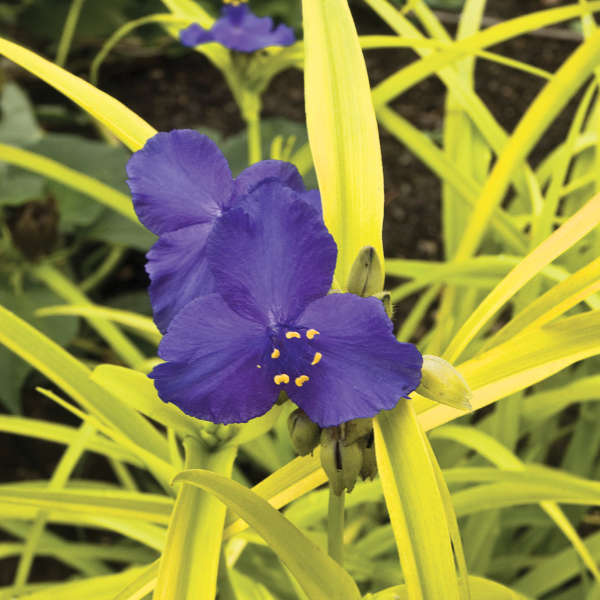
‘Sweet Kate’ is a compact, clump-forming, hybrid spiderwort that is noted for its unique yellow foliage. It typically grows to 12” tall. Three-petaled, purplish-blue flowers (to 1.5” diameter) accented by contrasting yellow stamens are borne in terminal clusters (umbels) atop stiff stems.

Pot Size (gallons), Height: #1

Description

Spiderwort

If you’re looking for a cheerful, low-fuss perennial that practically thrives on neglect, spiderwort (TRADESCANTIA × ANDERSONIANA) might just become your new garden best friend. I absolutely adore this plant—it’s the kind of reliable performer that shows up year after year with minimal coaxing, producing masses of delicate, three-petaled flowers in jewel tones that seem to glow in the garden. Here in Connecticut, it’s perfect for gardeners who want something beautiful without the demanding diva attitude. Trust me, once you grow spiderwort, you’ll wonder how you ever gardened without it.

What it looks like

Spiderwort is such a charming plant, with its distinctive three-petaled flowers that remind me of tiny fireworks bursting open in your garden beds. The blooms come in gorgeous shades of blue, purple, pink, and white—depending on the variety—and they’re held on branching stems that rise above graceful, grass-like foliage. The leaves are long and arching, with an almost fountainous quality that adds texture even when the plant isn’t flowering. Each delicate flower only lasts a day, but here’s the magic: the plant produces so many buds that you’ll have continuous blooms for weeks and weeks. The overall effect is airy and romantic, never heavy-handed or fussy-looking.

Growing it in your garden

Here’s what I love most about spiderwort: it’s genuinely adaptable. In our Connecticut gardens, it grows well in full sun to partial shade, though it tends to prefer some afternoon shade during our hot summer months. If you give it afternoon protection from intense heat, the blooms will last longer and display better color. The plant isn’t fussy about soil—it’ll establish itself in average, well-draining garden soil just fine. It’s actually quite drought-tolerant once it’s settled in, which makes it excellent for those busy seasons when watering falls off your priority list. I’ve seen spiderwort thrive in foundation plantings, perennial borders, and even cottage garden settings around the state.

Through the seasons

Spiderwort emerges fairly early in spring, which means it’s one of the first signs that your garden is truly waking up. By late spring through early summer, it’s absolutely covered in blooms—I’m talking abundant flowering that brightens up the entire garden bed. As summer progresses, you can deadhead spent flowers to encourage even more blooming, or let it be and enjoy the relaxed, naturalistic look. Here’s a helpful trick: many gardeners cut back their spiderwort by half in mid-June to encourage denser, bushier growth and often get a second flush of flowers in late summer. Come fall, it gradually fades back and dies down for the winter, making way for spring again. It’s completely winter-hardy here in New England—no fussing required.

Where it shines

I use spiderwort in several different ways throughout my own garden, and it really does excel in multiple settings. It’s absolutely lovely in perennial borders mixed with other spring and summer bloomers, where its light, airy texture prevents the bed from ever looking too solid or heavy. It’s wonderful in cottage gardens where that informal, gently wild look is exactly what you want. Because it’s so pretty and so low-maintenance, it’s perfect for beginning gardeners who want to build their confidence without feeling like they’re failing at plant care. It also works nicely in containers if you want to experiment, though it really does prefer life in the ground. And here’s something else: it’s a genuine pollinator magnet, so if you’re trying to support bees and butterflies around your Connecticut property, spiderwort is pulling its weight.

Perfect companions

Spiderwort pairs beautifully with so many garden favorites. I love combining it with catmint (NEPETA), which blooms at similar times and has a complementary purple-blue color palette. Creeping phlox, coreopsis, and Russian sage are all wonderful partners. Ornamental grasses like feather reed grass or blue fescue look stunning next to spiderwort’s graceful foliage. If you want to play with colors, pair pink spiderwort varieties with silvery artemisia or dusty miller. And don’t overlook combining it with spring bulbs—tulips and alliums emerge right as spiderwort is gearing up to bloom, creating lovely layered interest.

Care tips

Spiderwort really doesn’t need much from you, which is partly why I adore it. Water it regularly the first season while it’s establishing its root system, and then it becomes quite self-sufficient. Once established, you can water during dry spells, but it won’t suffer too much if you forget—it’s genuinely tough. Deadheading extends the bloom season and keeps the plant looking tidy, but it’s entirely optional. That mid-June cutback I mentioned earlier really does improve plant performance and encourage bushier growth. Divide spiderwort every three to four years in spring if you want to rejuvenate older clumps or share plants with gardening friends. It doesn’t attract pests or diseases here in Connecticut, making it even more appealing for low-fuss gardening.

Quick facts

  • Hardiness Zone: 4-9 (perfectly hardy throughout Connecticut)
  • Mature Height & Spread: 18-24 inches tall and wide
  • Bloom Season: Late spring through early summer (May-June), with possible reblooming in late summer after cutting back
  • Light Requirements: Full sun to partial shade; afternoon shade appreciated during hot summers
  • Water Needs: Moderate; drought-tolerant once established
  • Available at: Both our retail and wholesale locations