
Description

LAMIUM MACULATUM
If you’ve been searching for something that handles deep shade, poor soil, and Connecticut’s unpredictable springs without complaint, Spotted Dead Nettle might just be the answer you’ve been waiting for. This low-growing groundcover is one of those plants that quietly does its job year after year, asking very little but giving plenty in return. It’s not flashy or demanding—it’s dependable, and sometimes that’s exactly what a garden needs.
What it looks like
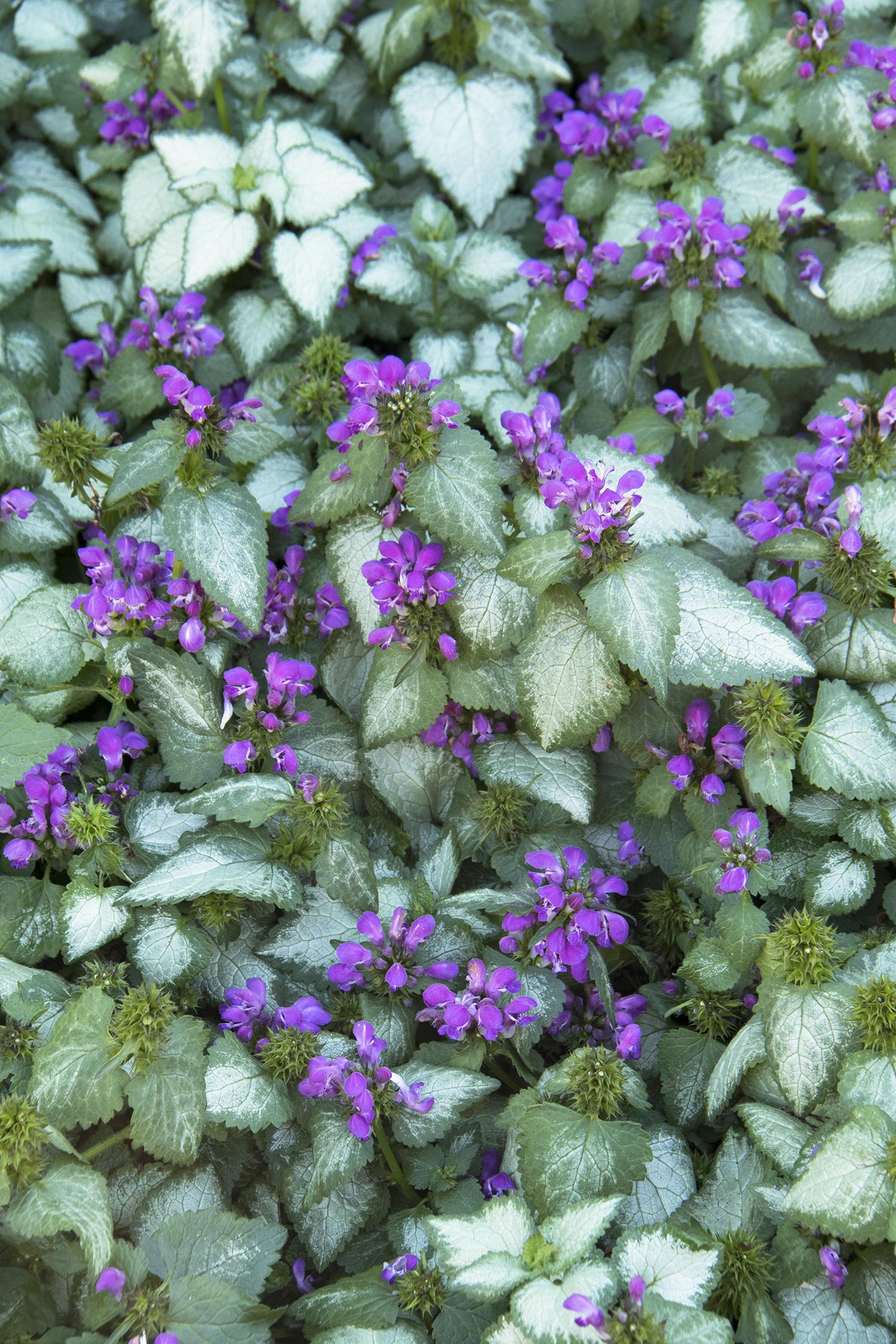
LAMIUM MACULATUM is a charming, delicate-looking plant that belies its toughness. The heart-shaped leaves are the real show here, variegated with silvery-white markings that seem to glow in shaded corners. Depending on the cultivar you choose, you might get leaves with just a hint of silver (like ‘White Nancy’) or dramatic two-tone foliage that practically illuminates dark spaces. In late spring through early summer, small tubular flowers appear in shades of pink, white, or purple, held just above the foliage on short spikes. The whole plant rarely exceeds 8 inches in height, making it perfect for tucking into tight spaces.
Growing it in your garden
Here’s what makes Spotted Dead Nettle such a gift for New England gardeners: it thrives exactly where many plants refuse to grow. That shady patch under your maple tree where nothing else seems happy? Plant it there. The area beneath your evergreens where the soil is dry and compacted? This is its kingdom. LAMIUM MACULATUM is incredibly forgiving about soil conditions—it’ll grow in poor, rocky, or clay-heavy earth without so much as a complaint. It prefers well-draining soil and will sulk slightly in standing water, but overall, it’s far more worried about too much sun than too much shade. In Connecticut gardens, this is the plant you reach for when you need to solve a problem spot, not create a focal point (though it certainly adds charm).
Through the seasons
Spring is when Spotted Dead Nettle really earns its keep. Just as the garden is waking up and you’re desperate for early color, this plant offers delicate flowers that seem impossibly cheerful given where they’re growing. Through summer, the silvery foliage remains ornamental even when the flowers fade. In fall and winter, many cultivars take on bronze or purple tones, adding unexpected interest to the dormant garden. Some varieties are evergreen in our region, maintaining their variegated leaves right through the cold months. By the time spring rolls around again, you’ve already got lush growth ready to go—no waiting.
Where it shines
Spotted Dead Nettle is the groundcover for Connecticut gardeners who have challenging spaces. Plant it along shaded woodland edges, under deciduous trees, in dry shade near building foundations, or along north-facing borders. It’s excellent for erosion control on slopes that don’t get much sun. It also works beautifully cascading over the edges of shaded containers or filling in beneath hostas and hellebores. Some gardeners use it as an edging plant in woodland gardens. Anywhere you need color, texture, and reliability in shade is exactly where LAMIUM MACULATUM belongs.
Perfect companions
In shade gardens, pair Spotted Dead Nettle with other woodland favorites. It looks gorgeous with ASTILBE, which shares its love of moist (but not wet) shade and adds vertical height and movement. Combine it with HEUCHERA for contrasting foliage textures, or let it weave between the feet of HOSTA plants. HELLEBORES make wonderful companions—their elegant flowers emerge as the lamium is coming into its own. For a spring show, plant it alongside woodland spring ephemerals like ERYTHRONIUM or TRILLIUM. It also complements ferns beautifully, softening their edges and filling in gaps.
Care tips
Spotted Dead Nettle is genuinely low-maintenance. Water it during establishment and during drought, but established plants are quite drought-tolerant, especially in shade. Deadhead spent flowers if you want to encourage longer blooming, though this isn’t essential. If the plant gets leggy or overgrown by midsummer, give it a light trim to encourage bushier growth and potentially a second flush of flowers. It rarely needs fertilizing—in fact, too much nitrogen can make it loose and sprawling. Divide established plants every three to four years if you want to propagate more for your garden or share with friends. In Connecticut’s climate, this is a genuinely carefree plant once established.
Quick facts
- Hardiness Zone: 4-8 (perfect for Connecticut)
- Mature Height & Spread: 8 inches tall, spreading 12-18 inches
- Bloom Season: Late spring through early summer (May-June)
- Light Requirements: Shade to partial shade (morning sun tolerated)
- Water Needs: Low to moderate; drought-tolerant once established
- Available at: Both our retail and wholesale locations