Spring Snow Crabapple

MALUS ‘SPRING SNOW’

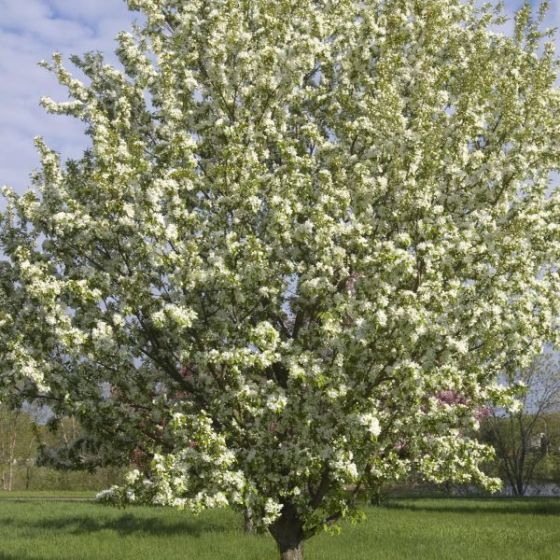
If you’ve ever driven through Connecticut in late April and found yourself pulling over just to stare at a crabapple in full bloom, you already know the magic we’re talking about. SPRING SNOW is that show-stopping moment bottled into a tree. This crabapple variety produces such an abundance of pristine white flowers that you can barely see the branches beneath them—it’s like someone dusted the entire canopy with snow, hence the perfect name. And here’s the best part: unlike many ornamental crabapples, this one is practically sterile, meaning you’ll get all the breathtaking beauty without the mess of persistent fruit litter covering your patio come fall.

What it looks like

SPRING SNOW is a small to medium upright tree with a naturally vase-shaped form that becomes more rounded and full with age. The branching structure is fine and somewhat spreading, creating an elegant silhouette even in winter. When spring arrives, the entire canopy transforms into a cloud of pure white blossoms. The flowers are semi-double, meaning they have more petals than a typical single bloom, giving them an almost camellia-like fullness. The dark green foliage emerges as the flowers fade, providing a clean summer backdrop. The bark is smooth and slightly ornamental, with subtle gray and brown tones that become more interesting as the tree matures.

Growing it in your garden

MALUS ‘SPRING SNOW’ is one of the most reliable crabapples for Connecticut gardens, and it’s refreshingly adaptable. It prefers full sun—at least six hours daily—to produce those incredible flowers, but it can tolerate partial shade. When it comes to soil, this tree is genuinely easygoing. It’ll grow in average, well-draining soil and can handle slightly acidic to neutral pH. Unlike some finicky ornamentals, SPRING SNOW doesn’t demand perfection. Plant it in spring or fall, dig a hole just as deep as the root ball and two to three times as wide, and give it a good drink. Space it at least eight to ten feet from other plants or structures to allow for its mature spread.

Through the seasons

Spring is obviously SPRING SNOW’s moment to shine, with those magnificent white flowers appearing in late April through early May—reliably, year after year. The blooms last about two weeks, provided we don’t get a late frost (thankfully, this variety is quite cold-hardy). Summer brings dense, healthy green foliage that needs no special attention. You might notice a few small reddish fruits developing—some years they’re more noticeable than others—but the tree’s relative sterility means you won’t be dealing with thousands of fallen crabapples in autumn, unlike many other varieties. Fall color is modest, usually a pleasant yellow-orange before the leaves drop. Winter reveals the tree’s elegant branching structure, making it an asset to the winter garden.

Where it shines

This is an excellent specimen tree for any Connecticut landscape. Use it as a focal point in a spring garden, anchor a mixed border, or plant it where you want a reliable burst of spring color. SPRING SNOW works beautifully as a street tree in suburban settings, thrives in both residential and commercial landscapes, and is perfect for small to medium yards where you want maximum impact without excessive mature size. It’s also a wonderful choice for pollinator gardens—the abundant flowers feed early-season bees and other beneficial insects. If you have space for just one flowering tree, this is a serious contender.

Perfect companions

Pair SPRING SNOW with spring bulbs like tulips, daffodils, and muscari planted at its base for a layered spring display. Shade-tolerant perennials such as hellebores and early bleeding heart work beautifully under the canopy. For structure and contrast, plant evergreen shrubs like boxwood or yew nearby. The tree also looks stunning when underplanted with shade-tolerant hostas or ferns that appreciate the dappled summer shade. Ornamental grasses nearby add movement and texture throughout the season.

Care tips

SPRING SNOW is genuinely low-maintenance once established. Water regularly the first season to help establish a deep root system, then gradually reduce watering as the tree matures—it’s quite drought-tolerant once settled in. Prune only to remove dead or crossing branches, ideally right after flowering ends in late spring. This tree has good disease resistance, particularly to the apple scab and cedar-apple rust issues that plague some crabapples in New England. Watch for scale or spider mites during hot, dry summers (common Connecticut pests), but most years you won’t need any intervention. A light mulch layer around the base helps retain moisture and keeps grass away from the trunk.

Quick facts

  • Hardiness Zone: 4-8 (fully hardy throughout Connecticut)
  • Mature Height & Spread: 25-30 feet tall, 20-25 feet wide
  • Bloom Season: Late April through early May
  • Light Requirements: Full sun to partial shade
  • Water Needs: Moderate; drought-tolerant once established
  • Available at: Both our retail and wholesale locations

Spring Snow Crabapple

A dense, oval upright tree with bright green leaves, turning yellow in the fall. Fragrant, single, white flowers appear in mid-spring. Fruitless variety.

Trunk Diameter: 3-3.5″

Description

Spring Snow Crabapple

MALUS ‘SPRING SNOW’

If you’ve ever driven through Connecticut in late April and found yourself pulling over just to stare at a crabapple in full bloom, you already know the magic we’re talking about. SPRING SNOW is that show-stopping moment bottled into a tree. This crabapple variety produces such an abundance of pristine white flowers that you can barely see the branches beneath them—it’s like someone dusted the entire canopy with snow, hence the perfect name. And here’s the best part: unlike many ornamental crabapples, this one is practically sterile, meaning you’ll get all the breathtaking beauty without the mess of persistent fruit litter covering your patio come fall.

What it looks like

SPRING SNOW is a small to medium upright tree with a naturally vase-shaped form that becomes more rounded and full with age. The branching structure is fine and somewhat spreading, creating an elegant silhouette even in winter. When spring arrives, the entire canopy transforms into a cloud of pure white blossoms. The flowers are semi-double, meaning they have more petals than a typical single bloom, giving them an almost camellia-like fullness. The dark green foliage emerges as the flowers fade, providing a clean summer backdrop. The bark is smooth and slightly ornamental, with subtle gray and brown tones that become more interesting as the tree matures.

Growing it in your garden

MALUS ‘SPRING SNOW’ is one of the most reliable crabapples for Connecticut gardens, and it’s refreshingly adaptable. It prefers full sun—at least six hours daily—to produce those incredible flowers, but it can tolerate partial shade. When it comes to soil, this tree is genuinely easygoing. It’ll grow in average, well-draining soil and can handle slightly acidic to neutral pH. Unlike some finicky ornamentals, SPRING SNOW doesn’t demand perfection. Plant it in spring or fall, dig a hole just as deep as the root ball and two to three times as wide, and give it a good drink. Space it at least eight to ten feet from other plants or structures to allow for its mature spread.

Through the seasons

Spring is obviously SPRING SNOW’s moment to shine, with those magnificent white flowers appearing in late April through early May—reliably, year after year. The blooms last about two weeks, provided we don’t get a late frost (thankfully, this variety is quite cold-hardy). Summer brings dense, healthy green foliage that needs no special attention. You might notice a few small reddish fruits developing—some years they’re more noticeable than others—but the tree’s relative sterility means you won’t be dealing with thousands of fallen crabapples in autumn, unlike many other varieties. Fall color is modest, usually a pleasant yellow-orange before the leaves drop. Winter reveals the tree’s elegant branching structure, making it an asset to the winter garden.

Where it shines

This is an excellent specimen tree for any Connecticut landscape. Use it as a focal point in a spring garden, anchor a mixed border, or plant it where you want a reliable burst of spring color. SPRING SNOW works beautifully as a street tree in suburban settings, thrives in both residential and commercial landscapes, and is perfect for small to medium yards where you want maximum impact without excessive mature size. It’s also a wonderful choice for pollinator gardens—the abundant flowers feed early-season bees and other beneficial insects. If you have space for just one flowering tree, this is a serious contender.

Perfect companions

Pair SPRING SNOW with spring bulbs like tulips, daffodils, and muscari planted at its base for a layered spring display. Shade-tolerant perennials such as hellebores and early bleeding heart work beautifully under the canopy. For structure and contrast, plant evergreen shrubs like boxwood or yew nearby. The tree also looks stunning when underplanted with shade-tolerant hostas or ferns that appreciate the dappled summer shade. Ornamental grasses nearby add movement and texture throughout the season.

Care tips

SPRING SNOW is genuinely low-maintenance once established. Water regularly the first season to help establish a deep root system, then gradually reduce watering as the tree matures—it’s quite drought-tolerant once settled in. Prune only to remove dead or crossing branches, ideally right after flowering ends in late spring. This tree has good disease resistance, particularly to the apple scab and cedar-apple rust issues that plague some crabapples in New England. Watch for scale or spider mites during hot, dry summers (common Connecticut pests), but most years you won’t need any intervention. A light mulch layer around the base helps retain moisture and keeps grass away from the trunk.

Quick facts

  • Hardiness Zone: 4-8 (fully hardy throughout Connecticut)
  • Mature Height & Spread: 25-30 feet tall, 20-25 feet wide
  • Bloom Season: Late April through early May
  • Light Requirements: Full sun to partial shade
  • Water Needs: Moderate; drought-tolerant once established
  • Available at: Both our retail and wholesale locations