Stellar Pink Dogwood

CORNUS KOUSA ‘STELLAR PINK’

If you’ve been searching for a dogwood that actually thrives in Connecticut—one that laughs in the face of our unpredictable springs, our humid summers, and our finicky soils—Stellar Pink is your answer. This is the kousa dogwood that breeding programs specifically developed to handle the rigors of our region, with all the elegance and none of the fussy temperament. It’s a tree that will reward you with years of reliable, breathtaking beauty.

What it looks like

Stellar Pink Dogwood is an architectural beauty from top to root. It grows with a graceful, layered branching habit that creates a naturally vase-shaped silhouette—the kind of structure that looks stunning even in winter when the tree is bare. The deeply furrowed bark in shades of tan and gray adds another dimension of visual interest, peeling slightly to reveal warmer tones underneath.

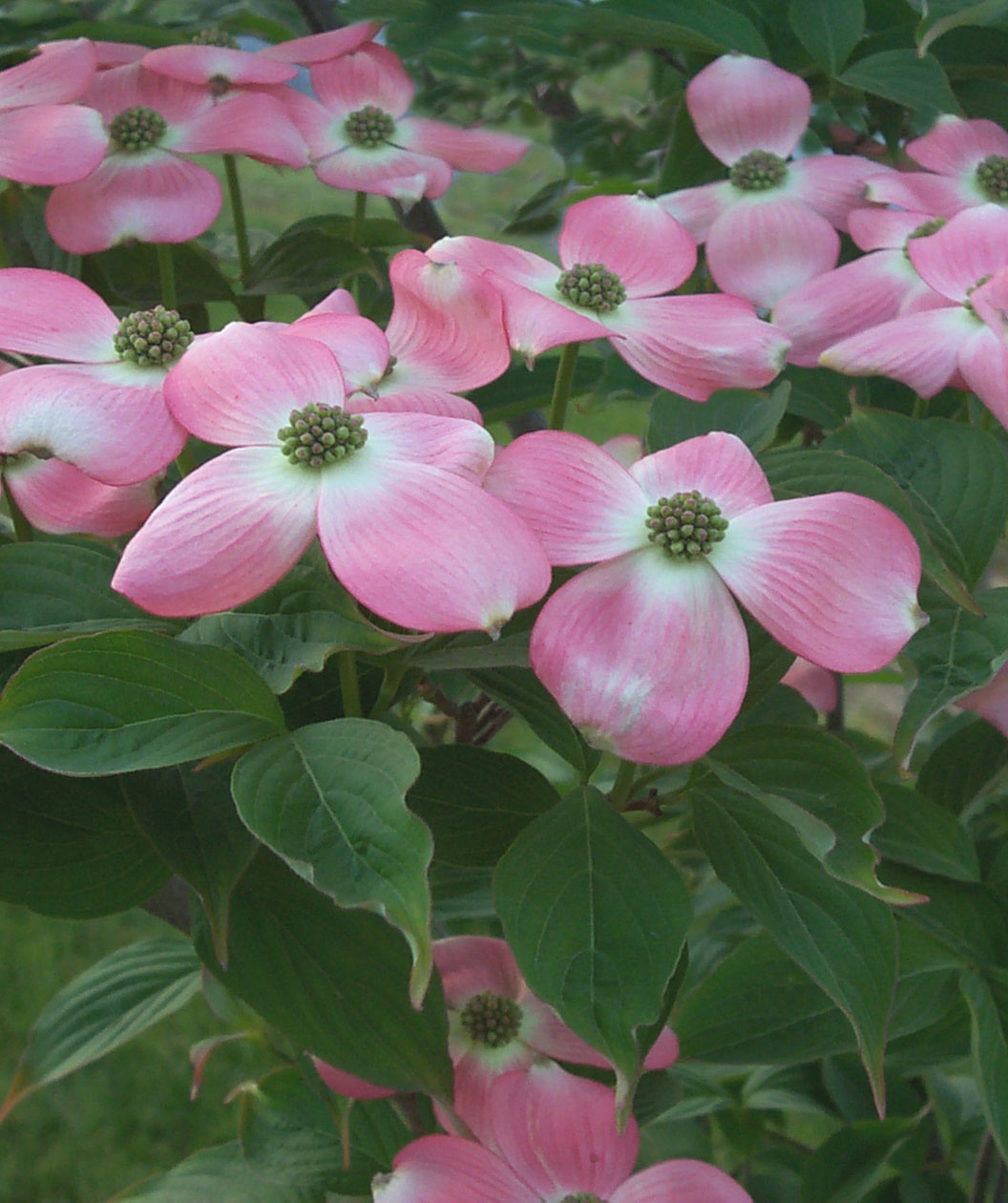
The real show begins in late spring when four-petaled bracts emerge in a soft, warm pink that deepens slightly as they mature. These aren’t true flowers (they’re modified leaves, technically), but they’re far more showy than the actual blooms hiding beneath them. The bracts persist for weeks, creating an extended display that keeps your garden looking fresh and romantic well into early summer.

Come fall, the foliage transforms into deep burgundy and wine tones before dropping, and the branches fill with unusual berry-like structures—rough, strawberry-red fruit that birds find irresistible and that adds another layer of garden interest through fall.

Growing it in your garden

Stellar Pink is forgiving in ways that other dogwoods simply aren’t. It tolerates a wider range of soil conditions than CORNUS FLORIDA (our native dogwood), including slightly acidic to neutral pH, and doesn’t demand the perfectly amended, woodland soil that its American cousin can be fussy about. In Connecticut, this means you can work with what you’ve got rather than completely overhauling a planting bed.

It prefers afternoon shade in our hotter summers, but can handle dappled sun throughout the day—position it where it gets morning light and afternoon protection from our most intense heat, and you’ll see it thrive. Unlike some delicate ornamentals, this kousa can also handle urban conditions and air pollution, making it perfect for suburban Connecticut gardens where native trees might struggle.

Through the seasons

Spring arrives with those stunning pink bracts that’ll have your neighbors asking questions. They emerge in mid to late May in Connecticut, right when everything else is bursting, but Stellar Pink holds its own with poise and presence. The blooming period stretches into June, giving you extended color without demanding constant attention.

Summer is when this tree settles into its role as a structural anchor in the landscape. The layered branching becomes even more apparent as the green foliage fills in, creating a canopy that’s elegant without being heavy. The exfoliating bark becomes more prominent, and the whole tree has an understated sophistication.

Fall brings the wine-red foliage show, and then those crimson fruits that birds absolutely love—plant this tree if you want to attract cardinals and cedar waxwings to your garden. Winter reveals the true architecture: that beautiful branching structure and peeling bark that makes it interesting even when everything else is sleeping.

Where it shines

Use Stellar Pink as a specimen tree where you want year-round visual interest—it’s beautiful enough and sculptural enough to stand alone. It also works beautifully in groupings of three or five in a larger landscape, where you can appreciate how each tree’s branching pattern plays off the others.

It’s perfect for the transitional space between sunny areas and shade—the dappled light zone where many trees struggle. Plant it near a patio or deck where you can enjoy the spring blooms up close and watch the birds visit in fall. It’s also excellent for properties with less-than-ideal soil conditions where fussier ornamentals would require significant amendment.

Perfect companions

Pair Stellar Pink with shade-tolerant understory plants like Astilbe, Hellebores, and Hosta for a sophisticated woodland edge. Native ferns create beautiful textural contrast below its airy canopy. For a more formal look, surround it with clipped boxwoods or dwarf conifers that echo its refined sensibility.

Care tips

Plant in spring or early fall, giving the root system time to establish before extreme heat or cold. Water regularly during the first year to help roots spread. Once established, Stellar Pink is drought-tolerant, but it’ll bloom more reliably if you water during dry spells in early summer. Minimal pruning is needed—this tree naturally grows into a beautiful shape. Prune only to remove crossing branches or shape in early summer, right after blooming.

Quick facts

  • Hardiness Zone: 5-8 (perfectly hardy in Connecticut)
  • Mature Height & Spread: 25-35 feet tall, 20-30 feet wide
  • Bloom Season: Late May through June
  • Light Requirements: Partial shade; afternoon shade in summer
  • Water Needs: Regular watering first year; drought-tolerant once established
  • Available at: Both our retail and wholesale locations.

Stellar Pink Dogwood

Category:

An interesting hybrid adorned with lovely pink blooms and foliage that changes to a reddish purple in the fall; vigorous grower with an erect habit and overlapping branches makes it a great choice for a front yard accent tree

Description

Stellar Pink Dogwood

CORNUS KOUSA ‘STELLAR PINK’

If you’ve been searching for a dogwood that actually thrives in Connecticut—one that laughs in the face of our unpredictable springs, our humid summers, and our finicky soils—Stellar Pink is your answer. This is the kousa dogwood that breeding programs specifically developed to handle the rigors of our region, with all the elegance and none of the fussy temperament. It’s a tree that will reward you with years of reliable, breathtaking beauty.

What it looks like

Stellar Pink Dogwood is an architectural beauty from top to root. It grows with a graceful, layered branching habit that creates a naturally vase-shaped silhouette—the kind of structure that looks stunning even in winter when the tree is bare. The deeply furrowed bark in shades of tan and gray adds another dimension of visual interest, peeling slightly to reveal warmer tones underneath.

The real show begins in late spring when four-petaled bracts emerge in a soft, warm pink that deepens slightly as they mature. These aren’t true flowers (they’re modified leaves, technically), but they’re far more showy than the actual blooms hiding beneath them. The bracts persist for weeks, creating an extended display that keeps your garden looking fresh and romantic well into early summer.

Come fall, the foliage transforms into deep burgundy and wine tones before dropping, and the branches fill with unusual berry-like structures—rough, strawberry-red fruit that birds find irresistible and that adds another layer of garden interest through fall.

Growing it in your garden

Stellar Pink is forgiving in ways that other dogwoods simply aren’t. It tolerates a wider range of soil conditions than CORNUS FLORIDA (our native dogwood), including slightly acidic to neutral pH, and doesn’t demand the perfectly amended, woodland soil that its American cousin can be fussy about. In Connecticut, this means you can work with what you’ve got rather than completely overhauling a planting bed.

It prefers afternoon shade in our hotter summers, but can handle dappled sun throughout the day—position it where it gets morning light and afternoon protection from our most intense heat, and you’ll see it thrive. Unlike some delicate ornamentals, this kousa can also handle urban conditions and air pollution, making it perfect for suburban Connecticut gardens where native trees might struggle.

Through the seasons

Spring arrives with those stunning pink bracts that’ll have your neighbors asking questions. They emerge in mid to late May in Connecticut, right when everything else is bursting, but Stellar Pink holds its own with poise and presence. The blooming period stretches into June, giving you extended color without demanding constant attention.

Summer is when this tree settles into its role as a structural anchor in the landscape. The layered branching becomes even more apparent as the green foliage fills in, creating a canopy that’s elegant without being heavy. The exfoliating bark becomes more prominent, and the whole tree has an understated sophistication.

Fall brings the wine-red foliage show, and then those crimson fruits that birds absolutely love—plant this tree if you want to attract cardinals and cedar waxwings to your garden. Winter reveals the true architecture: that beautiful branching structure and peeling bark that makes it interesting even when everything else is sleeping.

Where it shines

Use Stellar Pink as a specimen tree where you want year-round visual interest—it’s beautiful enough and sculptural enough to stand alone. It also works beautifully in groupings of three or five in a larger landscape, where you can appreciate how each tree’s branching pattern plays off the others.

It’s perfect for the transitional space between sunny areas and shade—the dappled light zone where many trees struggle. Plant it near a patio or deck where you can enjoy the spring blooms up close and watch the birds visit in fall. It’s also excellent for properties with less-than-ideal soil conditions where fussier ornamentals would require significant amendment.

Perfect companions

Pair Stellar Pink with shade-tolerant understory plants like Astilbe, Hellebores, and Hosta for a sophisticated woodland edge. Native ferns create beautiful textural contrast below its airy canopy. For a more formal look, surround it with clipped boxwoods or dwarf conifers that echo its refined sensibility.

Care tips

Plant in spring or early fall, giving the root system time to establish before extreme heat or cold. Water regularly during the first year to help roots spread. Once established, Stellar Pink is drought-tolerant, but it’ll bloom more reliably if you water during dry spells in early summer. Minimal pruning is needed—this tree naturally grows into a beautiful shape. Prune only to remove crossing branches or shape in early summer, right after blooming.

Quick facts

  • Hardiness Zone: 5-8 (perfectly hardy in Connecticut)
  • Mature Height & Spread: 25-35 feet tall, 20-30 feet wide
  • Bloom Season: Late May through June
  • Light Requirements: Partial shade; afternoon shade in summer
  • Water Needs: Regular watering first year; drought-tolerant once established
  • Available at: Both our retail and wholesale locations.