
Description

STEWARTIA PSEUDOCAMELLIA
If you’ve been searching for a plant that performs like a four-season masterpiece in Connecticut gardens, Stewartia might just be the answer you’ve been waiting for. This is a tree that refuses to choose just one season to shine—it shows up beautifully in every single one, and gardeners who plant it wonder why they didn’t discover it sooner. There’s something almost theatrical about the way a mature Stewartia carries itself through the year, from summer blooms that look almost too elegant to be real, to exfoliating bark that steals the show in winter when everything else has gone dormant.
What it looks like
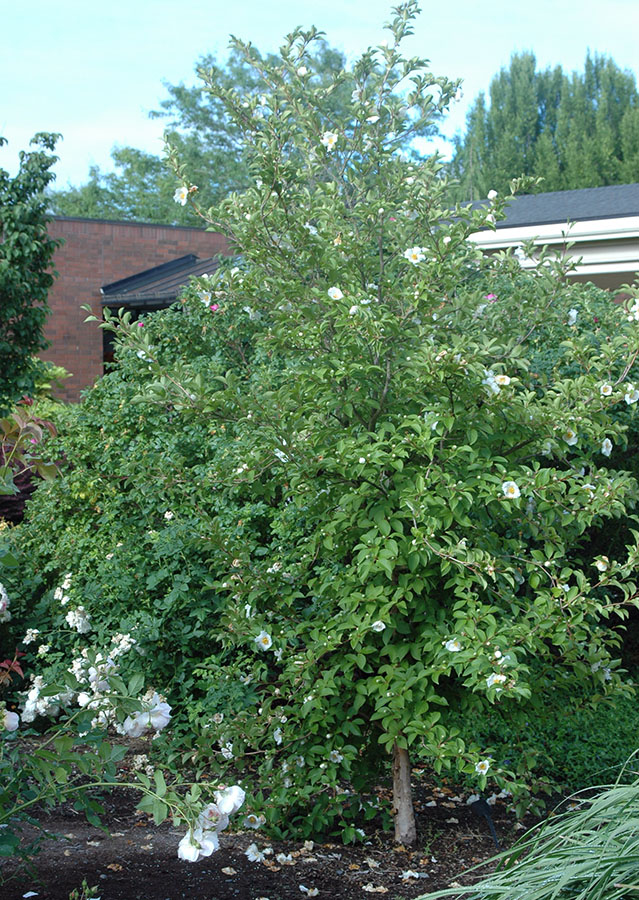
Stewartia is a deciduous tree with a naturally pyramidal form that becomes more refined as it matures, typically developing multiple trunks that add architectural interest to any landscape. In summer, it produces delicate white flowers with prominent golden-yellow stamens and slightly ruffled petals—they’re reminiscent of camellias, which makes sense given its scientific name. The glossy, dark green foliage is equally attractive, turning shades of deep crimson, orange, and purple in fall with the kind of reliability that makes you forget to be surprised by it year after year.
What really sets Stewartia apart, though, is its bark. As the tree matures, the smooth bark naturally exfoliates to reveal a patchwork of tan, cream, and cinnamon tones underneath. This happens year-round but becomes especially dramatic in winter when you can actually see the tree’s skeleton and appreciate its sculptural form against a snowy Connecticut landscape.
Growing it in your garden
Stewartia is happiest in locations where it receives dappled shade or morning sun with afternoon protection—think of it as preferring the kind of light you’d find on the eastern side of a building or beneath the high canopy of taller deciduous trees. This is particularly valuable in New England, where our summer sun can be intense. The tree appreciates soil that’s rich, well-draining, and on the acidic side, similar to what you’d provide for rhododendrons or azaleas. It’s not fussy about soil depth, but it does appreciate consistent moisture during its establishment period (roughly the first two years after planting).
The good news: Stewartia is a low-maintenance choice once established. It doesn’t require heavy pruning and naturally develops its elegant form. Plant it where you can enjoy the winter bark—perhaps visible from a favorite window or along a path where you’ll walk past it regularly.
Through the seasons
Spring arrives with fresh, medium-green foliage that emerges on a structured branch framework. Summer is when Stewartia truly performs, with flowers appearing from June through August in succession, keeping your garden looking dressed up for an extended period. The blooming season is remarkably long for Connecticut, giving you weeks of elegant white flowers against glossy foliage.
Fall color is a guaranteed show-stopper—the foliage transforms into rich jewel tones that make other trees look ordinary. Winter is when its sculptural bark becomes the main attraction; this is when you’ll find yourself drawn to the garden even on the coldest days, admiring the exfoliating pattern and the way snow clings to the multiple trunks.
Where it shines
Stewartia is an exceptional choice for the outer edge of woodland gardens, where it can serve as a graceful understory tree. It works beautifully as a specimen tree—somewhere you can see it from multiple angles and appreciate its form through all seasons. It’s also perfect for gardens where you want year-round visual interest without relying on evergreens. Use it to anchor a garden bed or position it where its winter bark can be backlit by morning sun.
In New England gardens, Stewartia solves the problem of wanting something refined and special that isn’t a typical shade tree. It’s far less common than maples or birches, which means it adds genuine interest and sophistication to your landscape.
Perfect companions
Stewartia pairs beautifully with shade-loving perennials like hellebores, astilbes, and hostas. Underplant it with spring bulbs—snowdrops, scillas, and early crocuses will put on their show before the Stewartia fully leafs out. Nearby rhododendrons and mountain laurels share the same soil preferences and aesthetic, creating a cohesive woodland garden feel. For contrast, add some fine-textured ferns or the silvery foliage of lamium.
Care tips
Water deeply and regularly during the first two growing seasons to help your Stewartia establish a strong root system. Once established, it’s fairly drought-tolerant but appreciates consistent moisture during hot, dry Connecticut summers. A 2-3 inch layer of mulch around the base keeps roots cool and maintains moisture—just keep mulch a few inches away from the trunk itself.
Prune only to remove damaged branches or to shape when the tree is young. Most of the time, Stewartia does better if you simply let it grow into its natural form. Fertilizing is generally unnecessary if you’ve prepared the planting hole well.
Quick facts
- Hardiness Zone: 5-8 (thrives in Connecticut)
- Mature Height & Spread: 15-20 feet tall and 10-15 feet wide
- Bloom Season: June through August
- Light Requirements: Dappled shade to morning sun
- Water Needs: Regular moisture; drought-tolerant once established
- Available at: Both our retail and wholesale locations