
Description

STYRAX JAPONICA
Imagine a tree that brings the delicate magic of a Japanese garden right into your Connecticut landscape. The Japanese Snowbell does exactly that—it’s a refined, graceful small tree that stops people mid-stride with its stunning bell-shaped white flowers dangling like ornaments from horizontal branches. This isn’t just another flowering tree; it’s a conversation starter, a focal point, and proof that you don’t need a massive oak to make a real impact on your property.
What it looks like
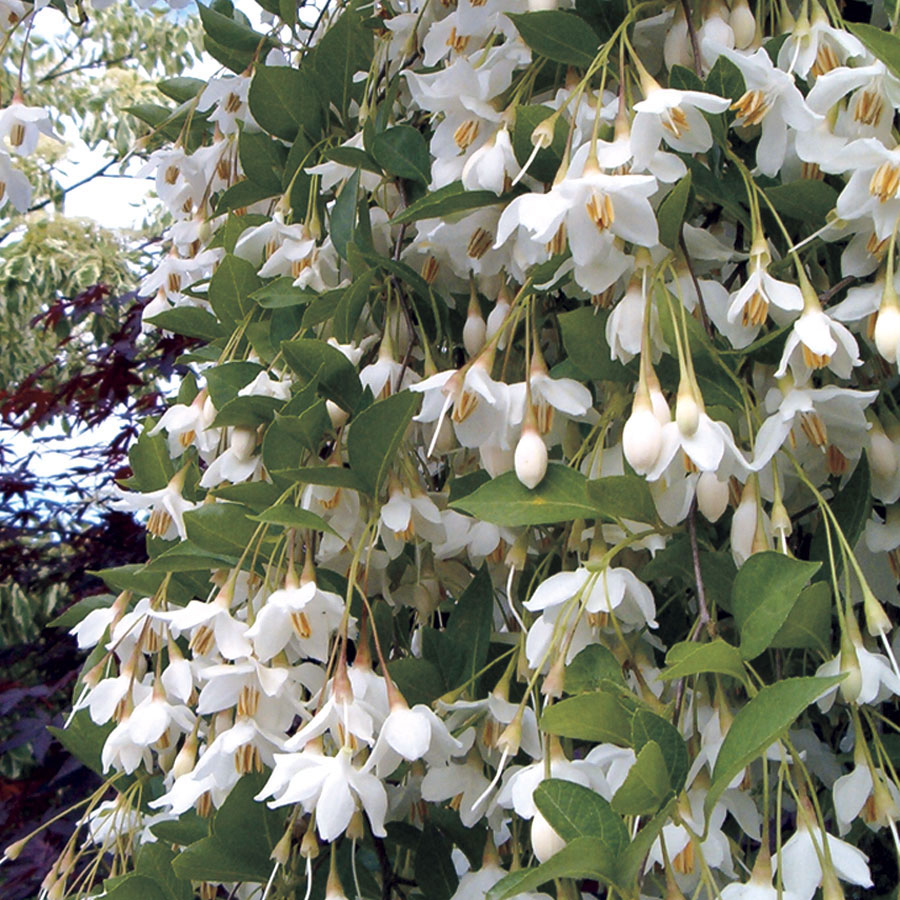
STYRAX JAPONICA is an elegant, deciduous small tree with a naturally spreading habit and a somewhat horizontal branching pattern that becomes more pronounced as it matures. The foliage is fine-textured and a lovely medium green that doesn’t compete for attention—it knows its job is to support the real stars. Those stars arrive in late spring: small, waxy white bell-shaped flowers that hang in delicate clusters below the branches, creating an almost ethereal effect, as if the tree is decorated with tiny porcelain bells. The flowers are lightly fragrant, adding another layer of charm. In autumn, the leaves turn a soft yellow before dropping, and the bark develops an interesting ridged pattern that provides winter interest.
Growing it in your garden
Here’s what makes STYRAX JAPONICA such a gem for New England gardeners: it’s tougher than it looks. While it appreciates a location with afternoon shade and protection from harsh winds, it adapts well to the variable Connecticut climate when given the right spot. It prefers soil that’s slightly acidic and doesn’t dry out completely, though it’s not a swamp-lover either—think of it as wanting consistent moisture, not soggy feet. Plant it where you can enjoy those flowers from below, looking up at the dangling blooms; this is a tree that rewards you for positioning it thoughtfully. It typically doesn’t need staking or major structural pruning if planted in a sheltered location.
Through the seasons
Spring is showtime. Just as the leaves are emerging, the flowers appear in abundance—usually in May or early June, depending on your exact location in Connecticut. It’s a relatively modest display compared to some ornamental trees, but that’s precisely its appeal; it whispers rather than shouts. Summer sees the tree settle into a refined green presence, happy in partial shade and adding vertical interest to the garden. Fall brings that soft golden transition, and by winter, you’ve got the architectural bones of the tree on display—its horizontal branching pattern is actually quite striking when bare. The tree maintains a sense of quiet elegance year-round.
Where it shines
The Japanese Snowbell is perfect as a specimen plant in a woodland garden, positioned where morning sun washes across those drooping flowers. It’s exceptional near a patio or seating area where you can enjoy the subtle fragrance. Use it in a mixed shade border, where its fine texture provides a sophisticated contrast to bolder foliage plants. It’s also lovely near a water feature—both the tree and reflections enhance each other. In New England, it thrives as a sheltered understory tree beneath taller native oaks or maples, enjoying dappled shade while still receiving enough light to flower generously.
Perfect companions
Plant STYRAX JAPONICA alongside shade-tolerant companions like hostas, hellebores, and coral bells, which echo its refined aesthetic. Understory shrubs like oakleaf hydrangea (HYDRANGEA QUERCIFOLIA) or mountain laurel (KALMIA LATIFOLIA) create beautiful layering. For groundcover, try native Connecticut ferns or sweet woodruff (GALLIUM ODORATUM), which loves the same dappled shade. Bloodroot (SANGUINARIA CANADENSIS) and trillium add spring interest before the tree fully leafs out. The key is choosing companions that appreciate partial shade and won’t compete for the spotlight—this tree deserves supporting players, not rivals.
Care tips
Water regularly during the first year and during dry spells thereafter, especially as the tree gets established. A 2-3 inch layer of mulch keeps roots cool and maintains moisture. Prune only to remove dead wood or crossing branches—this tree has a naturally attractive form that doesn’t need aggressive reshaping. In Connecticut’s climate, STYRAX JAPONICA rarely needs pest management, and diseases are minimal when air circulation is good. Avoid heavy fertilizing; it prefers lean to moderate soil. Patience is key with this tree; it’s not the fastest grower, but it’s worth the wait. Once established, it’s remarkably low-maintenance and will reward you for years.
Quick facts
- Hardiness Zone: 5-8 (thrives throughout Connecticut)
- Mature Height & Spread: 20-30 feet tall, 15-25 feet wide
- Bloom Season: Late May through early June
- Light Requirements: Partial shade to filtered sunlight
- Water Needs: Moderate; prefers consistent moisture without waterlogging
- Available at: Both our retail and wholesale locations