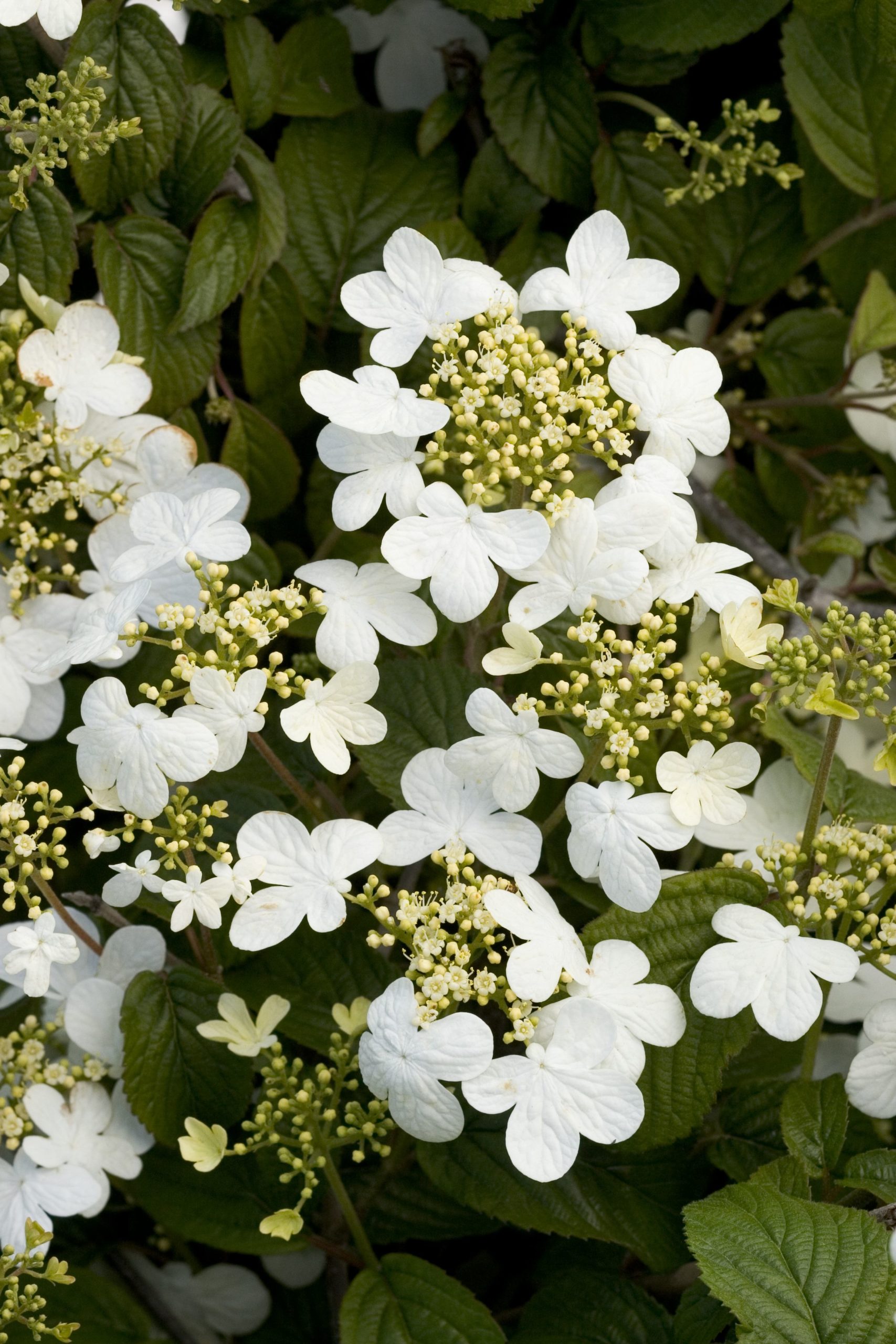
Summer Snowflake Viburnum

VIBURNUM PLICATUM TOMENTOSUM ‘SUMMER SNOWFLAKE’

What if one plant could deliver the elegance of a flowering cherry, the reliability of a Connecticut native, and blooms that refuse to stop all summer long? Meet Summer Snowflake Viburnum—a show-stopping deciduous shrub that shatters the myth that viburnums are spring-only bloomers. While many of its cousins put on their floral display in May and call it done, this refined cultivar keeps producing those spectacular white lacecap flowers from early summer straight through to fall. It’s the kind of plant that makes you wonder why every garden doesn’t have one.

What it looks like

Summer Snowflake is an architectural beauty with a distinctly horizontal branching pattern that creates a layered, almost sculptural silhouette. The dark green, finely textured foliage provides a sophisticated backdrop for its true star: pristine white flowers arranged in flat-topped clusters that practically glow in the garden. These aren’t the heavy panicles you might expect—they’re delicate and refined, with a lacy appearance that seems almost too elegant to be happening in your own backyard. In autumn, the leaves transition to deep burgundy tones before dropping, revealing an attractive branching structure that adds winter interest. The mature plant develops a graceful, somewhat spreading habit that looks equally at home in a contemporary garden or a more traditional landscape.

Growing it in your garden

Here’s what makes Summer Snowflake such a joy to grow: it’s unfussy in a way that feels almost suspicious. This viburnum thrives in full sun to partial shade, adapting beautifully to the variable light conditions of a typical Connecticut garden. It prefers consistently moist, well-draining soil but shows admirable resilience once established. Plant it in a location where you’ll walk by frequently—you’ll want to enjoy those flowers up close—and give it enough room to develop its natural spreading form. Unlike some fussier ornamentals, Summer Snowflake handles the humidity and temperature swings of New England growing conditions without drama. It’s not prone to the pest and disease problems that plague some viburnums, which means you’re planting something genuinely easy.

Through the seasons

Spring brings fresh green foliage and the anticipation of what’s coming. Early summer arrives with the first flush of white flowers, and here’s where the magic happens—unlike typical viburnums that finish by mid-June, Summer Snowflake keeps producing new flower clusters through July, August, and into September. Each bloom cycle lasts for weeks, so you’re never without flowers. The repeat blooming makes it a workhorse in the summer garden when flowering shrubs are in short supply. Fall transforms the foliage into deep wine-red hues before the leaves drop, revealing an elegant branching structure that looks particularly handsome when backlit by low autumn light. Winter is quiet but not boring—the architectural form and persistent branches create subtle garden structure throughout the cold months.

Where it shines

Summer Snowflake excels as a specimen plant where its distinctive horizontal branching and extended bloom season can be fully appreciated. It’s perfect as a focal point at the back of a border or positioned where evening light can showcase its luminous white flowers. Use it to anchor a shrub border, position it near a seating area where you can enjoy the view from multiple angles, or plant it as a standalone accent in a lawn. The repeat blooming makes it invaluable for gardeners seeking continuous color without deadheading or excessive fussing. It’s equally at home in a naturalistic woodland edge planting or a more formal landscape design—its refined character works with virtually any aesthetic.

Perfect companions

Summer Snowflake pairs beautifully with shade-tolerant perennials like astilbe and coral bells, which echo its delicate sensibility. Plant it near dark-foliaged shrubs such as burgundy Japanese maples—the contrast between their deep tones and the viburnum’s white flowers is striking. Spring bulbs like alliums work wonderfully at its base, providing earlier color before the viburnum takes over. For a more contemporary feel, combine it with ornamental grasses that move in the breeze. It also plays well with other New England stalwarts like native azaleas and dogwoods, creating a sophisticated layered planting.

Care tips

Water regularly during the first year to establish a deep root system, then the plant becomes quite drought-tolerant. Minimal pruning is needed—it has a naturally attractive form. If you want to shape it slightly, do any necessary pruning right after the final bloom flush in late summer, so you won’t sacrifice next year’s flowers. Watch for scale insects (uncommon but possible), and maintain good air circulation to prevent fungal issues in humid New England summers. A light mulch layer keeps roots cool and conserves moisture. That’s really it—this plant doesn’t ask for much.

Quick facts

  • Hardiness Zone: 5-8
  • Mature Height & Spread: 8-10 feet tall and wide
  • Bloom Season: Early summer through fall
  • Light Requirements: Full sun to partial shade
  • Water Needs: Moderate; prefers consistently moist, well-draining soil
  • Available at: Both our retail and wholesale locations

Summer Snowflake Viburnum

Category:

Blooming very heavily in Spring, turns to sporadic blooms throughout the Summer.

Zoning: 5-8
Mature Height and Spread: 3-5’

Description

Summer Snowflake Viburnum

VIBURNUM PLICATUM TOMENTOSUM ‘SUMMER SNOWFLAKE’

What if one plant could deliver the elegance of a flowering cherry, the reliability of a Connecticut native, and blooms that refuse to stop all summer long? Meet Summer Snowflake Viburnum—a show-stopping deciduous shrub that shatters the myth that viburnums are spring-only bloomers. While many of its cousins put on their floral display in May and call it done, this refined cultivar keeps producing those spectacular white lacecap flowers from early summer straight through to fall. It’s the kind of plant that makes you wonder why every garden doesn’t have one.

What it looks like

Summer Snowflake is an architectural beauty with a distinctly horizontal branching pattern that creates a layered, almost sculptural silhouette. The dark green, finely textured foliage provides a sophisticated backdrop for its true star: pristine white flowers arranged in flat-topped clusters that practically glow in the garden. These aren’t the heavy panicles you might expect—they’re delicate and refined, with a lacy appearance that seems almost too elegant to be happening in your own backyard. In autumn, the leaves transition to deep burgundy tones before dropping, revealing an attractive branching structure that adds winter interest. The mature plant develops a graceful, somewhat spreading habit that looks equally at home in a contemporary garden or a more traditional landscape.

Growing it in your garden

Here’s what makes Summer Snowflake such a joy to grow: it’s unfussy in a way that feels almost suspicious. This viburnum thrives in full sun to partial shade, adapting beautifully to the variable light conditions of a typical Connecticut garden. It prefers consistently moist, well-draining soil but shows admirable resilience once established. Plant it in a location where you’ll walk by frequently—you’ll want to enjoy those flowers up close—and give it enough room to develop its natural spreading form. Unlike some fussier ornamentals, Summer Snowflake handles the humidity and temperature swings of New England growing conditions without drama. It’s not prone to the pest and disease problems that plague some viburnums, which means you’re planting something genuinely easy.

Through the seasons

Spring brings fresh green foliage and the anticipation of what’s coming. Early summer arrives with the first flush of white flowers, and here’s where the magic happens—unlike typical viburnums that finish by mid-June, Summer Snowflake keeps producing new flower clusters through July, August, and into September. Each bloom cycle lasts for weeks, so you’re never without flowers. The repeat blooming makes it a workhorse in the summer garden when flowering shrubs are in short supply. Fall transforms the foliage into deep wine-red hues before the leaves drop, revealing an elegant branching structure that looks particularly handsome when backlit by low autumn light. Winter is quiet but not boring—the architectural form and persistent branches create subtle garden structure throughout the cold months.

Where it shines

Summer Snowflake excels as a specimen plant where its distinctive horizontal branching and extended bloom season can be fully appreciated. It’s perfect as a focal point at the back of a border or positioned where evening light can showcase its luminous white flowers. Use it to anchor a shrub border, position it near a seating area where you can enjoy the view from multiple angles, or plant it as a standalone accent in a lawn. The repeat blooming makes it invaluable for gardeners seeking continuous color without deadheading or excessive fussing. It’s equally at home in a naturalistic woodland edge planting or a more formal landscape design—its refined character works with virtually any aesthetic.

Perfect companions

Summer Snowflake pairs beautifully with shade-tolerant perennials like astilbe and coral bells, which echo its delicate sensibility. Plant it near dark-foliaged shrubs such as burgundy Japanese maples—the contrast between their deep tones and the viburnum’s white flowers is striking. Spring bulbs like alliums work wonderfully at its base, providing earlier color before the viburnum takes over. For a more contemporary feel, combine it with ornamental grasses that move in the breeze. It also plays well with other New England stalwarts like native azaleas and dogwoods, creating a sophisticated layered planting.

Care tips

Water regularly during the first year to establish a deep root system, then the plant becomes quite drought-tolerant. Minimal pruning is needed—it has a naturally attractive form. If you want to shape it slightly, do any necessary pruning right after the final bloom flush in late summer, so you won’t sacrifice next year’s flowers. Watch for scale insects (uncommon but possible), and maintain good air circulation to prevent fungal issues in humid New England summers. A light mulch layer keeps roots cool and conserves moisture. That’s really it—this plant doesn’t ask for much.

Quick facts

  • Hardiness Zone: 5-8
  • Mature Height & Spread: 8-10 feet tall and wide
  • Bloom Season: Early summer through fall
  • Light Requirements: Full sun to partial shade
  • Water Needs: Moderate; prefers consistently moist, well-draining soil
  • Available at: Both our retail and wholesale locations