
Description
QUERCUS BICOLOR
If you’ve been searching for an oak that actually thrives in Connecticut’s tricky wet spots—those areas where most trees either rot or resent you—meet your answer. The Swamp White Oak is a native powerhouse that laughs at poor drainage, handles both boggy springs and temporary flooding with equal grace, and grows into one of the most architecturally stunning trees your property will ever display. This isn’t a tree you plant because you have nowhere else to put it. This is a tree you plant because you want something genuinely magnificent.
What it looks like
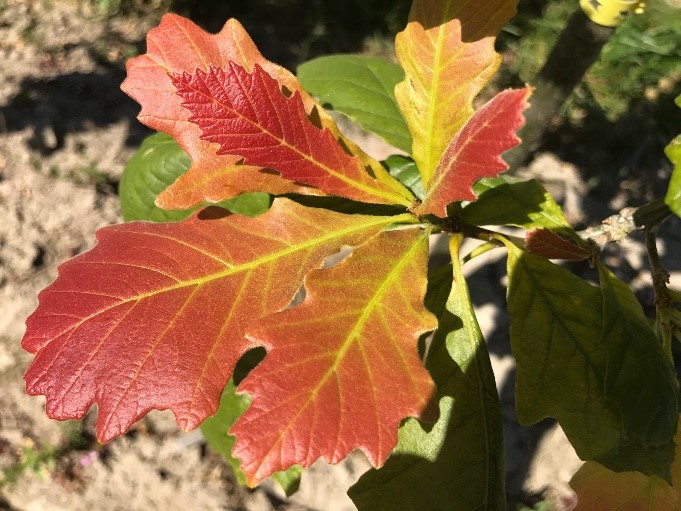
The Swamp White Oak is an architectural work of art. Its broad, spreading crown grows almost as wide as it is tall, creating a generous canopy that feels both open and protective. The leaves are deeply lobed—wider and more generously cut than many other oaks—with an appealing fuzzy undersurface that catches the light when the wind moves through them. The bark develops a handsome, shaggy character with age, adding winter interest that keeps your landscape engaging even when everything else has gone dormant.
In fall, the foliage puts on a show that ranges from deep burgundy to russet-brown, holding onto those warm tones longer than many oaks. The acorns sit in distinctive fringed cups, a charming detail that makes this oak instantly recognizable to anyone who knows their trees.
Growing it in your garden
Here’s what makes the Swamp White Oak particularly valuable in New England: it’s one of the few oaks that genuinely wants to grow in moist or even wet soil. While it certainly tolerates average conditions, it’s the tree you reach for when conventional wisdom says “nothing will grow there.” That said, it’s adaptable enough to handle drier sites too, making it remarkably flexible for a tree with such specific strengths.
Plant it in spring or fall, giving the root system time to establish before the heat of summer or the intensity of New England winter. Dig a hole slightly wider than the root ball and backfill with native soil amended with some compost. Swamp White Oak prefers acidic to neutral soil—exactly what much of Connecticut offers naturally—so you’re usually not fighting your native conditions here.
This oak grows at a moderate to somewhat slow pace, which means patience is required, but the long-term payoff is substantial. You’re planting for the decades ahead, which is exactly how oak trees deserve to be considered.
Through the seasons
Spring arrives with that particular fresh green that oaks do so well, with new leaves emerging in copper tones before they mature to rich green. Summer is when this tree truly shines—the broad canopy provides deep, dappled shade, and the foliage has a beautiful texture that makes you want to sit beneath it with a book.
Fall is the showstopper season, with those rich burgundy and rust tones creating genuine landscape drama. Unlike some oaks that drop their leaves early, the Swamp White Oak holds onto its color well into November, sometimes even December in milder years. Winter reveals the tree’s wonderful branching structure and that handsome shaggy bark—far from dormant, this is an elegant skeleton that anchors your landscape.
Where it shines
The Swamp White Oak is perfect for properties with natural water management challenges—the low-lying area that stays damp in spring, the clay soil that drains slowly, the spot where water collects after heavy rain. But beyond its practical excellence in tough spots, it’s equally at home as a specimen tree in a standard landscape. Plant it where its mature form can develop fully, and give it room to show off that broad, spreading canopy.
It’s wonderful as a standalone shade tree near the house, along property lines, or in open lawn areas where you want to create a sense of permanence and presence. This is a tree that looks better and better over time, gaining character and gravitas with age.
Perfect companions
Underplant your Swamp White Oak with native shade tolerators like ferns, wild ginger, and hellebores. The dappled shade it creates is ideal for understory plants. Native shrubs like Winterberry Holly and Viburnum thrive in the company of oaks. If you’re planting in a moist site, Acer rubrum (Red Maple) makes an excellent companion, as do native azaleas and rhododendrons.
Care tips
Swamp White Oak is remarkably low-maintenance once established. Water young trees regularly during their first two growing seasons, then let their deep roots do the work. Prune only to remove dead or crossing branches—this tree wants minimal interference. Oak wilt isn’t a significant concern in Connecticut, but standard practice of avoiding pruning during peak disease season (May through August) is still wise. Let fallen leaves remain as mulch to nurture soil health and the forest ecosystem this oak supports.
Quick facts
- Hardiness Zone: 4-8
- Mature Height & Spread: 50-60 feet tall and equally wide
- Bloom Season: Spring (inconspicuous flowers; acorns mature in fall)
- Light Requirements: Full sun to part shade
- Water Needs: Tolerates wet soil and periodic flooding; adapts to average moisture
- Available at: Both our retail and wholesale locations.