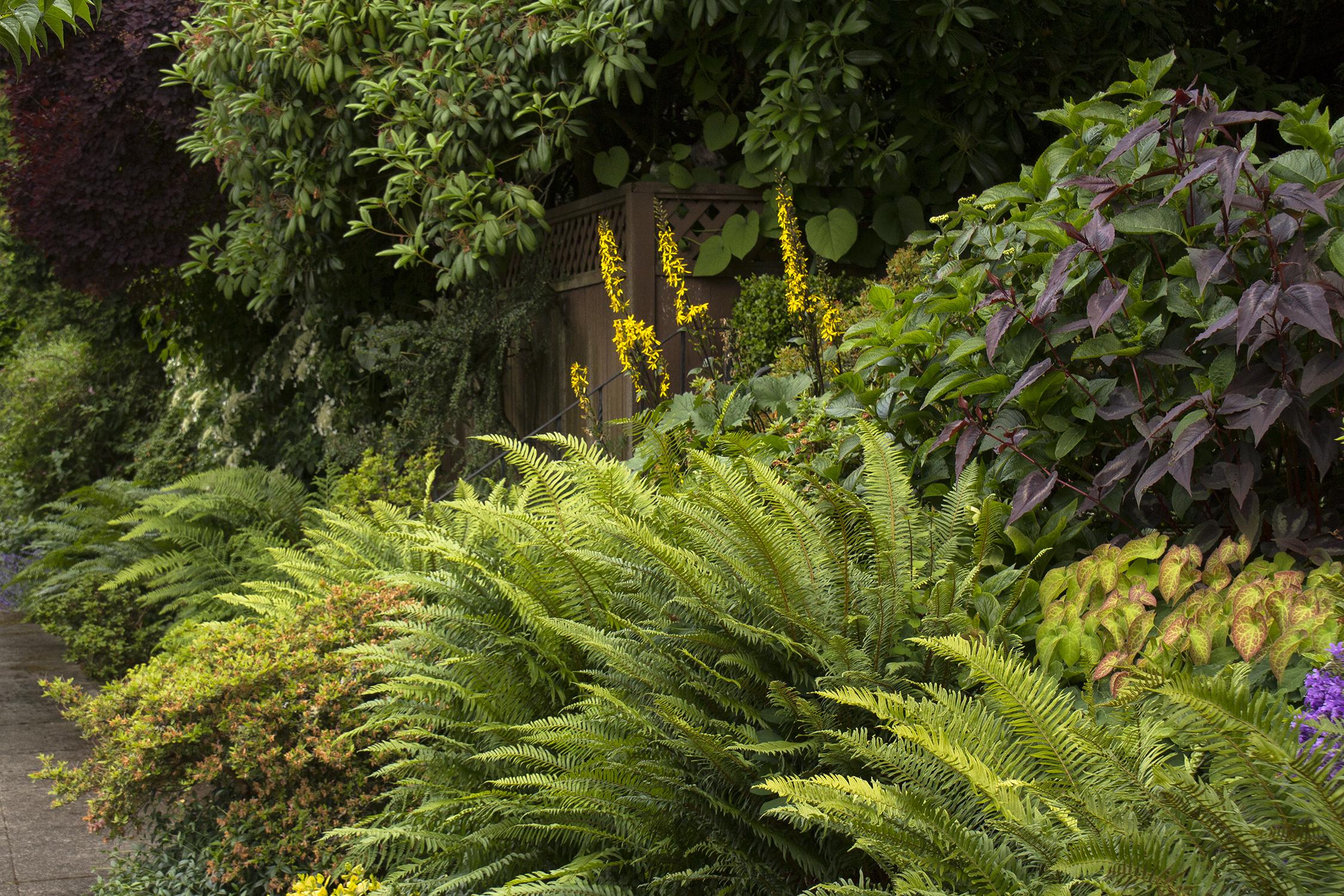
Sword Fern

POLYSTICHUM MUNITUM

If you’ve been searching for something that handles wet soil, deep shade, and Connecticut winters without complaint, while asking almost nothing in return, the Sword Fern might just become your garden’s most reliable friend. This Pacific Northwest native has quietly become a favorite among savvy New England gardeners who understand that a beautiful shade garden doesn’t require fussy plants or constant intervention. With its architectural fronds standing at attention like dark green swords, POLYSTICHUM MUNITUM brings structure and presence to spaces where many other plants struggle to survive.

What it looks like

The Sword Fern earned its common name honestly. Each frond is long, narrow, and distinctly pointed, creating a dramatic upright form that adds vertical interest to any shaded corner. The fronds emerge a slightly lighter green before deepening into a rich, glossy dark green that seems to glow in low light. Unlike some ferns that collapse into formless mounds, the Sword Fern maintains its dignified posture throughout the season. New fronds unfurl gracefully from the center of the plant, and the overall effect is one of composed elegance rather than wild abandon. In winter, when many shade plants have retreated underground, the Sword Fern remains evergreen, its dark fronds a welcome sign of life in the dormant season.

Growing it in your garden

Here’s what makes the Sword Fern so valuable to Connecticut gardeners: it genuinely thrives in conditions that defeat lesser plants. It prefers consistent moisture and rich, well-draining soil amended with organic matter—the kind of woodland soil you find under native trees. Give it a shaded location, ideally where it receives dappled light or bright indirect conditions, and it will reward you with vigorous growth and remarkable longevity. Once established, the Sword Fern is remarkably independent, asking only that you maintain consistent moisture during its first growing season. After that, it handles dry periods with surprising resilience, though it always looks its best with regular moisture.

The plant spreads slowly through underground rhizomes, gradually expanding to fill its designated space without becoming invasive. This measured pace means you can confidently place it knowing it won’t overtake its companions or require constant division and maintenance.

Through the seasons

Spring brings the pleasure of watching new fronds unfurl week by week, a slow-motion performance that reminds you nature doesn’t rush. By early summer, the plant reaches its full, glorious proportions. Summer is when the Sword Fern truly shines—it maintains its composure while hostas wilt and other shade plants flag in the heat. Autumn brings no dramatic color change (ferns simply don’t do that), but the deep green darkens slightly, creating a richer presence in the cooling season. Winter is perhaps most impressive: while your deciduous shade plants stand bare and skeletal, the Sword Fern remains proudly evergreen, its fronds dusted with snow or rain, creating a striking focal point in the winter garden.

Where it shines

The Sword Fern is a shade garden MVP. Plant it under established trees, along north-facing walls, or in those perpetually moist spots where nothing else performs well. It’s excellent for stabilizing slopes and banks where its rhizomatous growth helps prevent erosion. Use it to create a sense of depth in shade plantings, planting it toward the back of borders where its height adds dimension without blocking views of shorter plants. Paired with other shade lovers in a mixed border, the Sword Fern’s upright form provides essential contrast to spreading groundcovers and rounded companions.

Perfect companions

The Sword Fern plays beautifully with other shade plants that share its love of moisture. Pair it with hostas for a study in foliage contrasts—the fern’s vertical lines against the hosta’s broad mounds. Christmas ferns (POLYSTICHUM ACROSTICHOIDES, a native cousin) make excellent companions, creating a fern tapestry. Coral bells add colorful foliage interest at ground level. Hellebores bloom nearby in late winter, bridging the gap before spring ephemerals emerge. Bleeding hearts, astilbes, and foamflowers all appreciate the same moist, shaded conditions.

Care tips

Once established, the Sword Fern requires minimal maintenance. In spring, you can gently remove any damaged fronds from the previous season. Mulch lightly with organic matter to maintain consistent moisture and temperature. Unlike many ferns, the Sword Fern handles Connecticut’s winters without protection or fussing. Its evergreen nature means you never deal with the messy cutback ritual required by deciduous plants. Pests and diseases rarely trouble it, making it a genuinely low-maintenance choice for busy gardeners.

Quick facts

  • Hardiness Zone: 5–8 (reliably hardy throughout Connecticut)
  • Mature Height & Spread: 24–36 inches tall and wide
  • Bloom Season: N/A (grown for foliage; produces spores on frond undersides)
  • Light Requirements: Partial to full shade
  • Water Needs: Consistent moisture; tolerates occasional dry periods once established
  • Available at: Both our retail and wholesale locations

Sword Fern

One of the most robust and reliable, this hardy native male fern offers superb texture with glossy, leathery, toothed, dark green foliage. Vigorous evergreen clumps are formed by many long fronds; up to four feet long in cool, shady sites. Keeps up appearances even in warm, arid climates, though plants will be more compact.

Pot Size (gallons), Height: #1

Description

Sword Fern

POLYSTICHUM MUNITUM

If you’ve been searching for something that handles wet soil, deep shade, and Connecticut winters without complaint, while asking almost nothing in return, the Sword Fern might just become your garden’s most reliable friend. This Pacific Northwest native has quietly become a favorite among savvy New England gardeners who understand that a beautiful shade garden doesn’t require fussy plants or constant intervention. With its architectural fronds standing at attention like dark green swords, POLYSTICHUM MUNITUM brings structure and presence to spaces where many other plants struggle to survive.

What it looks like

The Sword Fern earned its common name honestly. Each frond is long, narrow, and distinctly pointed, creating a dramatic upright form that adds vertical interest to any shaded corner. The fronds emerge a slightly lighter green before deepening into a rich, glossy dark green that seems to glow in low light. Unlike some ferns that collapse into formless mounds, the Sword Fern maintains its dignified posture throughout the season. New fronds unfurl gracefully from the center of the plant, and the overall effect is one of composed elegance rather than wild abandon. In winter, when many shade plants have retreated underground, the Sword Fern remains evergreen, its dark fronds a welcome sign of life in the dormant season.

Growing it in your garden

Here’s what makes the Sword Fern so valuable to Connecticut gardeners: it genuinely thrives in conditions that defeat lesser plants. It prefers consistent moisture and rich, well-draining soil amended with organic matter—the kind of woodland soil you find under native trees. Give it a shaded location, ideally where it receives dappled light or bright indirect conditions, and it will reward you with vigorous growth and remarkable longevity. Once established, the Sword Fern is remarkably independent, asking only that you maintain consistent moisture during its first growing season. After that, it handles dry periods with surprising resilience, though it always looks its best with regular moisture.

The plant spreads slowly through underground rhizomes, gradually expanding to fill its designated space without becoming invasive. This measured pace means you can confidently place it knowing it won’t overtake its companions or require constant division and maintenance.

Through the seasons

Spring brings the pleasure of watching new fronds unfurl week by week, a slow-motion performance that reminds you nature doesn’t rush. By early summer, the plant reaches its full, glorious proportions. Summer is when the Sword Fern truly shines—it maintains its composure while hostas wilt and other shade plants flag in the heat. Autumn brings no dramatic color change (ferns simply don’t do that), but the deep green darkens slightly, creating a richer presence in the cooling season. Winter is perhaps most impressive: while your deciduous shade plants stand bare and skeletal, the Sword Fern remains proudly evergreen, its fronds dusted with snow or rain, creating a striking focal point in the winter garden.

Where it shines

The Sword Fern is a shade garden MVP. Plant it under established trees, along north-facing walls, or in those perpetually moist spots where nothing else performs well. It’s excellent for stabilizing slopes and banks where its rhizomatous growth helps prevent erosion. Use it to create a sense of depth in shade plantings, planting it toward the back of borders where its height adds dimension without blocking views of shorter plants. Paired with other shade lovers in a mixed border, the Sword Fern’s upright form provides essential contrast to spreading groundcovers and rounded companions.

Perfect companions

The Sword Fern plays beautifully with other shade plants that share its love of moisture. Pair it with hostas for a study in foliage contrasts—the fern’s vertical lines against the hosta’s broad mounds. Christmas ferns (POLYSTICHUM ACROSTICHOIDES, a native cousin) make excellent companions, creating a fern tapestry. Coral bells add colorful foliage interest at ground level. Hellebores bloom nearby in late winter, bridging the gap before spring ephemerals emerge. Bleeding hearts, astilbes, and foamflowers all appreciate the same moist, shaded conditions.

Care tips

Once established, the Sword Fern requires minimal maintenance. In spring, you can gently remove any damaged fronds from the previous season. Mulch lightly with organic matter to maintain consistent moisture and temperature. Unlike many ferns, the Sword Fern handles Connecticut’s winters without protection or fussing. Its evergreen nature means you never deal with the messy cutback ritual required by deciduous plants. Pests and diseases rarely trouble it, making it a genuinely low-maintenance choice for busy gardeners.

Quick facts

  • Hardiness Zone: 5–8 (reliably hardy throughout Connecticut)
  • Mature Height & Spread: 24–36 inches tall and wide
  • Bloom Season: N/A (grown for foliage; produces spores on frond undersides)
  • Light Requirements: Partial to full shade
  • Water Needs: Consistent moisture; tolerates occasional dry periods once established
  • Available at: Both our retail and wholesale locations