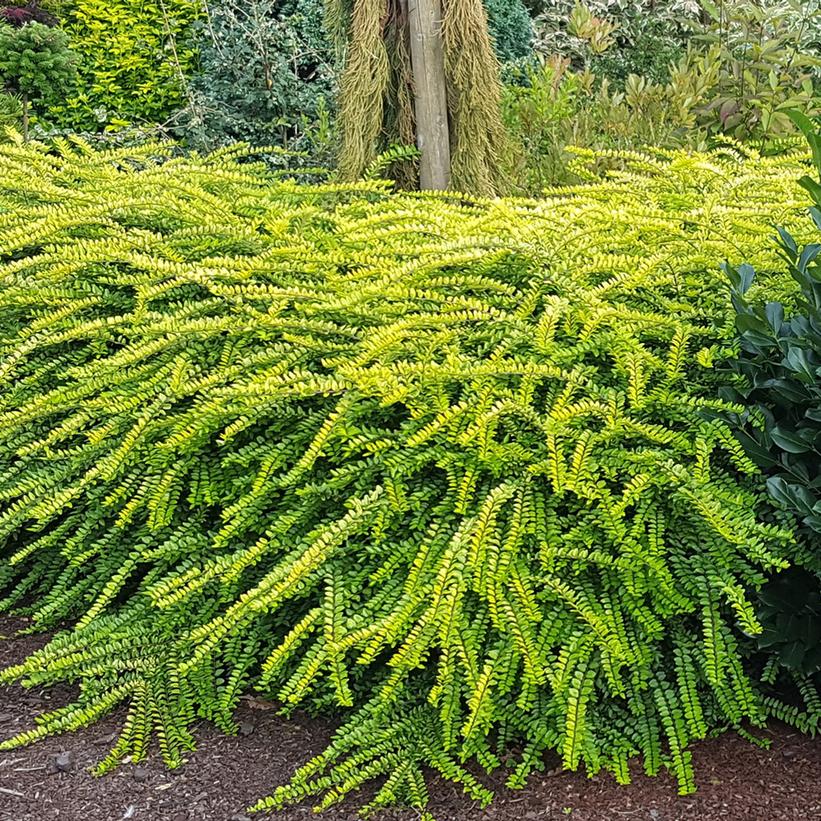
Thunderbolt Honeysuckle

LONICERA X ‘THUNDERBOLT’

If you’ve been searching for a vine that actually performs in New England—one that doesn’t just survive our cold winters but practically celebrates them—meet your answer. Thunderbolt Honeysuckle is that rare combination of tough-as-nails hardiness and undeniable showiness. This is a plant that doesn’t apologize for being beautiful. It climbs, it blooms prolifically, and it brings nectar-hungry hummingbirds to your garden like you’ve installed a five-star restaurant on a trellis.

What it looks like

Thunderbolt is a deciduous to semi-evergreen vine with a vibrant, almost electric personality that matches its name. The tubular flowers are the real drama here—they emerge in shades of deep burgundy-red on the outside with golden-yellow throats that seem to glow when the light hits them right. The two-tone effect is striking, especially when you’ve got a whole vine covered in these blooms. The foliage is a clean, fresh green that provides a perfect backdrop to the flowers without stealing the show. As a vigorous climber, it can reach considerable heights when given support, creating a substantial screen or specimen with real presence in the garden.

Growing it in your garden

Here’s where Thunderbolt proves its Connecticut credentials. Plant it in full sun to partial shade (full sun gives you the best blooms, though it tolerates afternoon shade). The vine is remarkably flexible about soil—it doesn’t demand rich, pampered conditions. Well-draining soil keeps it happiest, but it’s not fussy. It climbs vigorously, so give it something sturdy to grab onto: a strong trellis, arbor, fence, or pergola. Plant in spring for best establishment, and give it consistent moisture during that first growing season. Once established, it settles in and becomes quite self-sufficient, which is exactly what you want from a New England vine.

Through the seasons

Spring arrives, and Thunderbolt wakes up with purpose. The foliage emerges fresh and eager. By early summer, the first flowers appear—usually by June—and they keep coming in waves through midsummer and into early fall. Some seasons you’ll get another flush of blooms as the weather cools, which is a delightful bonus. The flowers attract hummingbirds and bees like almost nothing else; watching these visitors work the vine is entertainment in itself. Come winter, if your plant holds some foliage, the evergreen characteristics are nice; if it drops everything, that’s fine too. Either way, it comes roaring back when warmth returns.

Where it shines

Thunderbolt is perfect on a sunny south or west-facing fence where you want vertical interest and color from midsummer onward. It’s excellent for creating living screens that are also working ecosystems—the flowers feed hummingbirds, songbirds eat the berries that follow. Train it on a pergola over a patio where you can enjoy the blooms and the hummingbird activity right outside your door. It also works beautifully on mailbox posts or accent arbors where you want a focal point that actually earns its space. In smaller gardens, you can keep it pruned and more manageable; in larger spaces, let it ramble and celebrate its vigor.

Perfect companions

Plant Thunderbolt where its warm tones play well with cooler companions. Clematis vines with purple or blue flowers create a stunning contrast. The silvery foliage of artemisia at the base of the vine complements the burgundy blooms beautifully. Russian sage (PEROVSKIA) with its airy purple flowers and gray foliage is an inspired pairing. At ground level, plant sedums and ornamental grasses that echo the vine’s vigor and energy without competing for attention.

Care tips

Prune Thunderbolt in late winter or early spring before growth begins. You can cut it back fairly aggressively—it responds well and blooms on new growth. During the growing season, tie in new growth to your support structure to train the vine where you want it. Water deeply during establishment and during dry spells; once settled, it’s quite drought-tolerant. Deadheading (removing spent flowers) isn’t essential, but it can encourage more blooms if you’re feeling ambitious. The plant isn’t particularly bothered by pests or diseases in our region, which is another point in its favor. Feed it lightly in early spring with a balanced fertilizer—it doesn’t need heavy feeding to perform.

Quick facts

  • Hardiness Zone: Zone 4-9
  • Mature Height & Spread: 12-15 feet tall, vigorous and spreading
  • Bloom Season: June through September, often with repeat flushes
  • Light Requirements: Full sun to partial shade (full sun for best blooming)
  • Water Needs: Moderate; establish well, then drought-tolerant
  • Available at: Both our retail and wholesale locations

Thunderbolt Honeysuckle

Category:

Because of its smaller leaf size and dense form, Thunderbolt™ makes a great boxwood hedge replacement in part sun landscapes

Description

Thunderbolt Honeysuckle

LONICERA X ‘THUNDERBOLT’

If you’ve been searching for a vine that actually performs in New England—one that doesn’t just survive our cold winters but practically celebrates them—meet your answer. Thunderbolt Honeysuckle is that rare combination of tough-as-nails hardiness and undeniable showiness. This is a plant that doesn’t apologize for being beautiful. It climbs, it blooms prolifically, and it brings nectar-hungry hummingbirds to your garden like you’ve installed a five-star restaurant on a trellis.

What it looks like

Thunderbolt is a deciduous to semi-evergreen vine with a vibrant, almost electric personality that matches its name. The tubular flowers are the real drama here—they emerge in shades of deep burgundy-red on the outside with golden-yellow throats that seem to glow when the light hits them right. The two-tone effect is striking, especially when you’ve got a whole vine covered in these blooms. The foliage is a clean, fresh green that provides a perfect backdrop to the flowers without stealing the show. As a vigorous climber, it can reach considerable heights when given support, creating a substantial screen or specimen with real presence in the garden.

Growing it in your garden

Here’s where Thunderbolt proves its Connecticut credentials. Plant it in full sun to partial shade (full sun gives you the best blooms, though it tolerates afternoon shade). The vine is remarkably flexible about soil—it doesn’t demand rich, pampered conditions. Well-draining soil keeps it happiest, but it’s not fussy. It climbs vigorously, so give it something sturdy to grab onto: a strong trellis, arbor, fence, or pergola. Plant in spring for best establishment, and give it consistent moisture during that first growing season. Once established, it settles in and becomes quite self-sufficient, which is exactly what you want from a New England vine.

Through the seasons

Spring arrives, and Thunderbolt wakes up with purpose. The foliage emerges fresh and eager. By early summer, the first flowers appear—usually by June—and they keep coming in waves through midsummer and into early fall. Some seasons you’ll get another flush of blooms as the weather cools, which is a delightful bonus. The flowers attract hummingbirds and bees like almost nothing else; watching these visitors work the vine is entertainment in itself. Come winter, if your plant holds some foliage, the evergreen characteristics are nice; if it drops everything, that’s fine too. Either way, it comes roaring back when warmth returns.

Where it shines

Thunderbolt is perfect on a sunny south or west-facing fence where you want vertical interest and color from midsummer onward. It’s excellent for creating living screens that are also working ecosystems—the flowers feed hummingbirds, songbirds eat the berries that follow. Train it on a pergola over a patio where you can enjoy the blooms and the hummingbird activity right outside your door. It also works beautifully on mailbox posts or accent arbors where you want a focal point that actually earns its space. In smaller gardens, you can keep it pruned and more manageable; in larger spaces, let it ramble and celebrate its vigor.

Perfect companions

Plant Thunderbolt where its warm tones play well with cooler companions. Clematis vines with purple or blue flowers create a stunning contrast. The silvery foliage of artemisia at the base of the vine complements the burgundy blooms beautifully. Russian sage (PEROVSKIA) with its airy purple flowers and gray foliage is an inspired pairing. At ground level, plant sedums and ornamental grasses that echo the vine’s vigor and energy without competing for attention.

Care tips

Prune Thunderbolt in late winter or early spring before growth begins. You can cut it back fairly aggressively—it responds well and blooms on new growth. During the growing season, tie in new growth to your support structure to train the vine where you want it. Water deeply during establishment and during dry spells; once settled, it’s quite drought-tolerant. Deadheading (removing spent flowers) isn’t essential, but it can encourage more blooms if you’re feeling ambitious. The plant isn’t particularly bothered by pests or diseases in our region, which is another point in its favor. Feed it lightly in early spring with a balanced fertilizer—it doesn’t need heavy feeding to perform.

Quick facts

  • Hardiness Zone: Zone 4-9
  • Mature Height & Spread: 12-15 feet tall, vigorous and spreading
  • Bloom Season: June through September, often with repeat flushes
  • Light Requirements: Full sun to partial shade (full sun for best blooming)
  • Water Needs: Moderate; establish well, then drought-tolerant
  • Available at: Both our retail and wholesale locations