
Description

PINUS STROBUS ‘THUNDERHEAD’
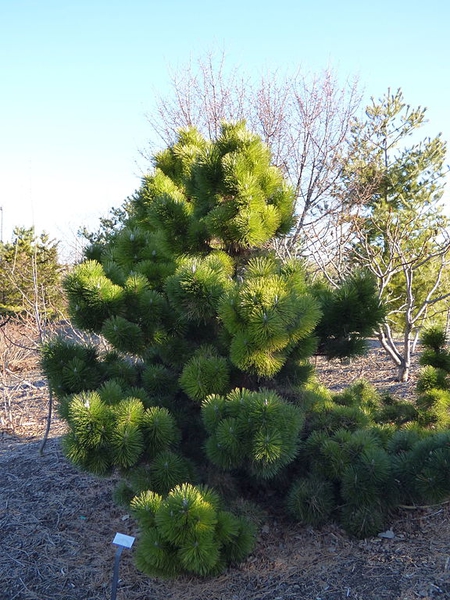
Picture a pine tree that stops people mid-conversation. That’s Thunderhead. With its dramatically dark, almost stormy blue-green needles and naturally compact, pyramidal silhouette, this cultivar of Eastern White Pine turns heads year-round. It’s the kind of tree that makes you wonder why every Connecticut garden doesn’t have one.
What it looks like
Thunderhead is a study in contrasts. Its needles—softer and finer than many pines—emerge in a moody, deep steel-blue color that’s almost architectural in its intensity. The foliage is denser than standard white pines, creating a full, sculptural form that feels refined without being fussy. New growth adds lighter accents of blue-gray throughout the season, creating subtle movement and depth. The branching pattern is naturally tidy, ascending at a graceful angle that gives the tree an almost deliberately composed appearance. It’s the kind of pine that looks equally stunning whether you’re viewing it from across the garden or standing directly beneath its branches.
Growing it in your garden
Here’s what makes Thunderhead particularly appealing for Connecticut gardeners: it’s an Eastern White Pine, which means it’s perfectly adapted to New England’s temperament. It wants well-drained soil and full sun—give it those two things, and you’ve got a resilient, long-lived tree. The compact growth habit makes it far more practical for residential landscapes than its wild cousins. It won’t overwhelm a typical suburban lot or shoulder out neighboring plants after fifteen years. Instead, it maintains a polished, intentional presence that works within garden design rather than against it.
Thunderhead thrives in slightly acidic soil, which is exactly what you typically find throughout Connecticut. It prefers consistent moisture during establishment but becomes remarkably drought-tolerant once settled. The tree appreciates good air circulation—important in our humid New England summers—and doesn’t appreciate sitting in standing water, so drainage matters.
Through the seasons
In spring, Thunderhead awakens with fresh candle growth that adds texture and a lighter blue-gray shimmer to the darker existing foliage. Summer brings that full, dense appearance that makes the tree such an excellent screen or specimen. The needles maintain their moody coloring without fading or browning, even through our hottest, driest weeks.
Fall and winter are where Thunderhead truly earns its keep. Many ornamental conifers lose their appeal when deciduous trees shed, but Thunderhead becomes more prominent and sculptural. That dark blue-green coloring deepens slightly in cold weather, creating a dramatic anchor in the winter garden. Snow clings beautifully to its branches—if you’re lucky enough to catch it frosted on a clear January morning, you’ll understand why gardeners become obsessed with evergreens.
Where it shines
This is an excellent specimen tree for a prominent position where its rich color and architectural form can be appreciated. Use it as a tall screen or windbreak—its dense branching provides genuine privacy without creating a wall of monotonous green. It works beautifully as a backdrop to lighter-colored plantings, where its moody tones create sophisticated contrast. In smaller landscapes, Thunderhead’s controlled growth makes it far more viable than typical white pines. It’s equally at home in contemporary gardens where its geometric form complements clean lines, and in traditional landscapes where it anchors beds and borders with evergreen gravitas.
Perfect companions
Thunderhead’s dark coloring is a gift to plant combinations. Pair it with golden-foliaged conifers like CHAMAECYPARIS PISIFERA ‘FILIFERA AUREA’ for luminous contrast. Underplant with white-flowering shade tolerant plants—astilbe, hellebores, or white bleeding heart—to emphasize the pine’s brooding backdrop. Combine with purple-leaved Japanese maples, burgundy-tinged heuchera, or silvery artemisia to create sophisticated color harmony. Lighter conifers like blue spruce or golden arborvitae look stunning when positioned in front, allowing Thunderhead to provide deep dimensional support.
Care tips
Water regularly during the first growing season and during extended dry spells. Mulch around the base to maintain soil moisture and moderate temperature fluctuations. Thunderhead rarely needs pruning—one of its virtues is naturally attractive form—but you can remove any crossing branches or dead wood. Watch for white pine weevil, which occasionally troubles Eastern White Pines in Connecticut; managing tree vigor through proper watering helps prevent problems. The tree’s dense branching means interior needles naturally drop as the tree matures, which is completely normal.
Quick facts
- Hardiness Zone: 3-8 (perfectly hardy throughout Connecticut)
- Mature Height & Spread: 25-35 feet tall, 12-18 feet wide
- Bloom Season: Not applicable (evergreen conifer)
- Light Requirements: Full sun (minimum 6 hours daily)
- Water Needs: Moderate; prefers consistent moisture but tolerates drought once established
- Available at: Both our retail and wholesale locations