
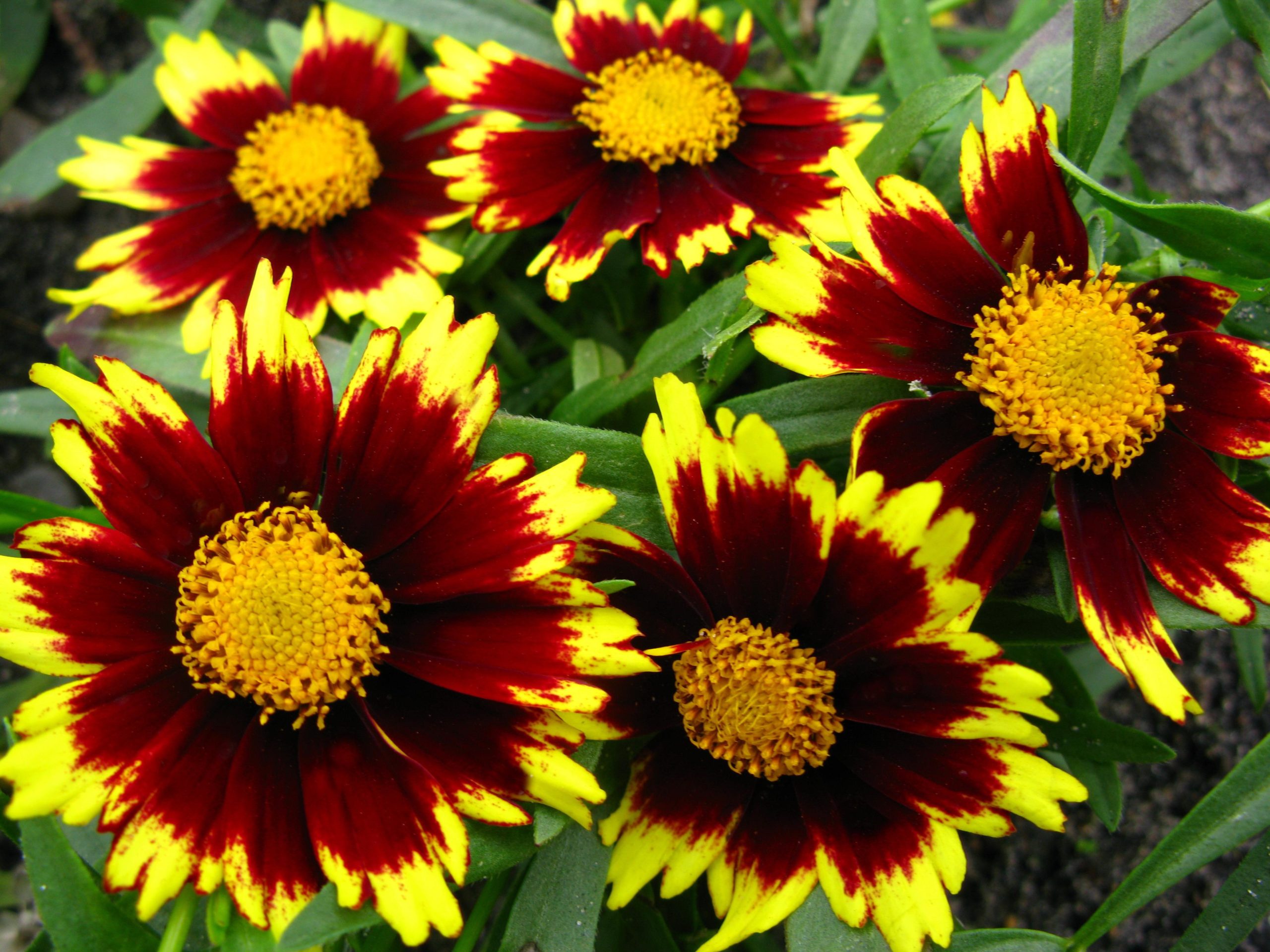
Description

COREOPSIS TINCTORIA
If you’ve been searching for a plant that simply won’t quit, that practically laughs in the face of Connecticut heat and drought, and that fills your garden with non-stop golden cheerfulness from early summer straight through fall—well, here it is. Tickseed is the definition of a no-fuss perennial that actually performs like it means business. New England gardeners have been quietly loving this plant for generations, and once you see it thriving in your own garden, you’ll understand why it’s earned such devoted fans.
What it looks like
Tickseed produces delicate, thread-like foliage that’s almost fern-like in its fine texture—actually, the scientific name TINCTORIA refers to its historical use as a natural dye. But it’s the flowers that will make you want to plant it everywhere. Bright golden-yellow blooms with burgundy or rust-red centers sit atop wiry stems, creating an airy, almost weightless effect in the garden. Each flower is small but produced in such abundance that you’ll hardly notice the individual blooms—instead, you’ll see waves of warm, sunny color. The plants stay relatively compact and tidy, ranging from 12 to 24 inches depending on variety, which makes them perfect for tucking into borders without creating leggy gaps.
Growing it in your garden
Here’s what makes tickseed such a gift to Connecticut gardeners: it wants to be neglected. Seriously. Give it full sun (six to eight hours minimum), well-draining soil, and then basically walk away. It’s not fussy about soil quality—poor, sandy, even clay soils are fine, as long as water doesn’t pool. Once established, tickseed is genuinely drought tolerant, though it’ll appreciate moderate water during establishment and any extended dry spells. The plant thrives in New England’s variable spring weather and handles our humid summers without developing disease. It’s one of those rare perennials that actually seems to perform better when you ignore it.
Through the seasons
Tickseed emerges reliably in spring, and if you’re patient, you might even catch it blooming by early June in a good year—but peak performance runs from July through the first hard frost. The flowers keep coming all summer long, completely unbothered by heat waves or drought stress. Here’s the magic trick: deadheading extends the bloom season significantly, but it’s optional. Even without it, you’ll have flowers well into October. Come winter, the foliage dies back completely, leaving clean ground for spring emergence. In Connecticut’s climate, it’s completely hardy and needs no winter protection whatsoever.
Where it shines
Tickseed is at home in hot, sunny borders where many plants struggle. It’s excellent for cottage gardens, where its informal character feels just right. Use it in containers—it won’t overwhelm them, and the airy growth habit works beautifully in mixed plantings. It’s also spectacular in meadow gardens or naturalized settings, where it’ll reseed itself and become more abundant over time. Because it tolerates poor soil, it’s perfect for difficult spots you’ve been struggling with. It’s also a standout choice if you’re gardening in that hot, dry area near your driveway or in sandy spots where native Connecticut conditions aren’t ideal.
Perfect companions
Tickseed loves company from other heat-lovers and drought-tolerant perennials. Plant it alongside Russian sage (PEROVSKIA), which offers similar airy height, or with ornamental grasses like feather reed grass for textural contrast. Coneflowers (ECHINACEA) bloom at the same time and share similar growing requirements. For a more delicate pairing, combine it with catmint (NEPETA) or salvia. In containers, it pairs beautifully with dusty miller or calibrachoa for a cheerful, low-maintenance combo.
Care tips
Deadheading is optional but rewarding—pinch or cut back spent flowers regularly if you want maximum bloom production. If plants get leggy by mid-summer (usually only in partial shade), cut them back by a third to encourage bushier growth. No staking needed. Tickseed doesn’t require fertilizer; in fact, too much nitrogen encourages foliage at the expense of flowers. Water during establishment and during extended dry spells, but otherwise let rainfall do the work. In spring, you can cut back the previous year’s dead foliage to the ground, or just let new growth emerge through it.
Quick facts
- Hardiness Zone: Zones 3-9
- Mature Height & Spread: 12-24 inches tall, 12-18 inches wide
- Bloom Season: June through October
- Light Requirements: Full sun (6-8 hours minimum)
- Water Needs: Low to moderate; drought tolerant once established
- Available at: Both our retail and wholesale locations