
Description
CORNUS X STELLAR PINK
Imagine a dogwood that actually delivers on every gardener’s wishlist: abundant pink flowers, disease resistance that lets you skip the spraying, and the kind of elegant branching structure that looks beautiful even in winter. Welcome to Variegated Stellar Pink Dogwood, a cultivar that takes the legendary toughness of CORNUS X STELLAR hybrids and wraps it in soft pink bracts that feel almost too good to be true. This isn’t your grandmother’s dogwood—it’s the answer to decades of breeding for a plant that handles New England weather without the frustrations that plagued earlier varieties.
What it looks like
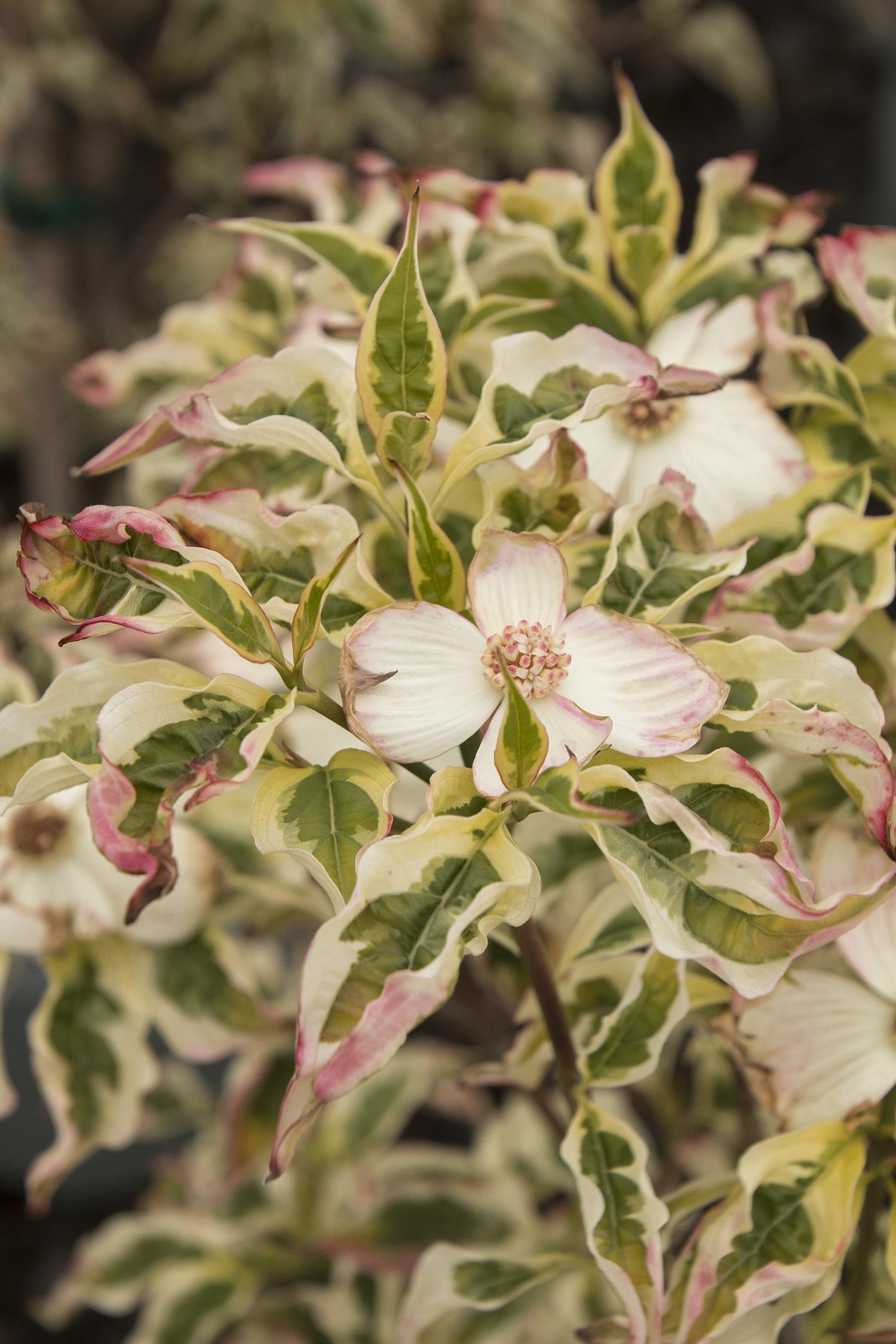
The magic of this dogwood lies in its generous, four-petaled pink bracts that appear in spring, sometimes blushing deeper toward the edges. Each bract has an almost creamy quality in certain light, creating a soft, romantic effect that ranges from pale pink to a warmer rose tone depending on sun exposure and the season. The foliage is its own story—deep green leaves often sport white or cream variegation, giving you visual interest well beyond the spring bloom period. The branching structure is naturally horizontal and graceful, creating that architectural framework that makes dogwoods the backbone of so many successful New England gardens. In autumn, the leaves shift to a burgundy-purple before dropping, and the red berries that follow attract birds throughout the fall and early winter.
Growing it in your garden
CORNUS X STELLAR PINK is a hybrid specifically bred to tolerate the diseases that devastate native flowering dogwoods in Connecticut and throughout New England. It’s more forgiving than its parent species—you get disease resistance without sacrificing beauty or hardiness. Plant it in a location with morning sun and afternoon shade, or in dappled sunlight beneath tall deciduous trees. It appreciates soil that’s rich in organic matter and well-draining. If you’re amending your planting hole (which we recommend), work in aged compost or composted leaf matter to create that slightly acidic, humus-rich environment dogwoods love. Space it where air can circulate around the canopy; good air flow is your best friend in preventing fungal issues.
Through the seasons
Spring arrives with a generous flush of pink bracts, typically appearing in April or early May in Connecticut, just as the tree is leafing out. The flowers are relatively long-lasting compared to some dogwoods, persisting through May if temperatures stay moderate. Summer brings a dense canopy of variegated green-and-white foliage that provides dappled shade and acts as a beautiful foil for shade-loving plants underneath. The variegation keeps the tree from looking too heavy, making it feel lighter and more refined than solid-green varieties. Fall delivers that reliable purple-tinged color change, and the red berries ripen to a coral-red that persists into November and December. Winter reveals the elegant tiered branching structure—actually a bonus season where you appreciate the tree’s inherent architecture when leaves fall away.
Where it shines
This is the dogwood for gardens where you want a focal point that works harder and delivers more. Plant it as a specimen where you can appreciate its multi-season interest, or use it as the anchor plant in a shade garden where its variegated foliage acts as a natural light source. It’s particularly valuable in the filtered shade beneath larger trees, where it elevates the understory without competing aggressively. In smaller residential landscapes throughout Connecticut, its moderate size and refined branching make it feel proportionate and graceful. The disease resistance makes it ideal if you’ve had disappointing experiences with flowering dogwoods in the past—this variety was actually developed to succeed where others struggled.
Perfect companions
Underplant CORNUS X STELLAR PINK with shade-tolerant perennials like Solomon’s Seal, hellebores, or native woodland ferns. The variegated foliage pairs beautifully with shade hostas, particularly darker varieties that provide color contrast. Add evergreen groundcovers like Allegheny Spurge to create a year-round base layer. In the shrub layer, pair it with rounded forms of inkberry or glossy abelia for textural contrast. Spring bulbs like Helleborus or early-blooming ephemerals work wonderfully in the drifts beneath—they’ll finish their show just as the dogwood is leafing out. For bright perennials, try shade-tolerant astilbe with feathery plumes that echo the dogwood’s delicate spring display.
Care tips
Water regularly during the first two growing seasons to establish a deep, healthy root system—this is especially important during New England’s dry summers. Once established, CORNUS X STELLAR PINK is quite drought-tolerant, though it appreciates consistent moisture. Prune only to shape or remove crossing branches; dogwoods prefer minimal intervention. Mulch with 2-3 inches of aged compost or shredded bark to maintain soil temperature and moisture, keeping mulch a few inches away from the trunk. In spring, you don’t need to fertilize if you’ve built good soil with organic matter. Avoid weed whackers and lawn mowers near the trunk—that thin bark damages easily.
Quick facts
- Hardiness Zone: 5-9
- Mature Height & Spread: 20-25 feet tall, 15-20 feet wide
- Bloom Season: April-May
- Light Requirements: Dappled sunlight to partial shade
- Water Needs: Regular water first two years; drought-tolerant when established
- Available at: Both our retail and wholesale locations