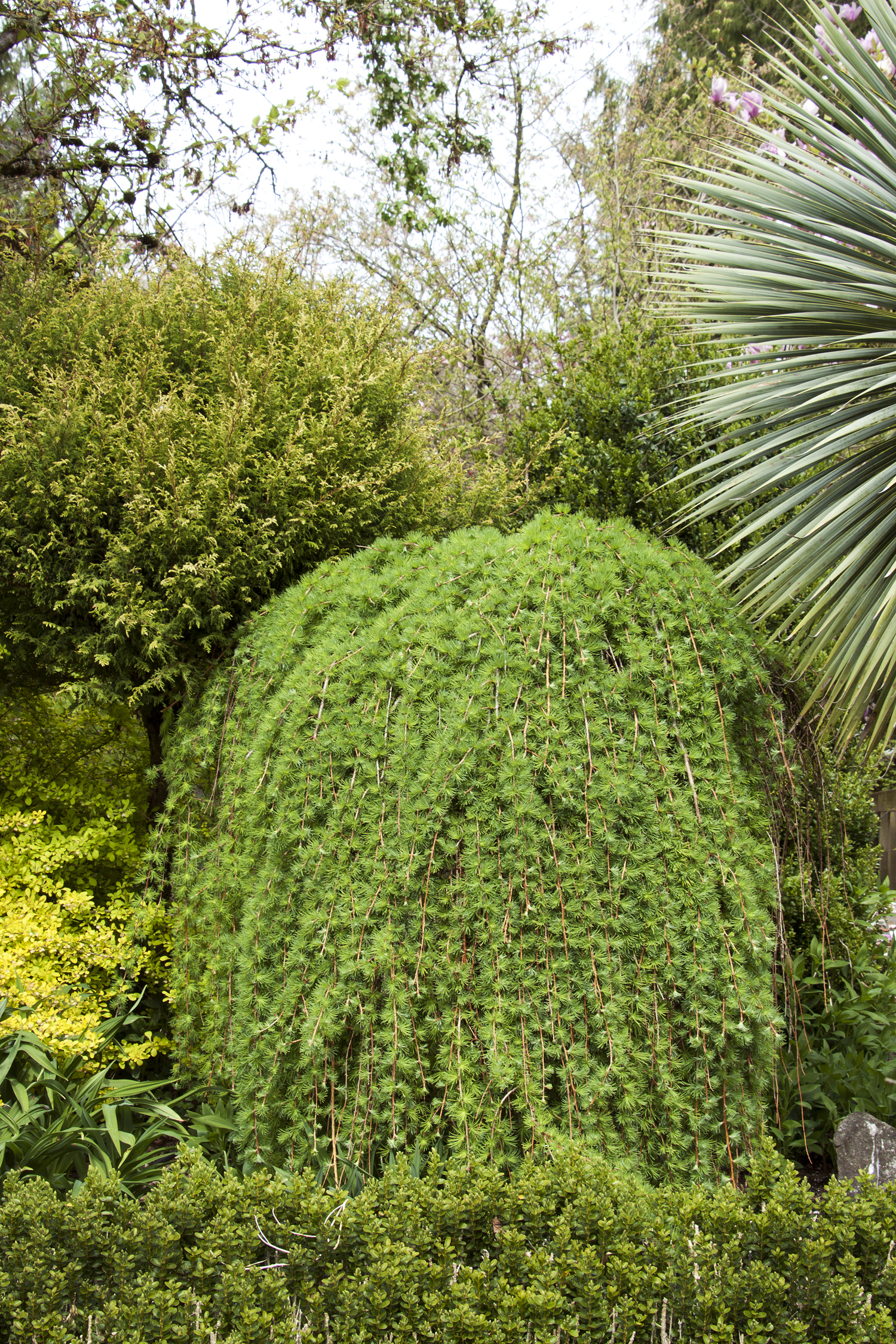
LARIX DECIDUA ‘PENDULA’

Imagine a living sculpture that captures the essence of melancholy and grace in a single form. The Twisted Weeping Larch is that rare plant that stops people mid-step, making them pause and stare. With its sinuous, contorted branches that cascade like a waterfall frozen in time, this is a tree that demands a place of honor in any garden that appreciates the extraordinary. It’s not just another weeping tree—it’s a statement, a focal point, a conversation starter that will have your neighbors asking questions for years to come.

What it looks like

The Twisted Weeping Larch is an architectural marvel dressed in delicate foliage. Its branches spiral and undulate in mesmerizing patterns, creating a weeping form that’s more dramatic than graceful, more theatrical than demure. In spring and summer, soft, feathery needles emerge in a luminous blue-green color, creating an almost ethereal quality. These needles are surprisingly fine and wispy—nothing like the stiff evergreen needles you might expect. Come autumn, something magical happens: those needles transform into burnished gold before dropping entirely, revealing the twisted structure beneath like an elaborate wooden skeleton.

The trunk itself contributes to the drama, often contorted as well, giving the entire tree a sense of movement and personality that feels almost alive.

Growing it in your garden

Here’s what makes this weeping larch special: despite its exotic appearance, it’s perfectly at home in Connecticut’s climate. This is a deciduous conifer—yes, it loses its needles in winter—which means it’s genuinely hardy and won’t sulk through our New England cold snaps. It thrives in cooler climates, making our Connecticut gardens ideal conditions.

Plant it where you can see it, because this tree is meant to be admired. Full sun to partial shade keeps it happy, though it does best with good light exposure. LARIX DECIDUA ‘PENDULA’ prefers well-draining soil and actually performs beautifully in slightly moist conditions. Unlike many ornamental trees that demand perfect drainage, this larch is adaptable and forgiving.

Through the seasons

Spring arrives with the emergence of those ethereal needle clusters—pale green at first, then deepening into blue-green as they mature. Growth is relatively restrained, making this a tree that develops its character slowly and deliberately.

Summer is when the weeping form becomes fully apparent. The cascading branches create wonderful dappled shade beneath, and the fine texture softens the landscape in ways that broader-leafed plants simply cannot achieve.

Fall is the grand finale. That transformation from green to gold happens with stunning speed, and for a brief window, your garden holds liquid sunshine. Then the needles drop, and you’re left with the bare branch structure—which is genuinely beautiful in a stark, honest way. It reveals the true architecture of the tree and looks particularly striking dusted with snow.

Winter finds it dormant but never dull. The twisted silhouette becomes a sculptural element in the winter landscape, particularly dramatic against evergreens or with a backdrop of snow-covered evergreens.

Where it shines

This is a focal-point plant, pure and simple. Place it where you want to draw the eye and make a statement. A Twisted Weeping Larch works beautifully as a specimen tree in a garden that’s been designed with intention. It’s stunning near a water feature—the reflection doubles its impact. It excels in Japanese-inspired gardens, modern minimalist designs, or anywhere you want drama without loudness.

In smaller gardens, it can be the singular showpiece around which everything else orbits. In larger landscapes, it becomes a punctuation mark that adds sophistication and intrigue.

Perfect companions

Because the Twisted Weeping Larch is such a strong visual element, pair it with more subtle companions. Hostas, coral bells, and shade-tolerant ferns work beautifully beneath and around it. Evergreen shrubs like yew or boxwood provide structure and backbone. Ornamental grasses add movement without competing. Consider underplanting with shade-tolerant groundcovers or spring bulbs that bloom before the canopy fully leafs out.

Care tips

This tree is remarkably low-maintenance. Water regularly during establishment, especially through Connecticut’s sometimes-dry summers, but once settled, it’s quite drought-tolerant. Prune minimally—only to remove any dead wood or crossing branches. The natural form is so distinctive that pruning is rarely necessary and often counterproductive. In very windy locations, you might provide some staking when young, as the weeping form can be vulnerable to wind breakage until established.

It’s essentially pest and disease-free in Connecticut, which means you’ll spend far more time admiring it than maintaining it.

Quick facts

  • Hardiness Zone: 4–6
  • Mature Height & Spread: 15–25 feet tall, 8–12 feet wide (varies with form and training)
  • Bloom Season: Spring catkins; deciduous needles
  • Light Requirements: Full sun to partial shade
  • Water Needs: Moderate; prefers well-drained to moist soil
  • Available at: Both our retail and wholesale locations

Twisted Weeping Larch

Exciting, irregularly drooping branches, soft, fluffy tufts of green needles that become brilliant yellow in fall.

Zoning: 2-8

Description

LARIX DECIDUA ‘PENDULA’

Imagine a living sculpture that captures the essence of melancholy and grace in a single form. The Twisted Weeping Larch is that rare plant that stops people mid-step, making them pause and stare. With its sinuous, contorted branches that cascade like a waterfall frozen in time, this is a tree that demands a place of honor in any garden that appreciates the extraordinary. It’s not just another weeping tree—it’s a statement, a focal point, a conversation starter that will have your neighbors asking questions for years to come.

What it looks like

The Twisted Weeping Larch is an architectural marvel dressed in delicate foliage. Its branches spiral and undulate in mesmerizing patterns, creating a weeping form that’s more dramatic than graceful, more theatrical than demure. In spring and summer, soft, feathery needles emerge in a luminous blue-green color, creating an almost ethereal quality. These needles are surprisingly fine and wispy—nothing like the stiff evergreen needles you might expect. Come autumn, something magical happens: those needles transform into burnished gold before dropping entirely, revealing the twisted structure beneath like an elaborate wooden skeleton.

The trunk itself contributes to the drama, often contorted as well, giving the entire tree a sense of movement and personality that feels almost alive.

Growing it in your garden

Here’s what makes this weeping larch special: despite its exotic appearance, it’s perfectly at home in Connecticut’s climate. This is a deciduous conifer—yes, it loses its needles in winter—which means it’s genuinely hardy and won’t sulk through our New England cold snaps. It thrives in cooler climates, making our Connecticut gardens ideal conditions.

Plant it where you can see it, because this tree is meant to be admired. Full sun to partial shade keeps it happy, though it does best with good light exposure. LARIX DECIDUA ‘PENDULA’ prefers well-draining soil and actually performs beautifully in slightly moist conditions. Unlike many ornamental trees that demand perfect drainage, this larch is adaptable and forgiving.

Through the seasons

Spring arrives with the emergence of those ethereal needle clusters—pale green at first, then deepening into blue-green as they mature. Growth is relatively restrained, making this a tree that develops its character slowly and deliberately.

Summer is when the weeping form becomes fully apparent. The cascading branches create wonderful dappled shade beneath, and the fine texture softens the landscape in ways that broader-leafed plants simply cannot achieve.

Fall is the grand finale. That transformation from green to gold happens with stunning speed, and for a brief window, your garden holds liquid sunshine. Then the needles drop, and you’re left with the bare branch structure—which is genuinely beautiful in a stark, honest way. It reveals the true architecture of the tree and looks particularly striking dusted with snow.

Winter finds it dormant but never dull. The twisted silhouette becomes a sculptural element in the winter landscape, particularly dramatic against evergreens or with a backdrop of snow-covered evergreens.

Where it shines

This is a focal-point plant, pure and simple. Place it where you want to draw the eye and make a statement. A Twisted Weeping Larch works beautifully as a specimen tree in a garden that’s been designed with intention. It’s stunning near a water feature—the reflection doubles its impact. It excels in Japanese-inspired gardens, modern minimalist designs, or anywhere you want drama without loudness.

In smaller gardens, it can be the singular showpiece around which everything else orbits. In larger landscapes, it becomes a punctuation mark that adds sophistication and intrigue.

Perfect companions

Because the Twisted Weeping Larch is such a strong visual element, pair it with more subtle companions. Hostas, coral bells, and shade-tolerant ferns work beautifully beneath and around it. Evergreen shrubs like yew or boxwood provide structure and backbone. Ornamental grasses add movement without competing. Consider underplanting with shade-tolerant groundcovers or spring bulbs that bloom before the canopy fully leafs out.

Care tips

This tree is remarkably low-maintenance. Water regularly during establishment, especially through Connecticut’s sometimes-dry summers, but once settled, it’s quite drought-tolerant. Prune minimally—only to remove any dead wood or crossing branches. The natural form is so distinctive that pruning is rarely necessary and often counterproductive. In very windy locations, you might provide some staking when young, as the weeping form can be vulnerable to wind breakage until established.

It’s essentially pest and disease-free in Connecticut, which means you’ll spend far more time admiring it than maintaining it.

Quick facts

  • Hardiness Zone: 4–6
  • Mature Height & Spread: 15–25 feet tall, 8–12 feet wide (varies with form and training)
  • Bloom Season: Spring catkins; deciduous needles
  • Light Requirements: Full sun to partial shade
  • Water Needs: Moderate; prefers well-drained to moist soil
  • Available at: Both our retail and wholesale locations