
Weeping Redbud

CERCIS CANADENSIS VAR. ALBA ‘RUBY FALLS’

What if a tree could weep with grace and still steal the show? The Weeping Redbud is that rare specimen that makes gardeners stop mid-stride and stare. Unlike its upright cousins, this cultivar cascades like a living fountain, its long, arching branches reaching toward the ground in a gesture of pure elegance. Imagine a tree that combines the delicate charm of an ornamental weeper with the bold, unmistakable magenta-pink flowers that redbuds are famous for—except this one grows them in abundance along every pendulous branch. It’s theatrical. It’s garden-changing. And yes, it absolutely works in Connecticut.

What it looks like

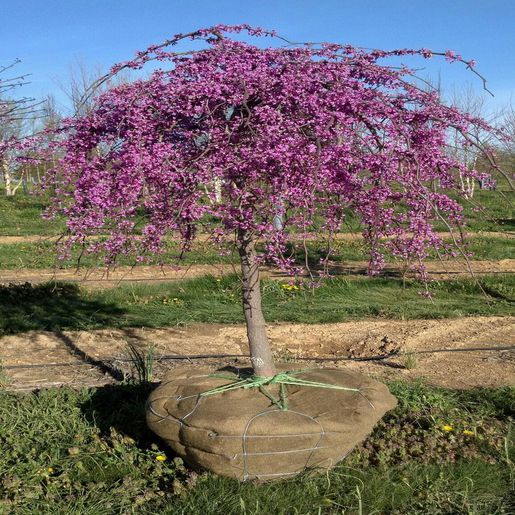
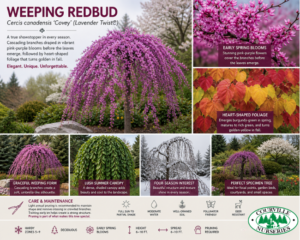
The Weeping Redbud is a sculptural statement piece. Its branches naturally spread outward and downward, creating a spreading mound or fountain-like silhouette that grows 20 to 30 feet wide in ideal conditions (though it typically stays more compact in New England gardens). The foliage is heart-shaped and luminous green, turning golden-yellow before dropping in fall. But here’s what makes this tree unforgettable: in early to mid-spring, before the leaves fully emerge, the entire framework becomes smothered in small, deep rose-pink flowers that practically glow in morning sunlight. These flowers cluster directly on the branches—a phenomenon called cauliflory that makes even seasoned gardeners feel like beginners discovering plants for the first time.

Growing it in your garden

Weeping Redbud is surprisingly accommodating once established, though it does appreciate some attention during its first season. Plant it where it gets full sun to part shade—you’ll get the most prolific flowering in sun, but afternoon shade in Connecticut’s hot summers can help reduce stress. It prefers well-draining soil but adapts to average conditions; it’s not fussy about pH and handles both slightly acidic and neutral soils without complaint. The real gift is that this tree rarely requires heavy pruning. Its natural weeping habit develops on its own, giving you that fountain shape without architectural intervention.

Through the seasons

Spring is the Weeping Redbud’s standing ovation. Those magenta flowers arrive in April, sometimes pushing through late snow—a Connecticut gardener’s dose of optimism. By May, the delicate heart-shaped leaves unfurl, and the tree transitions to a soft, billowing mound of green. Summer is understated elegance; the drooping branches create wonderful dappled shade beneath, making it perfect for sitting under on a humid Connecticut afternoon. Fall brings that clean yellow color, and the bare branches in winter reveal the tree’s sculptural architecture beautifully. If you’re planting it near a window or along a pathway, you’ll enjoy its silhouette against winter skies.

Where it shines

This is a focal point plant, and it knows it. Use it as a specimen tree where it can be viewed from multiple angles—near a seating area, at the end of a pathway, or anchoring a corner of the garden. It’s particularly stunning where early spring light can backlight those flowers. The Weeping Redbud also works beautifully as a small shade tree for a semi-shaded garden room; the graceful branches create natural shelter without the weight of larger deciduous trees. In smaller Connecticut gardens, it’s an excellent alternative to traditional weeping cherries, offering similar visual drama with a somewhat different personality.

Perfect companions

Underplant with shade-tolerant perennials like Hellebores, Epimedium, or Astilbe, which appreciate the dappled shade the drooping branches provide. Spring bulbs—especially Scilla and Chionodoxa—complement the magenta flowers beautifully. For larger gardens, pair it with Serviceberry or Crabapple for a spring flower progression. In the understory, Ferns and Coral Bells create texture without competing for attention. If you want evergreen structure nearby, consider Inkberry Holly as a dark, contrasting backdrop.

Care tips

Water regularly during the first year to establish a deep root system; once settled, the Weeping Redbud is quite drought-tolerant for a Connecticut tree. Prune only to remove dead wood or crossing branches—resist the urge to “shape” it. The weeping form is natural, and over-pruning disrupts it. Mulch around the base in spring to retain moisture and regulate soil temperature through our variable New England winters. No serious pests trouble it, making it a refreshingly low-maintenance addition to the landscape.

Quick facts

  • Hardiness Zone: 4-9 (fully hardy in Connecticut)
  • Mature Height & Spread: 15-25 feet tall; 20-30 feet wide at maturity
  • Bloom Season: April to early May
  • Light Requirements: Full sun to part shade (full sun for best flowering)
  • Water Needs: Moderate; drought-tolerant once established
  • Available at: Both our retail and wholesale locations.

Weeping Redbud

Cercis canadensis, commonly called eastern redbud, is a deciduous, often multi-trunked understory tree with a rounded crown that typically matures to 20-30’ tall with a slightly larger spread.

Description

Weeping Redbud

CERCIS CANADENSIS VAR. ALBA ‘RUBY FALLS’

What if a tree could weep with grace and still steal the show? The Weeping Redbud is that rare specimen that makes gardeners stop mid-stride and stare. Unlike its upright cousins, this cultivar cascades like a living fountain, its long, arching branches reaching toward the ground in a gesture of pure elegance. Imagine a tree that combines the delicate charm of an ornamental weeper with the bold, unmistakable magenta-pink flowers that redbuds are famous for—except this one grows them in abundance along every pendulous branch. It’s theatrical. It’s garden-changing. And yes, it absolutely works in Connecticut.

What it looks like

The Weeping Redbud is a sculptural statement piece. Its branches naturally spread outward and downward, creating a spreading mound or fountain-like silhouette that grows 20 to 30 feet wide in ideal conditions (though it typically stays more compact in New England gardens). The foliage is heart-shaped and luminous green, turning golden-yellow before dropping in fall. But here’s what makes this tree unforgettable: in early to mid-spring, before the leaves fully emerge, the entire framework becomes smothered in small, deep rose-pink flowers that practically glow in morning sunlight. These flowers cluster directly on the branches—a phenomenon called cauliflory that makes even seasoned gardeners feel like beginners discovering plants for the first time.

Growing it in your garden

Weeping Redbud is surprisingly accommodating once established, though it does appreciate some attention during its first season. Plant it where it gets full sun to part shade—you’ll get the most prolific flowering in sun, but afternoon shade in Connecticut’s hot summers can help reduce stress. It prefers well-draining soil but adapts to average conditions; it’s not fussy about pH and handles both slightly acidic and neutral soils without complaint. The real gift is that this tree rarely requires heavy pruning. Its natural weeping habit develops on its own, giving you that fountain shape without architectural intervention.

Through the seasons

Spring is the Weeping Redbud’s standing ovation. Those magenta flowers arrive in April, sometimes pushing through late snow—a Connecticut gardener’s dose of optimism. By May, the delicate heart-shaped leaves unfurl, and the tree transitions to a soft, billowing mound of green. Summer is understated elegance; the drooping branches create wonderful dappled shade beneath, making it perfect for sitting under on a humid Connecticut afternoon. Fall brings that clean yellow color, and the bare branches in winter reveal the tree’s sculptural architecture beautifully. If you’re planting it near a window or along a pathway, you’ll enjoy its silhouette against winter skies.

Where it shines

This is a focal point plant, and it knows it. Use it as a specimen tree where it can be viewed from multiple angles—near a seating area, at the end of a pathway, or anchoring a corner of the garden. It’s particularly stunning where early spring light can backlight those flowers. The Weeping Redbud also works beautifully as a small shade tree for a semi-shaded garden room; the graceful branches create natural shelter without the weight of larger deciduous trees. In smaller Connecticut gardens, it’s an excellent alternative to traditional weeping cherries, offering similar visual drama with a somewhat different personality.

Perfect companions

Underplant with shade-tolerant perennials like Hellebores, Epimedium, or Astilbe, which appreciate the dappled shade the drooping branches provide. Spring bulbs—especially Scilla and Chionodoxa—complement the magenta flowers beautifully. For larger gardens, pair it with Serviceberry or Crabapple for a spring flower progression. In the understory, Ferns and Coral Bells create texture without competing for attention. If you want evergreen structure nearby, consider Inkberry Holly as a dark, contrasting backdrop.

Care tips

Water regularly during the first year to establish a deep root system; once settled, the Weeping Redbud is quite drought-tolerant for a Connecticut tree. Prune only to remove dead wood or crossing branches—resist the urge to “shape” it. The weeping form is natural, and over-pruning disrupts it. Mulch around the base in spring to retain moisture and regulate soil temperature through our variable New England winters. No serious pests trouble it, making it a refreshingly low-maintenance addition to the landscape.

Quick facts

  • Hardiness Zone: 4-9 (fully hardy in Connecticut)
  • Mature Height & Spread: 15-25 feet tall; 20-30 feet wide at maturity
  • Bloom Season: April to early May
  • Light Requirements: Full sun to part shade (full sun for best flowering)
  • Water Needs: Moderate; drought-tolerant once established
  • Available at: Both our retail and wholesale locations.