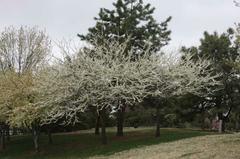
White Eastern Redbud

CERCIS CANADENSIS VAR. ALBA

If you’ve driven past a redbud in early spring and thought, “I want that tree, but in white,” then you’ve just found your answer. The White Eastern Redbud is every bit as charming as its rosy-pink cousin, but dressed in delicate ivory blooms that seem to glow against bare branches. It’s the kind of tree that makes you pause on your morning walk—a small, elegant deciduous tree that brings fresh spring energy to any Connecticut garden without the drama of hot pink. This is refined spring beauty for gardeners who prefer whispers to shouts.

What it looks like

The White Eastern Redbud is a small, multi-stemmed deciduous tree that typically grows into a rounded, somewhat spreading crown. What makes it absolutely worth your garden space is the explosion of tiny, pea-shaped white flowers that cluster tightly along the branches in April and early May—often blooming right before the leaves emerge, which is exactly what you want. The effect is almost ethereal, like snow has caught in the branches at the perfect moment.

After the flowers fade, heart-shaped leaves emerge in soft green, creating a delicate, airy canopy through summer. In fall, those leaves turn a gentle yellow-green before dropping. Even in winter, the tree has appeal; its exfoliating bark reveals subtle gray and tan tones. CERCIS CANADENSIS VAR. ALBA is essentially a color-shifted version of our native Eastern Redbud, so it grows with the same elegant proportions and adaptable nature.

Growing it in your garden

Here’s what makes this tree so valuable in New England gardens: it’s remarkably unfussy. White Eastern Redbud thrives in full sun to part shade—though you’ll get the most abundant blooms with at least four to six hours of direct sun. It’s not particular about soil, adapting to everything from slightly acidic to alkaline conditions. Unlike some of the finicky ornamentals that demand perfect drainage and fertile earth, this redbud handles our Connecticut clay and varied soil types without complaint.

The tree is also naturally pest-resistant and disease-resistant, which means you’re not signing up for constant maintenance battles. It’s cold-hardy, reliable through Connecticut winters, and doesn’t have any serious issues that require you to become an expert problem-solver. This is a tree you can plant, mulch appropriately, and then actually enjoy rather than endlessly fuss over.

Through the seasons

Spring is obviously the main event—those stunning white flowers are what you’re planting for. But the tree earns its place all year. Early summer brings lush green foliage that softens the landscape and provides dappled shade. The airy leaf canopy means you don’t lose all the light in shade areas; there’s still filtered sunlight reaching plantings below.

Midsummer is quiet and graceful; the tree just exists as a beautiful, well-behaved presence. Fall color is subtle but pleasant—a gentle yellow-green that doesn’t compete with the drama of maples and ashes, but complements them instead. Winter reveals the tree’s architectural bones, and if you’re fortunate enough to see frost on those bare branches, the structure becomes nearly as beautiful as the spring flowers.

Where it shines

This is your tree for the transitional spaces in your garden. Plant it where you’re moving from dense shade to sunnier areas. It works beautifully as a small specimen tree in a cottage garden setting. It’s perfect for the understory layer—placed where it adds spring interest without overwhelming the space or competing with larger shade trees. In smaller Connecticut properties where space is precious, the White Eastern Redbud’s modest size (it won’t overpower you) combined with its seasonal interest makes it an especially smart choice.

It’s also ideal if you want spring blooms but find the typical forsythia or crabapple a bit predictable. The white flowers paired with the tree’s form feel more sophisticated, more intentional. This is what you plant when you’re thinking like a gardener, not just installing trees.

Perfect companions

Underplant with shade-tolerant perennials that bloom after the redbud’s spring show: hostas, hellebores, epimedium, or coral bells. The filtered shade and gentle canopy above create perfect conditions for these plants. Pair it in the background with evergreen shrubs—boxwoods, inkberries, or hollies—so winter doesn’t leave bare branches looking lonely. Spring bulbs like daffodils and tulips create a carpet of color under the emerging foliage.

Care tips

Water regularly your first year while the tree is establishing its root system. After that, mature White Eastern Redbuds are fairly drought-tolerant, though they’ll bloom more prolifically if they get consistent moisture during dry spells. Mulch around the base—about 2 to 3 inches, keeping it away from the trunk itself. Prune only to shape or remove dead branches; this tree naturally forms a lovely shape without heavy-handed pruning.

Quick facts

  • Hardiness Zone: Zones 4-9
  • Mature Height & Spread: 20-30 feet tall and 15-25 feet wide
  • Bloom Season: April to early May
  • Light Requirements: Full sun to part shade (more flowers in full sun)
  • Water Needs: Moderate; drought-tolerant once established
  • Available at: Both our retail and wholesale locations

White Eastern Redbud

Cercis canadensis, commonly called eastern redbud, is a deciduous, often multi-trunked understory tree with a rounded crown that typically matures to 20-30’ tall with a slightly larger spread. It is particularly noted for its stunning pea-like rose-purple flowers which bloom profusely on bare branches in early spring (March-April) before the foliage emerges

Pot Size (gallons), Height: #7 , 6-8′

Description

White Eastern Redbud

CERCIS CANADENSIS VAR. ALBA

If you’ve driven past a redbud in early spring and thought, “I want that tree, but in white,” then you’ve just found your answer. The White Eastern Redbud is every bit as charming as its rosy-pink cousin, but dressed in delicate ivory blooms that seem to glow against bare branches. It’s the kind of tree that makes you pause on your morning walk—a small, elegant deciduous tree that brings fresh spring energy to any Connecticut garden without the drama of hot pink. This is refined spring beauty for gardeners who prefer whispers to shouts.

What it looks like

The White Eastern Redbud is a small, multi-stemmed deciduous tree that typically grows into a rounded, somewhat spreading crown. What makes it absolutely worth your garden space is the explosion of tiny, pea-shaped white flowers that cluster tightly along the branches in April and early May—often blooming right before the leaves emerge, which is exactly what you want. The effect is almost ethereal, like snow has caught in the branches at the perfect moment.

After the flowers fade, heart-shaped leaves emerge in soft green, creating a delicate, airy canopy through summer. In fall, those leaves turn a gentle yellow-green before dropping. Even in winter, the tree has appeal; its exfoliating bark reveals subtle gray and tan tones. CERCIS CANADENSIS VAR. ALBA is essentially a color-shifted version of our native Eastern Redbud, so it grows with the same elegant proportions and adaptable nature.

Growing it in your garden

Here’s what makes this tree so valuable in New England gardens: it’s remarkably unfussy. White Eastern Redbud thrives in full sun to part shade—though you’ll get the most abundant blooms with at least four to six hours of direct sun. It’s not particular about soil, adapting to everything from slightly acidic to alkaline conditions. Unlike some of the finicky ornamentals that demand perfect drainage and fertile earth, this redbud handles our Connecticut clay and varied soil types without complaint.

The tree is also naturally pest-resistant and disease-resistant, which means you’re not signing up for constant maintenance battles. It’s cold-hardy, reliable through Connecticut winters, and doesn’t have any serious issues that require you to become an expert problem-solver. This is a tree you can plant, mulch appropriately, and then actually enjoy rather than endlessly fuss over.

Through the seasons

Spring is obviously the main event—those stunning white flowers are what you’re planting for. But the tree earns its place all year. Early summer brings lush green foliage that softens the landscape and provides dappled shade. The airy leaf canopy means you don’t lose all the light in shade areas; there’s still filtered sunlight reaching plantings below.

Midsummer is quiet and graceful; the tree just exists as a beautiful, well-behaved presence. Fall color is subtle but pleasant—a gentle yellow-green that doesn’t compete with the drama of maples and ashes, but complements them instead. Winter reveals the tree’s architectural bones, and if you’re fortunate enough to see frost on those bare branches, the structure becomes nearly as beautiful as the spring flowers.

Where it shines

This is your tree for the transitional spaces in your garden. Plant it where you’re moving from dense shade to sunnier areas. It works beautifully as a small specimen tree in a cottage garden setting. It’s perfect for the understory layer—placed where it adds spring interest without overwhelming the space or competing with larger shade trees. In smaller Connecticut properties where space is precious, the White Eastern Redbud’s modest size (it won’t overpower you) combined with its seasonal interest makes it an especially smart choice.

It’s also ideal if you want spring blooms but find the typical forsythia or crabapple a bit predictable. The white flowers paired with the tree’s form feel more sophisticated, more intentional. This is what you plant when you’re thinking like a gardener, not just installing trees.

Perfect companions

Underplant with shade-tolerant perennials that bloom after the redbud’s spring show: hostas, hellebores, epimedium, or coral bells. The filtered shade and gentle canopy above create perfect conditions for these plants. Pair it in the background with evergreen shrubs—boxwoods, inkberries, or hollies—so winter doesn’t leave bare branches looking lonely. Spring bulbs like daffodils and tulips create a carpet of color under the emerging foliage.

Care tips

Water regularly your first year while the tree is establishing its root system. After that, mature White Eastern Redbuds are fairly drought-tolerant, though they’ll bloom more prolifically if they get consistent moisture during dry spells. Mulch around the base—about 2 to 3 inches, keeping it away from the trunk itself. Prune only to shape or remove dead branches; this tree naturally forms a lovely shape without heavy-handed pruning.

Quick facts

  • Hardiness Zone: Zones 4-9
  • Mature Height & Spread: 20-30 feet tall and 15-25 feet wide
  • Bloom Season: April to early May
  • Light Requirements: Full sun to part shade (more flowers in full sun)
  • Water Needs: Moderate; drought-tolerant once established
  • Available at: Both our retail and wholesale locations