Wichita Blue

JUNIPERUS SCOPULORUM ‘WICHITA BLUE’

There’s something deeply satisfying about a plant that looks architectural, feels substantial, and asks for almost nothing in return. Wichita Blue is that rare evergreen that grows confidently in Connecticut’s unpredictable climate while serving as a stunning year-round focal point. Unlike some junipers that sprawl or weep apologetically, this cultivar reaches upward with real intention—a silvery-blue sentinel that commands respect without demanding constant attention.

What it looks like

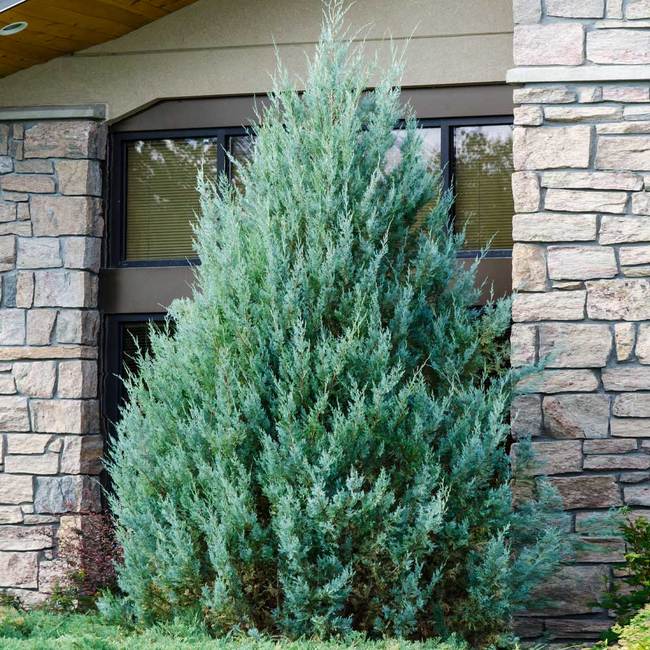
Wichita Blue is an elegant columnar juniper with a distinctly refined silhouette. Its foliage is that mesmerizing steel-blue color that seems to glow on overcast New England days and deepens to an almost purple-blue as temperatures drop in winter. The color stays vibrant year-round, never fading to that sad bronze that affects some evergreens. The branching pattern is dense and orderly, creating a naturally narrow cone shape that doesn’t need aggressive pruning to maintain its form. Mature specimens develop a sculptural presence—they’re the kind of plant that photographs beautifully against stone, brick, or winter snow.

Growing it in your garden

Here’s what makes Wichita Blue genuinely special for Connecticut gardeners: it thrives in full sun and honestly prefers it, which means you can plant it in locations where many evergreens struggle. It’s not fussy about soil type—sandy, loamy, clay, poor, average—it adapts with good humor. Once established, it’s remarkably drought-tolerant, which is increasingly valuable as our summers get hotter and drier. Unlike JUNIPERUS HORIZONTALIS or spreading varieties, the columnar form means you can place it in tight spaces where you need vertical interest without spreading width. Plant it in fall or early spring for best establishment.

Through the seasons

Spring brings fresh new growth with an even brighter blue-silver hue that catches light beautifully. Summer is when Wichita Blue really earns its place—that steely blue color intensifies, and the plant stands unmoved by heat and drought that might stress other evergreens. Fall watches the foliage deepen and richly develop, preparing for winter. Come December and January, when much of the garden has retreated, Wichita Blue looks alive and vibrant. The blue intensifies in cold, sometimes developing purple undertones that are genuinely stunning against snow. Spring comes and you realize you’ve had living color all winter long.

Where it shines

Use Wichita Blue to anchor a modern garden design—its clean lines and formal shape complement contemporary architecture beautifully. It’s outstanding as a specimen in a foundation planting, where its narrow width doesn’t obscure windows or doors. Plant it in groups of odd numbers (3 or 5) for dramatic screening or as a windbreak along property lines. It creates vertical emphasis in shrub borders without the maintenance demands of columnar evergreens that need shearing. The blue color is stunning against warm-toned hardscaping, especially copper, rust, or weathered wood. It’s also beautiful in winter container gardens where its structured form and color provide real presence.

Perfect companions

Wichita Blue’s architecture speaks to other strong-form plants. Pair it with ILEX VERTICILLATA (winterberry) for striking winter contrast—the red berries absolutely sing against the blue foliage. Combine it with ornamental grasses like MISCANTHUS or PANICUM for textural play. It looks extraordinary with evergreen ferns and hellebores at its base—the lacy, delicate foliage creates beautiful contrast with the structured juniper. Cotoneaster, barberry, and other plants with warm-toned foliage create striking color combinations. Consider sedum or creeping phlox as groundcover around the base.

Care tips

Water regularly during the first growing season—this establishes deep roots that serve the plant through Connecticut’s dry periods. After establishment, water during extended droughts (anything over two weeks without significant rainfall). Wichita Blue doesn’t need pruning to maintain its shape, though you can gently remove any dead wood in spring. It’s resistant to juniper blight, spider mites, and the pest and disease pressures that plague some evergreens. Full sun is essential—shade causes the foliage color to dull and the form to open up awkwardly. There’s genuinely little else to do. This is an evergreen for people who want impact without maintenance.

Quick facts

  • Hardiness Zone: Zones 3-7 (thrives throughout Connecticut)
  • Mature Height & Spread: 20-25 feet tall, 3-4 feet wide
  • Bloom Season: Evergreen; foliage color peaks in winter
  • Light Requirements: Full sun (6+ hours direct sun daily)
  • Water Needs: Low once established; drought-tolerant
  • Available at: Both our retail and wholesale locations.
Wichita Blue

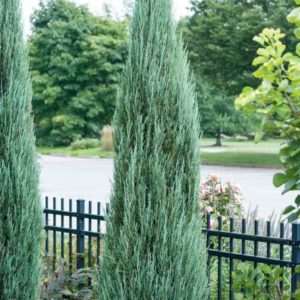
hick and full, the moderately-sized Wichita Blue Juniper creates an impenetrable screen or windbreak but is short enough to not interfere with power lines. A row of these Junipers will add vertical interest along fences, streets and beyond, performing as screens or windbreaks.

Pot Size (gallons), Height: 4-5′

Description

Wichita Blue

JUNIPERUS SCOPULORUM ‘WICHITA BLUE’

There’s something deeply satisfying about a plant that looks architectural, feels substantial, and asks for almost nothing in return. Wichita Blue is that rare evergreen that grows confidently in Connecticut’s unpredictable climate while serving as a stunning year-round focal point. Unlike some junipers that sprawl or weep apologetically, this cultivar reaches upward with real intention—a silvery-blue sentinel that commands respect without demanding constant attention.

What it looks like

Wichita Blue is an elegant columnar juniper with a distinctly refined silhouette. Its foliage is that mesmerizing steel-blue color that seems to glow on overcast New England days and deepens to an almost purple-blue as temperatures drop in winter. The color stays vibrant year-round, never fading to that sad bronze that affects some evergreens. The branching pattern is dense and orderly, creating a naturally narrow cone shape that doesn’t need aggressive pruning to maintain its form. Mature specimens develop a sculptural presence—they’re the kind of plant that photographs beautifully against stone, brick, or winter snow.

Growing it in your garden

Here’s what makes Wichita Blue genuinely special for Connecticut gardeners: it thrives in full sun and honestly prefers it, which means you can plant it in locations where many evergreens struggle. It’s not fussy about soil type—sandy, loamy, clay, poor, average—it adapts with good humor. Once established, it’s remarkably drought-tolerant, which is increasingly valuable as our summers get hotter and drier. Unlike JUNIPERUS HORIZONTALIS or spreading varieties, the columnar form means you can place it in tight spaces where you need vertical interest without spreading width. Plant it in fall or early spring for best establishment.

Through the seasons

Spring brings fresh new growth with an even brighter blue-silver hue that catches light beautifully. Summer is when Wichita Blue really earns its place—that steely blue color intensifies, and the plant stands unmoved by heat and drought that might stress other evergreens. Fall watches the foliage deepen and richly develop, preparing for winter. Come December and January, when much of the garden has retreated, Wichita Blue looks alive and vibrant. The blue intensifies in cold, sometimes developing purple undertones that are genuinely stunning against snow. Spring comes and you realize you’ve had living color all winter long.

Where it shines

Use Wichita Blue to anchor a modern garden design—its clean lines and formal shape complement contemporary architecture beautifully. It’s outstanding as a specimen in a foundation planting, where its narrow width doesn’t obscure windows or doors. Plant it in groups of odd numbers (3 or 5) for dramatic screening or as a windbreak along property lines. It creates vertical emphasis in shrub borders without the maintenance demands of columnar evergreens that need shearing. The blue color is stunning against warm-toned hardscaping, especially copper, rust, or weathered wood. It’s also beautiful in winter container gardens where its structured form and color provide real presence.

Perfect companions

Wichita Blue’s architecture speaks to other strong-form plants. Pair it with ILEX VERTICILLATA (winterberry) for striking winter contrast—the red berries absolutely sing against the blue foliage. Combine it with ornamental grasses like MISCANTHUS or PANICUM for textural play. It looks extraordinary with evergreen ferns and hellebores at its base—the lacy, delicate foliage creates beautiful contrast with the structured juniper. Cotoneaster, barberry, and other plants with warm-toned foliage create striking color combinations. Consider sedum or creeping phlox as groundcover around the base.

Care tips

Water regularly during the first growing season—this establishes deep roots that serve the plant through Connecticut’s dry periods. After establishment, water during extended droughts (anything over two weeks without significant rainfall). Wichita Blue doesn’t need pruning to maintain its shape, though you can gently remove any dead wood in spring. It’s resistant to juniper blight, spider mites, and the pest and disease pressures that plague some evergreens. Full sun is essential—shade causes the foliage color to dull and the form to open up awkwardly. There’s genuinely little else to do. This is an evergreen for people who want impact without maintenance.

Quick facts

  • Hardiness Zone: Zones 3-7 (thrives throughout Connecticut)
  • Mature Height & Spread: 20-25 feet tall, 3-4 feet wide
  • Bloom Season: Evergreen; foliage color peaks in winter
  • Light Requirements: Full sun (6+ hours direct sun daily)
  • Water Needs: Low once established; drought-tolerant
  • Available at: Both our retail and wholesale locations.