Description
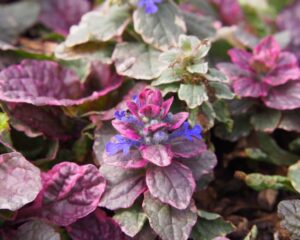 AJUGA REPTANS ‘BURGUNDY GLOW’
If you’ve been searching for something that handles Connecticut’s unpredictable spring weather, summer heat, and everything winter throws at it while looking absolutely stunning—look no further. AJUGA REPTANS ‘BURGUNDY GLOW’ is the tough-as-nails groundcover that also happens to be a total showstopper, with foliage so rich and colorful you’ll forget it’s technically “just” a groundcover.
What it looks like
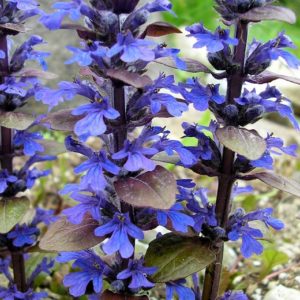
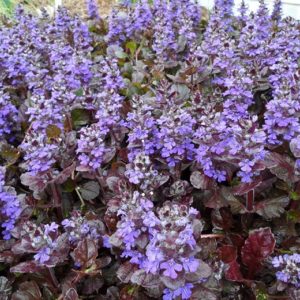
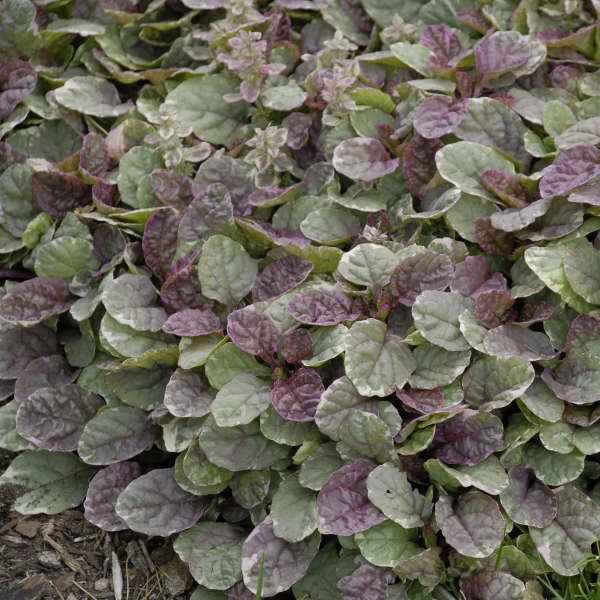
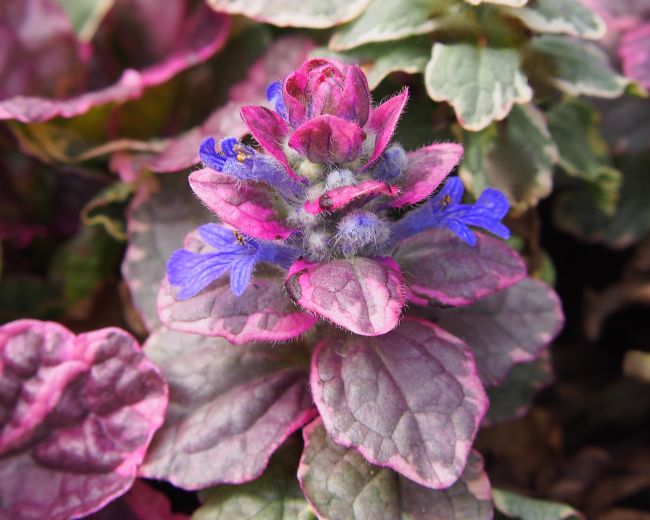
This is where AJUGA BURGUNDY GLOW earns its reputation. The foliage arrives in spring in a stunning tricolor display: deep burgundy-wine leaves suffused with cream and pink variegation that looks like someone hand-painted each leaf. As temperatures warm through the season, those burgundy tones intensify, deepening into rich wine-red by midsummer. The effect is absolutely luminous, especially when the afternoon sun catches the variegated edges. Even without the flowers (which are lovely spiky blue-purple spires), this plant would be worth growing for the foliage alone. But you get both, which feels like a gift.
Growing it in your garden
AJUGA BURGUNDY GLOW is remarkably unfussy, which is precisely why it’s become such a trusted favorite across New England gardens. It spreads steadily via runners, creating dense, weed-suppressing coverage without being invasive in the way some groundcovers can be. In Connecticut’s growing zone, it establishes quickly and overwinters reliably, bouncing back each spring with renewed vigor. You can plant it in spring through early fall, and it’ll settle in without drama. It grows low—typically 4 to 6 inches tall—making it perfect for edging beds, filling in spaces between pavers, or cascading over rock garden walls. The neat, compact habit means it stays tidy without constant maintenance.
Through the seasons
Spring brings fresh growth with that stunning variegated foliage unfurling in cream, pink, and burgundy. By late April or May (depending on your microclimate), delicate spikes of deep blue-purple flowers appear, creating a beautiful contrast against the colorful leaves. These flowers attract bees and early pollinators, making this plant as useful as it is beautiful. Summer is when the burgundy intensifies—the warmer it gets, the richer the color becomes. Fall sees that wine-red deepen even further as temperatures cool, extending the visual interest well into November. In winter, AJUGA BURGUNDY GLOW holds its foliage in Connecticut’s milder years, though in particularly harsh winters, it may go partially dormant before reliably returning in spring. Even dormant, the dried foliage has character.
Where it shines
Use AJUGA BURGUNDY GLOW as an edging plant along mixed borders where you want year-round color without tall, imposing foliage. It’s exceptional in rock gardens and alpine troughs, where its low spread and colorful leaves become focal points. Rock walls and raised beds benefit from its cascading habit. Plant it on slopes where you want erosion control without a boring, utilitarian look. It works beautifully in shade gardens beneath high-canopied trees, adding bright variegated color to areas that might otherwise be dark. Even in containers—yes, containers—AJUGA BURGUNDY GLOW performs admirably, spilling over pot edges with vibrant color. Consider mass planting it as a unique groundcover alternative to mulch in difficult spots where lawn won’t grow.
Perfect companions
Pair AJUGA BURGUNDY GLOW with spring bulbs like snowdrops or early crocuses that emerge through its foliage. Hostas of any variety complement its low stature and provide textural contrast. Creeping phlox (PHLOX SUBULATA) in soft pastels looks lovely alongside it. Sedums and other low-growing alpine plants work beautifully in rock garden settings. Ferns appreciate the same partial shade and moisture that AJUGA enjoys. For late-season interest, combine it with ornamental grasses that pick up on those burgundy tones. Dark-leaved heucheras create stunning color echoes with the variegated burgundy foliage.
Care tips
Plant AJUGA BURGUNDY GLOW in full sun to part shade for the best color development—plants in deep shade will lose some of that vibrant variegation. Soil should be average to fertile and well-draining; it tolerates a range of pH and soil types but prefers slightly moist conditions, especially during establishment. Water regularly the first season, then only during extended dry periods. Once established, this plant is remarkably drought-tolerant, though it performs best with moderate moisture. A light trim after flowering keeps plants dense and prevents any leggy growth. It’s rarely troubled by pests or diseases in Connecticut gardens. Divide mature clumps every few years if you want to expand coverage elsewhere in your garden.
Quick facts
- Hardiness Zone: Zones 3-9
- Mature Height & Spread: 4-6 inches tall, spreads 12-18 inches annually
- Bloom Season: Late spring (May-June)
- Light Requirements: Full sun to partial shade
- Water Needs: Moderate; drought-tolerant once established
- Available at: Both our retail and wholesale locations