Summer Crush Hydrangea

HYDRANGEA MACROPHYLLA ‘SUMMER CRUSH’

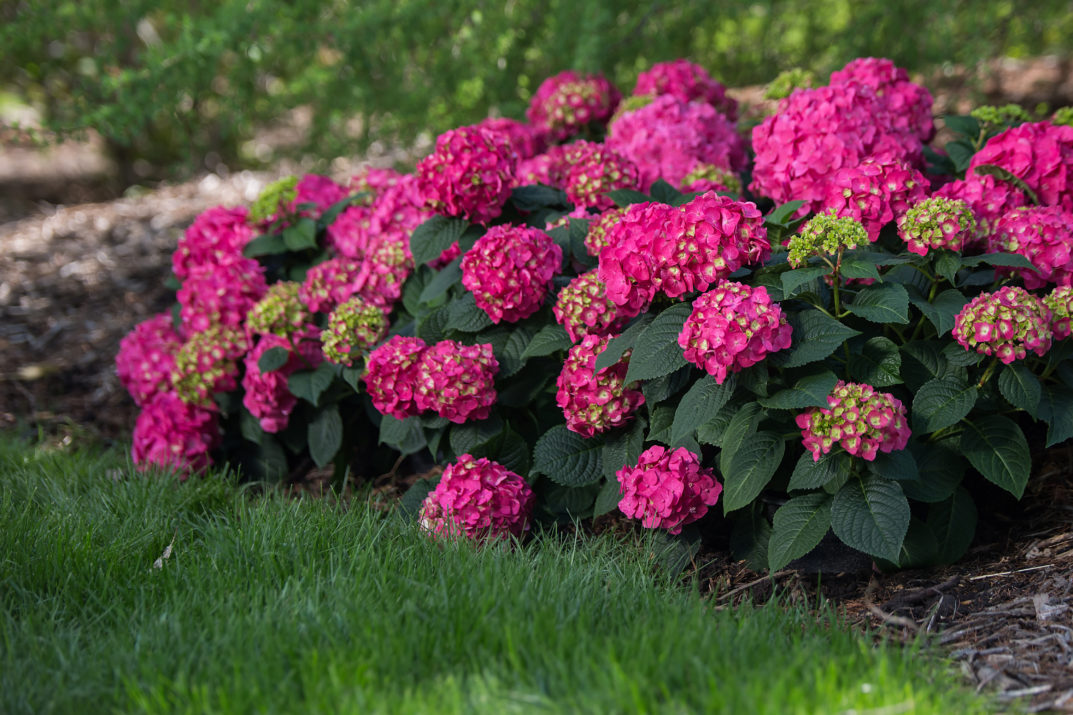
Here’s the honest truth about Summer Crush Hydrangea: it’s an overachiever that somehow makes it look effortless. This is the hydrangea you’ve been waiting for—the one that doesn’t just survive a Connecticut summer, but absolutely thrives in it, producing blooms so abundant and so vibrantly colored that neighbors will literally stop and ask what you’re doing differently. The flowers emerge in soft pink and gradually deepen to a rich, jewel-toned magenta as the season progresses, creating a natural color shift that feels like the plant is putting on a small show just for your garden.

What it looks like

Summer Crush is a mounded deciduous shrub with a naturally compact, tidy form that doesn’t sprawl or need constant pruning to keep presentable. The foliage is dark green and lustrous, providing a gorgeous backdrop for those magnificent flowers. The blooms themselves are lacecap-type hydrangeas—that sophisticated style where showy florets ring the outer edge of each flower cluster while fertile flowers create an airy center. It’s the kind of bloom structure that looks equally stunning en masse from across the yard or up close in a floral arrangement. And yes, these flowers dry beautifully if you’re inclined to bring them inside.

Growing it in your garden

Summer Crush wants afternoon shade and morning sun—think of it as the Goldilocks of hydrangeas. In southern Connecticut, this is genuinely easy to achieve. The plant prefers consistently moist, well-draining soil enriched with organic matter. If your garden tends toward clay (and whose doesn’t in Connecticut?), amend generously with compost before planting. The slightly acidic soil conditions we naturally have in New England actually help intensify the pink-to-magenta color development, though the exact shade will depend on your soil’s aluminum availability. Don’t stress too much about pH—Summer Crush is far more flexible than traditional bigleaf hydrangeas.

This variety is notably disease-resistant and performs reliably through our challenging New England seasons. It blooms on new wood, which means you have flexibility with pruning and won’t accidentally remove next year’s flowers like you might with some hydrangeas. Spring pruning is straightforward and forgiving.

Through the seasons

Spring arrives with fresh, emerging foliage in a soft chartreuse that gradually darkens. By early summer, the first flower buds appear—the anticipation alone is worth the wait. From June through September, Summer Crush delivers continuous blooms, which is genuinely unusual for hydrangeas. Rather than one big flush and done, you get wave after wave of flowers. The color evolution from pink to magenta happens gradually, so you’re never bored looking at the same tone. In autumn, as temperatures cool, the foliage takes on burgundy undertones while the flowers themselves develop deeper, wine-like hues. It’s stunning. Even after frost arrives, the dried flower heads persist into winter, offering architectural interest and shelter for overwintering insects.

Where it shines

Summer Crush excels in foundation plantings where you want color without fussiness. It’s perfect for the partial shade garden that gets western afternoon light. It performs beautifully in mixed borders alongside companions like ornamental grasses, coneflowers, and black-eyed Susans. Container growing is absolutely possible—just commit to consistent watering during Connecticut’s hot, dry summers. This hydrangea is also particularly rewarding in smaller yards where you need a plant that earns its space through extended bloom time and relatively compact growth.

Perfect companions

Pair Summer Crush with Japanese forest grass (HAKONECHLOA MACRA) for fine-textured contrast. The silvery foliage of artemisia plays beautifully against those magenta flowers. Consider planting nearby LIRIOPE for late-season color and a completely different flower form. Shade-tolerant hostas with chartreuse or blue-toned foliage make excellent visual companions. For continuous color, underplant with shade-tolerant perennials like bleeding heart or hellebores.

Care tips

Water consistently, especially during establishment and through your first summer. Deep soaking once or twice weekly beats daily sprinkles. Mulch around the base with two to three inches of composted bark to retain moisture and keep roots cool. If you live in northern Connecticut, a light winter mulch protects the base from extreme cold. Deadheading spent flowers throughout the season encourages fresh blooms, though leaving late-season flowers on the plant creates that beautiful dried winter interest. Fertilize in spring with a balanced hydrangea fertilizer and again in early summer—no more after July, as late feeding can encourage tender new growth vulnerable to frost.

Quick facts

  • Hardiness Zone: 5–9 (reliably hardy throughout Connecticut)
  • Mature Height & Spread: 3–4 feet tall and wide
  • Bloom Season: June through September
  • Light Requirements: Partial shade with some morning sun
  • Water Needs: Consistently moist, well-draining soil
  • Available at: Both our retail and wholesale locations
Summer Crush Hydrangea

With a profusion of big raspberry red or neon purple blooms, Summer Crush® brings floral quality blooms to your garden or patio container. Not only is it drop-dead gorgeous, but it is compact so you get a neat, tidy look throughout the summer.

Pot Size (gallons), Height: #3

Description

Summer Crush Hydrangea

HYDRANGEA MACROPHYLLA ‘SUMMER CRUSH’

Here’s the honest truth about Summer Crush Hydrangea: it’s an overachiever that somehow makes it look effortless. This is the hydrangea you’ve been waiting for—the one that doesn’t just survive a Connecticut summer, but absolutely thrives in it, producing blooms so abundant and so vibrantly colored that neighbors will literally stop and ask what you’re doing differently. The flowers emerge in soft pink and gradually deepen to a rich, jewel-toned magenta as the season progresses, creating a natural color shift that feels like the plant is putting on a small show just for your garden.

What it looks like

Summer Crush is a mounded deciduous shrub with a naturally compact, tidy form that doesn’t sprawl or need constant pruning to keep presentable. The foliage is dark green and lustrous, providing a gorgeous backdrop for those magnificent flowers. The blooms themselves are lacecap-type hydrangeas—that sophisticated style where showy florets ring the outer edge of each flower cluster while fertile flowers create an airy center. It’s the kind of bloom structure that looks equally stunning en masse from across the yard or up close in a floral arrangement. And yes, these flowers dry beautifully if you’re inclined to bring them inside.

Growing it in your garden

Summer Crush wants afternoon shade and morning sun—think of it as the Goldilocks of hydrangeas. In southern Connecticut, this is genuinely easy to achieve. The plant prefers consistently moist, well-draining soil enriched with organic matter. If your garden tends toward clay (and whose doesn’t in Connecticut?), amend generously with compost before planting. The slightly acidic soil conditions we naturally have in New England actually help intensify the pink-to-magenta color development, though the exact shade will depend on your soil’s aluminum availability. Don’t stress too much about pH—Summer Crush is far more flexible than traditional bigleaf hydrangeas.

This variety is notably disease-resistant and performs reliably through our challenging New England seasons. It blooms on new wood, which means you have flexibility with pruning and won’t accidentally remove next year’s flowers like you might with some hydrangeas. Spring pruning is straightforward and forgiving.

Through the seasons

Spring arrives with fresh, emerging foliage in a soft chartreuse that gradually darkens. By early summer, the first flower buds appear—the anticipation alone is worth the wait. From June through September, Summer Crush delivers continuous blooms, which is genuinely unusual for hydrangeas. Rather than one big flush and done, you get wave after wave of flowers. The color evolution from pink to magenta happens gradually, so you’re never bored looking at the same tone. In autumn, as temperatures cool, the foliage takes on burgundy undertones while the flowers themselves develop deeper, wine-like hues. It’s stunning. Even after frost arrives, the dried flower heads persist into winter, offering architectural interest and shelter for overwintering insects.

Where it shines

Summer Crush excels in foundation plantings where you want color without fussiness. It’s perfect for the partial shade garden that gets western afternoon light. It performs beautifully in mixed borders alongside companions like ornamental grasses, coneflowers, and black-eyed Susans. Container growing is absolutely possible—just commit to consistent watering during Connecticut’s hot, dry summers. This hydrangea is also particularly rewarding in smaller yards where you need a plant that earns its space through extended bloom time and relatively compact growth.

Perfect companions

Pair Summer Crush with Japanese forest grass (HAKONECHLOA MACRA) for fine-textured contrast. The silvery foliage of artemisia plays beautifully against those magenta flowers. Consider planting nearby LIRIOPE for late-season color and a completely different flower form. Shade-tolerant hostas with chartreuse or blue-toned foliage make excellent visual companions. For continuous color, underplant with shade-tolerant perennials like bleeding heart or hellebores.

Care tips

Water consistently, especially during establishment and through your first summer. Deep soaking once or twice weekly beats daily sprinkles. Mulch around the base with two to three inches of composted bark to retain moisture and keep roots cool. If you live in northern Connecticut, a light winter mulch protects the base from extreme cold. Deadheading spent flowers throughout the season encourages fresh blooms, though leaving late-season flowers on the plant creates that beautiful dried winter interest. Fertilize in spring with a balanced hydrangea fertilizer and again in early summer—no more after July, as late feeding can encourage tender new growth vulnerable to frost.

Quick facts

  • Hardiness Zone: 5–9 (reliably hardy throughout Connecticut)
  • Mature Height & Spread: 3–4 feet tall and wide
  • Bloom Season: June through September
  • Light Requirements: Partial shade with some morning sun
  • Water Needs: Consistently moist, well-draining soil
  • Available at: Both our retail and wholesale locations