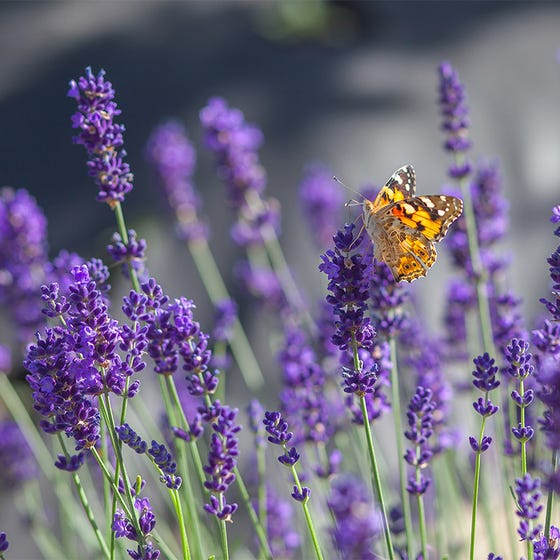
English Lavender

LAVANDULA ANGUSTIFOLIA

Close your eyes and picture the heart of a Connecticut cottage garden. Chances are, English Lavender is right there in the middle of it—swaying in the summer breeze, humming with bees, and filling the air with that unmistakable purple-haze fragrance that makes you feel like you’re on holiday. This is the lavender that actually thrives in New England, the one that comes back reliably year after year, and the one that transforms a sunny corner from ordinary to absolutely magical.

What it looks like

English Lavender is the essence of Mediterranean elegance, even in Connecticut. Picture narrow, silvery-green foliage that’s almost feathery to the touch, rising into tight little mounds that stay compact and tidy without fussing. Come summer, delicate flower spikes emerge—usually in shades of deep purple, but also available in pristine white, pale pink, and even bicolors—each tiny floret packed densely along the stem like nature’s own confetti. The overall effect is romantic and airy, the kind of plant that makes you want to brush your hand through it as you pass.

Growing it in your garden

Here’s where English Lavender proves itself a true New England native at heart: it actually prefers the cooler, drier conditions of northern climates. Unlike its tender cousins, LAVANDULA ANGUSTIFOLIA handles Connecticut winters beautifully, especially if you give it what it’s asking for—full sun and soil with excellent drainage. This is important. Lavender despises wet feet, so if your garden tends toward clay or stays boggy in spring, amend generously with sand and grit. Think Mediterranean hillside, not English meadow, despite the name. Once established, this plant is refreshingly low-maintenance, asking for minimal watering beyond normal rainfall and no fertilizing whatsoever. In fact, too much pampering makes it floppy and prone to disease.

Through the seasons

Spring brings the emergence of that beautiful silvery foliage, fresh and fine-textured, providing structure and color even before blooming begins. By early June, the flower spikes start rising, and by July they’ve reached their full glory—weeks upon weeks of continuous bloom that extends well into August if you deadhead spent flowers. This is peak season, when pollinators absolutely flock to the plant and the fragrance seems strongest. Come September and October, the flowers dry beautifully in place, turning a warm tan-brown that remains ornamental into winter. The dried spikes can be left standing for visual interest and wildlife shelter, or harvested for dried arrangements and sachets. In harsh Connecticut winters, the silvery foliage persists underneath, proof that the plant is alive and waiting for spring.

Where it shines

English Lavender is the star of sunny borders, especially along pathways where you can brush against it and release that signature scent. It’s perfect for cottage gardens, Mediterranean-style schemes, pollinator plantings, and contemporary minimalist designs—truly a plant that adapts to your garden’s personality. Use it to edge beds, line driveways, or cluster in groups of three or five for maximum impact. It’s also exceptional in containers, where the drainage and heat are usually perfect, and it spills gracefully over the edges. Plant it near seating areas or bedroom windows where you can enjoy the fragrance and watch the bees working. English Lavender also makes an excellent dried flower—harvest in mid-bloom, hang upside down in a cool, dry spot, and enjoy for months.

Perfect companions

English Lavender loves the company of other sun-worshipping, drought-tolerant plants. Russian Sage (PEROVSKIA) echoes its color and airy texture beautifully. Pair it with Catmint (NEPETA), Coreopsis, ornamental grasses like Stipa or Miscanthus, and silvery-foliaged plants like Artemisia and Santolina. Sedums, Rudbeckia, and Echinacea are excellent companions that share its love of sun and drainage. In containers, combine English Lavender with trailing Senecio or upright Rosemary for a classic Mediterranean combo.

Care tips

The biggest mistake gardeners make is overwatering and over-amending the soil. Resist the urge. Once established, English Lavender needs watering only during extended dry spells. Prune lightly in early spring to remove winter-damaged growth and maintain shape. After blooming, you can cut back by about one-third if desired, but leaving some structure over winter protects the crown. Never cut into old, woody growth—lavender doesn’t regenerate from that. In Connecticut’s humid summers, ensure good air circulation to prevent fungal issues. If you notice the plant looking unhappy despite good drainage, root rot from water stress is likely the culprit.

Quick facts

  • Hardiness Zone: Zones 5–8
  • Mature Height & Spread: 18–24 inches tall and wide
  • Bloom Season: June to August, sometimes into September
  • Light Requirements: Full sun (6+ hours daily, preferably 8)
  • Water Needs: Low to moderate; prefers dry to medium conditions
  • Available at: Both our retail and wholesale locations

English Lavender

SuperBlue’ is a compact and fragrant Lavender plant that tops out at 12″, making it a perfect choice for edging walkways and setting into patio containers. This English Lavender is fairly tough, withstanding drought and overwintering reliably in all but the coldest zones. Rich and saturated, ‘SuperBlue’ produces blooms that are tighter together, delivering more color and fewer airy gaps. (Lavandula angustifolia)

Pot Size (gallons), Height: #1

Description

English Lavender

LAVANDULA ANGUSTIFOLIA

Close your eyes and picture the heart of a Connecticut cottage garden. Chances are, English Lavender is right there in the middle of it—swaying in the summer breeze, humming with bees, and filling the air with that unmistakable purple-haze fragrance that makes you feel like you’re on holiday. This is the lavender that actually thrives in New England, the one that comes back reliably year after year, and the one that transforms a sunny corner from ordinary to absolutely magical.

What it looks like

English Lavender is the essence of Mediterranean elegance, even in Connecticut. Picture narrow, silvery-green foliage that’s almost feathery to the touch, rising into tight little mounds that stay compact and tidy without fussing. Come summer, delicate flower spikes emerge—usually in shades of deep purple, but also available in pristine white, pale pink, and even bicolors—each tiny floret packed densely along the stem like nature’s own confetti. The overall effect is romantic and airy, the kind of plant that makes you want to brush your hand through it as you pass.

Growing it in your garden

Here’s where English Lavender proves itself a true New England native at heart: it actually prefers the cooler, drier conditions of northern climates. Unlike its tender cousins, LAVANDULA ANGUSTIFOLIA handles Connecticut winters beautifully, especially if you give it what it’s asking for—full sun and soil with excellent drainage. This is important. Lavender despises wet feet, so if your garden tends toward clay or stays boggy in spring, amend generously with sand and grit. Think Mediterranean hillside, not English meadow, despite the name. Once established, this plant is refreshingly low-maintenance, asking for minimal watering beyond normal rainfall and no fertilizing whatsoever. In fact, too much pampering makes it floppy and prone to disease.

Through the seasons

Spring brings the emergence of that beautiful silvery foliage, fresh and fine-textured, providing structure and color even before blooming begins. By early June, the flower spikes start rising, and by July they’ve reached their full glory—weeks upon weeks of continuous bloom that extends well into August if you deadhead spent flowers. This is peak season, when pollinators absolutely flock to the plant and the fragrance seems strongest. Come September and October, the flowers dry beautifully in place, turning a warm tan-brown that remains ornamental into winter. The dried spikes can be left standing for visual interest and wildlife shelter, or harvested for dried arrangements and sachets. In harsh Connecticut winters, the silvery foliage persists underneath, proof that the plant is alive and waiting for spring.

Where it shines

English Lavender is the star of sunny borders, especially along pathways where you can brush against it and release that signature scent. It’s perfect for cottage gardens, Mediterranean-style schemes, pollinator plantings, and contemporary minimalist designs—truly a plant that adapts to your garden’s personality. Use it to edge beds, line driveways, or cluster in groups of three or five for maximum impact. It’s also exceptional in containers, where the drainage and heat are usually perfect, and it spills gracefully over the edges. Plant it near seating areas or bedroom windows where you can enjoy the fragrance and watch the bees working. English Lavender also makes an excellent dried flower—harvest in mid-bloom, hang upside down in a cool, dry spot, and enjoy for months.

Perfect companions

English Lavender loves the company of other sun-worshipping, drought-tolerant plants. Russian Sage (PEROVSKIA) echoes its color and airy texture beautifully. Pair it with Catmint (NEPETA), Coreopsis, ornamental grasses like Stipa or Miscanthus, and silvery-foliaged plants like Artemisia and Santolina. Sedums, Rudbeckia, and Echinacea are excellent companions that share its love of sun and drainage. In containers, combine English Lavender with trailing Senecio or upright Rosemary for a classic Mediterranean combo.

Care tips

The biggest mistake gardeners make is overwatering and over-amending the soil. Resist the urge. Once established, English Lavender needs watering only during extended dry spells. Prune lightly in early spring to remove winter-damaged growth and maintain shape. After blooming, you can cut back by about one-third if desired, but leaving some structure over winter protects the crown. Never cut into old, woody growth—lavender doesn’t regenerate from that. In Connecticut’s humid summers, ensure good air circulation to prevent fungal issues. If you notice the plant looking unhappy despite good drainage, root rot from water stress is likely the culprit.

Quick facts

  • Hardiness Zone: Zones 5–8
  • Mature Height & Spread: 18–24 inches tall and wide
  • Bloom Season: June to August, sometimes into September
  • Light Requirements: Full sun (6+ hours daily, preferably 8)
  • Water Needs: Low to moderate; prefers dry to medium conditions
  • Available at: Both our retail and wholesale locations