Description

PHLOX PANICULATA ‘LAURA’
When midsummer arrives and most of your garden is settling into a predictable hum, PHLOX PANICULATA ‘LAURA’ steps onto the stage with the confidence of a performer who knows she’s got the audience’s full attention. This is a panicle phlox that doesn’t just show up—she shows out, with flower clusters so abundant they practically obscure the foliage beneath, and a fragrance that drifts across your garden on warm evenings like an invitation to slow down and simply breathe.
What it looks like
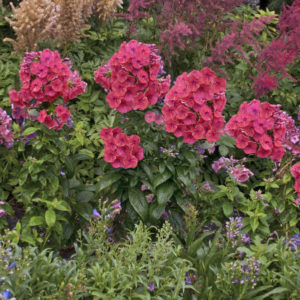
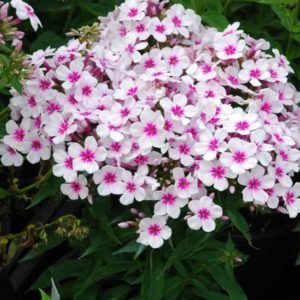
Laura is a stunner in the classic phlox tradition, with sturdy, upright stems clothed in deep green leaves that form a strong structural backbone for her real star turn. The flowers arrive in massive pyramidal panicles—think tightly packed clusters of small, five-petaled blooms—in a luminous coral-pink shade that seems to glow as the sun sinks lower in the sky. The color is warm without being garish, sophisticated without being shy. Individual flowers are modest in size, but grouped together in such profusion, they create a presence that’s impossible to ignore. The plant typically reaches shoulder height or slightly taller, making it an excellent candidate for the middle or back of borders.
Growing it in your garden
Here’s what makes Laura such a reliable performer in Connecticut gardens: she’s genuinely unfussy. Give her full sun to part shade—though she’ll produce the most spectacular blooms with at least six hours of direct sunlight—and well-draining soil enriched with organic matter. Unlike some of the finicky cultivars that demand perfect conditions, Laura is content with average garden soil, which makes her a practical choice for real-world gardening rather than gardening fantasy. She prefers consistent moisture during the growing season, so mulching around the base helps retain soil water and keeps her happy through our hot New England summers. Good air circulation is her one real request—this helps prevent powdery mildew, which can be an issue with panicle phlox in humid conditions.
Through the seasons
Spring arrives and Laura emerges as reliable green shoots among the garden’s early awakening. By early summer, the stems are elongating and buds are forming. Then, typically by mid-July and extending into August, the magic happens. Waves of coral-pink flowers open in succession, meaning you’re not getting one brief flash of color but rather weeks of continuous bloom. Deadheading spent flowers can encourage even more blooms, though you can also leave later flowers to mature for late-season interest. As fall settles in, the flower clusters fade gracefully to russet tones, adding a different kind of beauty to the autumn garden. The stems remain structurally sound through winter, creating helpful silhouettes in the dormant season before you cut them back in early spring.
Where it shines
Laura is a perennial border workhorse, the kind of plant that makes novice gardeners look like experienced designers simply because it does its job so well. Use her in drifts of three or more for maximum impact—phlox is never better than when planted in groups. She’s a wonderful companion for roses, creating a romantic pairing that feels effortless. Because she blooms during the height of summer when many spring bloomers have already faded, she’s perfect for filling the mid-season gap in gardens that might otherwise look spent by July. She also makes a respectable cut flower, bringing her lovely scent indoors for several days.
Perfect companions
Laura teams beautifully with purple-foliaged plants like HEUCHERA ‘Obsidian’ or purple coneflower (ECHINACEA purpurea), which create a stunning color contrast. Ornamental grasses like PANICUM ‘Heavy Metal’ add movement and texture that complements her solid structure. Consider pairing her with white-flowering companions like GAURA or dahlias for a striking combination, or go monochromatic with other coral and pink tones for a sophisticated drift. Lavender-blue DELPHINIUM in the background creates a classic cottage garden combination that never fails.
Care tips
Deadheading will extend your bloom season considerably—pinch off spent flower clusters to encourage branching and more flowers. If your plant becomes tall and leggy, you can pinch back the stems in early summer to create a bushier, more compact form, though you’ll sacrifice some of the early flowers. Every three to four years, divide the plant in spring to rejuvenate it and prevent the center from becoming woody. Watch for powdery mildew in humid seasons; improve air circulation and avoid overhead watering to minimize problems. In Connecticut’s cold winters, no special protection is needed—Laura is absolutely hardy and will return reliably each spring.
Quick facts
- Hardiness Zone: 3–8
- Mature Height & Spread: 24–36 inches tall, 18–24 inches wide
- Bloom Season: Mid-July through August
- Light Requirements: Full sun to part shade (6+ hours ideal)
- Water Needs: Moderate; consistent moisture during growing season
- Available at: Both our retail and wholesale locations