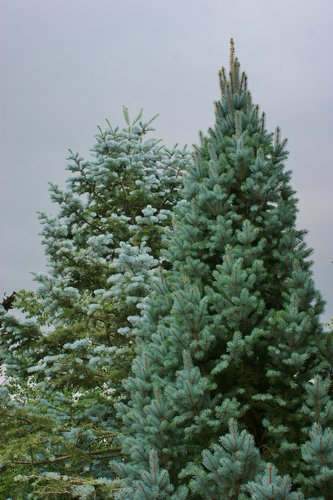
Fastigiata Blue Spruce

PICEA PUNGENS ‘FASTIGIATA’

If you’ve ever wanted a spruce that actually respects your space, the Fastigiata Blue Spruce is your answer. While most spruces eventually sprawl like they own the neighborhood, this narrow, columnar variety grows straight up—think of it as the well-behaved teenager of the conifer family. It brings the stunning steel-blue needles everyone loves about Colorado Blue Spruces without demanding the square footage of a small meadow.

What it looks like

This is one of the most architecturally striking conifers you can plant. The Fastigiata Blue Spruce grows in a tight, pencil-like column with a distinctly formal silhouette that makes it impossible to ignore. The foliage is a magnificent blue-gray, almost metallic in appearance, especially when young shoots emerge in spring with that signature silvery-blue glow. The needles are sharp and densely packed, giving the entire tree a sculptural, almost frosted appearance. At maturity, it remains slender and upright—typically reaching 40 to 50 feet tall but only 8 to 10 feet wide. This extreme verticality makes it perfect for creating strong vertical lines in landscapes where space is precious.

Growing it in your garden

Here’s what makes the Fastigiata Blue Spruce so reliable for Connecticut gardens: it’s tougher than it looks. This tree handles our New England winters without flinching, thriving in Zones 3 through 7 with equal aplomb. It’s not fussy about soil, performing well in everything from sandy to clay-based soils, as long as drainage is decent. These spruces actually prefer slightly drier conditions than you might expect—they appreciate good air circulation and don’t love sitting in boggy ground. Plant it in full sun for the best color development; while it tolerates partial shade, you’ll get that signature blue intensity when it’s basking in six or more hours of direct sunlight daily. The tree’s narrow form means it won’t create problematic shade for the plants around it either, which is a huge advantage in smaller Connecticut yards.

Through the seasons

Spring brings new growth that’s even more luminous than the existing needles, with a silvery-blue cast that catches the light beautifully. Early summer shows the tree at its most dimensional as those new shoots expand. The summer months are when the Fastigiata really becomes a focal point—that cool blue-gray color is almost refreshing to look at on hot July afternoons. Small, reddish-purple cones develop in late summer and mature to brown by fall. Unlike deciduous trees, the Fastigiata never puts on a color show in autumn—it doesn’t need to. Instead, it provides unwavering structure and color throughout fall as other plants fade. Winter is perhaps when it shines brightest; snow clings beautifully to its fine-textured needles, and against winter’s gray skies, that blue-gray foliage becomes a living piece of garden architecture.

Where it shines

This is the spruce for vertical emphasis in tight spaces. Use it as a specimen tree where you want year-round color and form. In foundation plantings, it adds sophistication without overshadowing your home—especially in formal or contemporary landscapes. It’s magnificent as an accent plant at the corner of a deck or patio, framing views or creating a living focal point. Plant it in groups of three or five at varying distances to create a modern, sculptural effect. It also works beautifully as a living screen for hiding utility areas or as a backdrop for flowering shrubs that need a sophisticated evergreen companion. Because it stays so narrow, it’s ideal for smaller Connecticut properties where traditional blue spruces simply won’t fit.

Perfect companions

Plant Fastigiata Blue Spruce alongside plants that appreciate similar conditions and won’t compete for space. Dwarf Alberta spruces, junipers, and other columnar conifers create an interesting mixed-evergreen composition. At its base, consider underplanting with shade-tolerant groundcovers like creeping phlox, sedum, or ornamental grasses like Japanese forest grass. In spring-flowering times, bulbs like tulips and daffodils provide wonderful color contrast against that cool blue. Deciduous shrubs with interesting foliage—like purple-leaf barberry or golden spirea—make striking companions for the bluish tones.

Care tips

Young trees benefit from consistent watering during their first two growing seasons—think deeply every week or ten days if rain hasn’t fallen. Once established, the Fastigiata is quite drought-tolerant and doesn’t need supplemental watering except during severe Connecticut droughts. Minimal pruning is needed; the tree naturally maintains its tight, columnar form. If you need to remove lower branches or shape it slightly, do so in early spring before new growth emerges. Watch for spider mites in hot, dry summers—a quick spray of water across the foliage can prevent infestations. No fertilizer is necessary for established trees; in poor soils, apply a balanced slow-release fertilizer in spring.

Quick facts

  • Hardiness Zone: 3–7
  • Mature Height & Spread: 40–50 feet tall, 8–10 feet wide
  • Bloom Season: Conifer cones form in late summer
  • Light Requirements: Full sun (6+ hours daily for best color)
  • Water Needs: Moderate; prefers well-drained soil, tolerates drought once established
  • Available at: Both our retail and wholesale locations

Fastigiata Blue Spruce

A popular selection for its tight columnar habit as it won’t grow as tall and/or wide as the species. It is the perfect choice for planting in a small area. ‘Fastigiata’ will eventually begin to spread with age, but can be kept tight with shearing.

Pot Size (gallons), Height: #15

Description

Fastigiata Blue Spruce

PICEA PUNGENS ‘FASTIGIATA’

If you’ve ever wanted a spruce that actually respects your space, the Fastigiata Blue Spruce is your answer. While most spruces eventually sprawl like they own the neighborhood, this narrow, columnar variety grows straight up—think of it as the well-behaved teenager of the conifer family. It brings the stunning steel-blue needles everyone loves about Colorado Blue Spruces without demanding the square footage of a small meadow.

What it looks like

This is one of the most architecturally striking conifers you can plant. The Fastigiata Blue Spruce grows in a tight, pencil-like column with a distinctly formal silhouette that makes it impossible to ignore. The foliage is a magnificent blue-gray, almost metallic in appearance, especially when young shoots emerge in spring with that signature silvery-blue glow. The needles are sharp and densely packed, giving the entire tree a sculptural, almost frosted appearance. At maturity, it remains slender and upright—typically reaching 40 to 50 feet tall but only 8 to 10 feet wide. This extreme verticality makes it perfect for creating strong vertical lines in landscapes where space is precious.

Growing it in your garden

Here’s what makes the Fastigiata Blue Spruce so reliable for Connecticut gardens: it’s tougher than it looks. This tree handles our New England winters without flinching, thriving in Zones 3 through 7 with equal aplomb. It’s not fussy about soil, performing well in everything from sandy to clay-based soils, as long as drainage is decent. These spruces actually prefer slightly drier conditions than you might expect—they appreciate good air circulation and don’t love sitting in boggy ground. Plant it in full sun for the best color development; while it tolerates partial shade, you’ll get that signature blue intensity when it’s basking in six or more hours of direct sunlight daily. The tree’s narrow form means it won’t create problematic shade for the plants around it either, which is a huge advantage in smaller Connecticut yards.

Through the seasons

Spring brings new growth that’s even more luminous than the existing needles, with a silvery-blue cast that catches the light beautifully. Early summer shows the tree at its most dimensional as those new shoots expand. The summer months are when the Fastigiata really becomes a focal point—that cool blue-gray color is almost refreshing to look at on hot July afternoons. Small, reddish-purple cones develop in late summer and mature to brown by fall. Unlike deciduous trees, the Fastigiata never puts on a color show in autumn—it doesn’t need to. Instead, it provides unwavering structure and color throughout fall as other plants fade. Winter is perhaps when it shines brightest; snow clings beautifully to its fine-textured needles, and against winter’s gray skies, that blue-gray foliage becomes a living piece of garden architecture.

Where it shines

This is the spruce for vertical emphasis in tight spaces. Use it as a specimen tree where you want year-round color and form. In foundation plantings, it adds sophistication without overshadowing your home—especially in formal or contemporary landscapes. It’s magnificent as an accent plant at the corner of a deck or patio, framing views or creating a living focal point. Plant it in groups of three or five at varying distances to create a modern, sculptural effect. It also works beautifully as a living screen for hiding utility areas or as a backdrop for flowering shrubs that need a sophisticated evergreen companion. Because it stays so narrow, it’s ideal for smaller Connecticut properties where traditional blue spruces simply won’t fit.

Perfect companions

Plant Fastigiata Blue Spruce alongside plants that appreciate similar conditions and won’t compete for space. Dwarf Alberta spruces, junipers, and other columnar conifers create an interesting mixed-evergreen composition. At its base, consider underplanting with shade-tolerant groundcovers like creeping phlox, sedum, or ornamental grasses like Japanese forest grass. In spring-flowering times, bulbs like tulips and daffodils provide wonderful color contrast against that cool blue. Deciduous shrubs with interesting foliage—like purple-leaf barberry or golden spirea—make striking companions for the bluish tones.

Care tips

Young trees benefit from consistent watering during their first two growing seasons—think deeply every week or ten days if rain hasn’t fallen. Once established, the Fastigiata is quite drought-tolerant and doesn’t need supplemental watering except during severe Connecticut droughts. Minimal pruning is needed; the tree naturally maintains its tight, columnar form. If you need to remove lower branches or shape it slightly, do so in early spring before new growth emerges. Watch for spider mites in hot, dry summers—a quick spray of water across the foliage can prevent infestations. No fertilizer is necessary for established trees; in poor soils, apply a balanced slow-release fertilizer in spring.

Quick facts

  • Hardiness Zone: 3–7
  • Mature Height & Spread: 40–50 feet tall, 8–10 feet wide
  • Bloom Season: Conifer cones form in late summer
  • Light Requirements: Full sun (6+ hours daily for best color)
  • Water Needs: Moderate; prefers well-drained soil, tolerates drought once established
  • Available at: Both our retail and wholesale locations