Description
LIRIODENDRON TULIPIFERA
What if one plant could give you soaring height, brilliant spring blooms, and that golden-butterscotch fall color that makes you pull over just to look? The Tulip Tree—also called Yellow Poplar—is one of Connecticut’s most underrated treasures. It grows tall and straight like something out of a fairy tale, with leaves shaped like cat faces and flowers that honestly look like someone glued little tulips to the branches. In spring, when everything is just waking up, those pale green and orange blooms appear high in the canopy, and if you stand beneath one, you’ll understand why this tree has been beloved since colonial times.
What it looks like
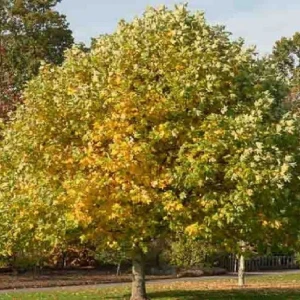
The Tulip Tree is an architectural marvel. Picture a tall, narrow crown with a strong, straight trunk that makes it ideal for creating vertical interest in your landscape. The leaves are its most distinctive feature—they’re lobed and squared off at the tip, honestly looking more like a cat’s face or a fish than anything botanical. Come spring, pale green and orange tulip-shaped flowers appear scattered throughout the canopy. They’re often hidden among the foliage, which adds to their charm—like nature’s secret treasure hunt. In fall, those leaves transform into a luminous yellow-gold that catches the light in the most spectacular way. This tree can reach impressive heights, so think about placement carefully.
Growing it in your garden
Tulip Trees are remarkably adaptable to Connecticut’s conditions, though they do prefer slightly acidic to neutral soil. They’re not finicky about moisture—they’ll grow in average to slightly moist soil—but they really establish strongest with consistent water during their first few growing seasons. Plant in full sun to partial shade, though more sun means better flowering and more dramatic fall color. They do prefer not to be crowded; give them space to develop that naturally elegant form. The tree grows at a moderate to fast pace once established, so you’re not waiting forever for your investment to mature. They handle our New England winters without any special treatment and seem to shrug off the occasional spring frost.
Through the seasons
Spring is when the Tulip Tree truly announces itself. Those quirky flowers emerge as the leaves unfurl, creating a lovely two-part show. Summer brings full, dense foliage that creates dappled shade—the lobed leaves create an interesting play of light and shadow beneath the canopy. Fall is showtime: that butter-yellow color starts appearing in late September through October, and it holds its color longer than many trees. Winter reveals the tree’s architecture—that straight trunk and elegant branching pattern become the skeleton that frames your winter landscape. The tree is deciduous, so you get that clean slate each year.
Where it shines
This is a specimen tree, meaning it deserves a spot where you can actually see it. Plant it where morning light can backlight those fall leaves, or position it as a focal point at the end of a garden vista. Tulip Trees work beautifully as street trees for properties that have room for its mature size. They’re excellent for creating height in mixed borders or woodland-edge gardens. Because they grow tall rather than wide, they don’t dominate garden space the way some larger trees do. They’re perfect for Connecticut properties where you want year-round visual interest but need to be thoughtful about space.
Perfect companions
Under a Tulip Tree, the dappled shade is perfect for shade-loving perennials. Plant native Connecticut wildflowers like Hellebores, Hostas, and shade-tolerant Ferns in the understory. Nearby, taller shrubs like Oakleaf Hydrangea or native Viburnum create a lovely layered effect. Evergreen shrubs at the base anchor the composition and provide winter structure when the tree is bare. The tree’s upright form means it won’t overshadow nearby plantings if you position things thoughtfully.
Care tips
Water consistently during the establishment period—that’s the first two years after planting. Once established, Tulip Trees are quite drought-tolerant, though they appreciate supplemental water during hot, dry Connecticut summers. They don’t require much pruning; just remove any dead or crossing branches in late winter. Be patient with young trees—they may take a few seasons to really flower heavily, but once they settle in, the blooms come reliably. Avoid planting them where wind tunnels through; while they’re sturdy, their height means wind is a consideration. If you notice small branch dieback, don’t panic—this tree is very good at recovering.
Quick facts
- Hardiness Zone: 4–9 (perfect for Connecticut)
- Mature Height & Spread: 60–90 feet tall, 30–50 feet wide
- Bloom Season: Spring (May)
- Light Requirements: Full sun to partial shade
- Water Needs: Average to moderate; prefers consistent moisture during establishment
- Available at: Both our retail and wholesale locations