Description
TILIA AMERICANA
The American Linden is one of Connecticut’s most underrated treasures. While other shade trees hog the spotlight, this elegant native quietly steals the show with its stately form, intoxicating fragrance, and genuine four-season appeal. If you’re tired of the same old maples and oaks, and you want a tree that will make your neighbors ask “what is that smell?”—this is your answer. TILIA AMERICANA doesn’t just grow in your landscape; it becomes a landmark.
What it looks like
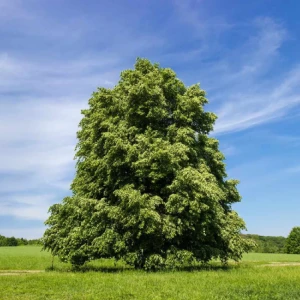
Picture a tree with an almost perfect pyramidal shape, especially when young, that matures into a broad, rounded crown with dense, deep green foliage. The leaves are heart-shaped and slightly asymmetrical, creating a fine, elegant texture even from a distance. In late June through early July, when the tiny yellowish-white flowers appear in drooping clusters (called cymes), they’re almost hidden by the leaves—but that’s when the magic happens. The fragrance is sweet, honey-like, and absolutely intoxicating. Bees absolutely flock to it. Come fall, the leaves turn a soft, buttery yellow that glows in autumn light. The smooth gray bark remains handsome even in winter, adding quiet structure to the bare landscape.
Growing it in your garden
TILIA AMERICANA is remarkably adaptable and forgiving, which is exactly what you want in a large shade tree. It prefers full sun to partial shade and needs well-draining, fertile soil, but it’s far more flexible than you’d expect. It tolerates both slightly acidic and slightly alkaline conditions. Unlike some finicky shade trees, it doesn’t demand constant fussing. In Connecticut’s climate, it’s completely winter-hardy and settles in beautifully. Plant it in spring or early fall, give it consistent moisture during its first growing season, and then let it be. This is a tree that actually improves with age and becomes more impressive every decade.
Through the seasons
Spring arrives with fresh, bright green leaves and an increasingly upright branching habit. Summer is when the flowers steal the show—that unforgettable fragrance signals peak bloom. The tree provides dense, cooling shade perfect for sitting beneath on hot New England afternoons. Fall transforms the canopy into gold, creating a stunning focal point through mid-autumn. Winter reveals the tree’s strong architectural bones; the smooth bark and elegant branching structure make it surprisingly beautiful even when bare.
Where it shines
TILIA AMERICANA excels as a specimen shade tree in a lawn, where its graceful form and fragrance can be fully appreciated. It’s also excellent as a street tree—historically, American Lindens lined many New England town centers and country roads for good reason. It creates a living canopy over patios, walkways, and seating areas where you’ll want to linger during bloom time. This tree is particularly valuable in larger gardens and estates where it has room to reach its full potential. Its native status means it supports local pollinators and wildlife while fitting naturally into New England landscapes.
Perfect companions
Plant shade-tolerant understory shrubs like Oakleaf Hydrangea (HYDRANGEA QUERCIFOLIA) or native spicebush (LINDERA BENZOIN) beneath the canopy. Spring bulbs—especially tulips and alliums—look charming around the base. Hostas and Helleborus handle the dappled shade beautifully. The tree’s strong form means it looks striking as a focal point against evergreen backings like hemlock or white pine. In mixed borders, its clean lines complement ornamental grasses and late-season perennials that bloom after its flowers fade.
Care tips
Water regularly during establishment, but mature trees are quite drought-tolerant once settled. Prune only to shape or remove crossing branches in winter. Watch for Japanese beetles in mid-summer—they can defoliate trees if populations are heavy, though established TILIA AMERICANA typically recovers. The tree’s only real drawback is that it can sucker at the base if the roots are damaged, so plan carefully before planting and mulch gently. Don’t plant in compacted soil or areas with heavy foot traffic. Otherwise, this is about as low-maintenance as large shade trees get.
Quick facts
- Hardiness Zone: 2-8 (thrives throughout Connecticut and all of New England)
- Mature Height & Spread: 60-80 feet tall, 40-50 feet wide
- Bloom Season: Late June through early July
- Light Requirements: Full sun to partial shade
- Water Needs: Moderate; prefers consistent moisture during establishment
- Available at: Both our retail and wholesale locations