Description
MAGNOLIA x SOULANGEANA
The Saucer Magnolia is Connecticut’s most glamorous harbinger of spring. Before the forsythia yellows and long before the deciduous trees leaf out, this magnificent tree bursts into bloom with flowers so large, so extravagantly pink-tinged white, that they stop traffic on residential streets throughout New England. If you’ve ever wondered what that showstopping magnolia tree is in your neighbor’s yard come April, there’s an excellent chance it’s this one. It’s the kind of plant that makes you believe in spring even when the last snow pile is melting at the edge of the driveway.
What it looks like
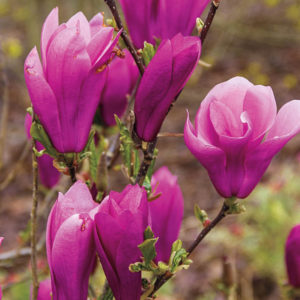
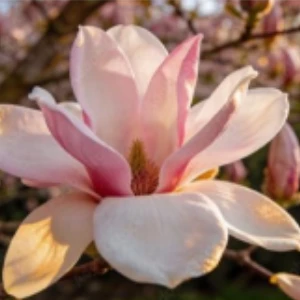
Saucer Magnolia earned its common name honestly: the flowers really do resemble elegant serving dishes. Each bloom reaches 5 to 10 inches across, with upright petals that range from pale pink to deeper rose, especially at the base. The inside of the petals glows with the softest ivory-white, creating a bicolor effect that’s almost unreal in its perfection. Flowers emerge directly from the branches before the leaves appear, which means you get the full, unobstructed impact of that floral display. The tree itself grows into a rounded, somewhat spreading form with smooth gray bark that remains attractive even in winter. Once the flowers fade, glossy green leaves emerge and persist through summer, turning golden-bronze before dropping in autumn.
Growing it in your garden
Saucer Magnolia thrives in Connecticut gardens when given what it needs: excellent drainage, consistent moisture during the growing season, and protection from the harshest afternoon sun in summer. This is not a tree that tolerates wet feet or drought extremes, so choose your planting spot thoughtfully. Morning sun is ideal—it’ll warm those early spring blooms nicely without subjecting them to intense afternoon heat later in the year. The tree performs beautifully in slightly acidic soil, which isn’t difficult to find in New England. Plant in early spring or fall, giving yourself time before the heat of summer sets in. Space it where it has room to reach its mature width; don’t crowd it against a house or fence, as poor air circulation can invite problems.
Through the seasons
April belongs entirely to the Saucer Magnolia. Those enormous, fragrant flowers emerge weeks before most other trees have even begun to wake up—sometimes as early as late March in warmer Connecticut microclimates. It’s a fleeting but unforgettable display, lasting two to three weeks depending on weather. Once flowering finishes, the fresh green foliage takes over and provides a lovely backdrop to spring bulbs and woodland plants. Summer finds the tree quietly handsome, its rounded canopy offering dappled shade. Fall brings a subtle golden-bronze color that’s more understated than showy, but lovely nonetheless. Winter reveals the tree’s architectural form and graceful branching structure.
Where it shines
Use Saucer Magnolia as a featured specimen tree where you want spring impact—near an entry, as a focal point in a mixed border, or in a woodland garden setting where it can be appreciated from a distance. It’s perfect for gardeners who want early-season color and don’t mind that the show is intense but brief. The tree also works beautifully in groupings of three magnolias with staggered bloom times, creating a longer season of floral interest. Because it tolerates some shade and prefers afternoon protection from hot sun, it’s ideal for the eastern or northern side of a property rather than a full-sun, south-facing location.
Perfect companions
Plant Saucer Magnolia where early spring bulbs can dance beneath it—daffodils, tulips, and Virginia bluebells are stunning companions. The tree pairs beautifully with other shade-tolerant shrubs like VIBURNUM, RHODODENDRON, and PIERIS. Underplant with shade-loving perennials like hellebores, bleeding heart, and hostas that will fill in once the magnolia’s display has finished. Nearby Japanese maples complement the magnolia’s graceful form and don’t compete for resources.
Care tips
Saucer Magnolia needs consistent moisture, especially during its first few growing seasons. Mulch around the base to keep roots cool and maintain soil moisture, but keep mulch pulled back from the trunk itself. Prune only to remove crossing branches or shape the tree immediately after flowering—magnolias don’t like heavy pruning and set their flower buds the previous summer. Watch for magnolia scale, which occasionally troubles these trees in our region; early detection makes treatment much easier. Never prune in late summer or fall, as this encourages tender new growth that won’t survive Connecticut’s winters.
Quick facts
- Hardiness Zone: 4–9
- Mature Height & Spread: 20–30 feet tall and wide
- Bloom Season: Early spring (March to April)
- Light Requirements: Morning sun, afternoon shade preferred
- Water Needs: Moderate; consistent moisture, well-drained soil
- Available at: Both our retail and wholesale locations.