Description

PRUNUS SUBHIRTELLA ‘DELAWARE VALLEY WHITE’
If you’ve been searching for a flowering cherry that actually thrives in Connecticut’s temperamental climate—one that doesn’t sulk through our unpredictable springs or succumb to our harsh winters—Delaware Valley White is exactly what you’ve been waiting for. This isn’t some fussy ornamental that demands coddling; it’s a tough, dependable beauty that delivers spectacular spring blooms year after year, even when Mother Nature throws her worst at us.
What it looks like
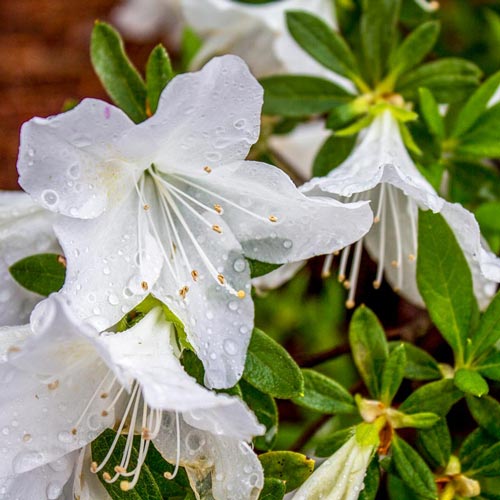
Delaware Valley White is a graceful, upright-spreading tree with an elegant vase-like form that only gets more sculptural with age. In spring, before the leaves fully emerge, the branches transform into a cloud of pristine white double flowers—those full, ruffled blooms that make you stop and stare. Each flower is delicate and intricate, and they blanket the entire tree in a way that feels almost unreal. Once the flowers fade, the emerging foliage is a soft bronze-green, eventually maturing to a rich, glossy dark green that provides excellent contrast in the summer garden. The tree’s bark is an attractive reddish-brown, adding winter interest long after the leaves have fallen.
Growing it in your garden
Here’s where Delaware Valley White really proves its worth in New England gardens. Unlike many ornamental cherries that struggle with Connecticut’s humid springs and freeze-thaw cycles, this variety is remarkably resilient. Plant it in a location with full sun—at least six hours daily—and well-draining soil with consistent moisture during the establishment period. Once settled in, it’s far more drought-tolerant than you’d expect from a cherry. The key to success is avoiding waterlogged soil, which can promote fungal issues during our damp springs. A site with good air circulation helps keep disease at bay. If you’re planting in a lawn, give it some room; this tree prefers not to compete with grass roots, especially in its early years.
Through the seasons
Spring is obviously the showstopper—those white double flowers typically appear in mid-to-late April in Connecticut, after the worst of our frost dangers have usually passed. The bloom period lasts several weeks, providing extended interest. Summer sees the tree settle into a respectable supporting role, offering dappled shade and a tidy silhouette. Fall color is subtle but pleasant—a soft yellow-bronze that doesn’t demand attention but rewards closer inspection. Winter reveals the tree’s architectural bones: that attractive branching structure and warm-toned bark become the focal point, especially when backlit by low winter sun or rimmed with snow.
Where it shines
Delaware Valley White is perfect as a specimen tree in a prominent location—a front yard focal point, the anchor of a foundation planting, or a standout in a mixed border. It’s also ideal for smaller properties because it naturally stays manageable in size without requiring aggressive pruning. Plant it where you’ll see it from a window during that magical bloom time, or position it to frame a view. It works beautifully as part of a spring garden composition with flowering shrubs like rhododendrons or viburnums, or as the elegant counterpoint to evergreens that provide year-round structure.
Perfect companions
Pair Delaware Valley White with shade-loving perennials that appreciate its dappled spring light—hellebores, bleeding hearts, and epimediums are perfect choices. Underplant with spring bulbs like naturalized daffodils or grape hyacinths for a layered spring display. Evergreen shrubs like boxwood or Holly provide year-round structure and make the tree’s spring performance even more striking. For a sophisticated look, combine it with other architectural plants like Japanese maples or dwarf conifers that echo its elegant branching.
Care tips
Prune Delaware Valley White in late winter while dormant, removing any crossing branches or deadwood and shaping to enhance its natural vase form. Light pruning after flowering is fine if needed for any stray branches. Apply mulch around the base in spring to regulate soil moisture and moderate temperature swings—especially helpful for our New England weather extremes. Water regularly during establishment (roughly the first two growing seasons) and during extended dry spells. The tree is largely pest and disease-resistant, but good air circulation and avoiding overhead watering reduce the risk of fungal issues during humid periods.
Quick facts
- Hardiness Zone: 4-8 (reliably hardy throughout Connecticut)
- Mature Height & Spread: 20-30 feet tall, 15-25 feet wide
- Bloom Season: Mid to late spring (April in Connecticut)
- Light Requirements: Full sun (6+ hours daily)
- Water Needs: Moderate; prefers consistent moisture but well-draining soil
- Available at: Both our retail and wholesale locations