Description
CERCIS CANADENSIS ‘RUBY FALLS’
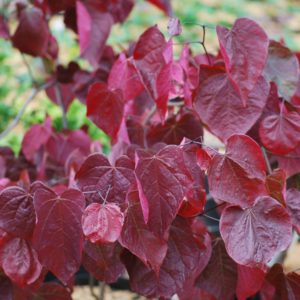
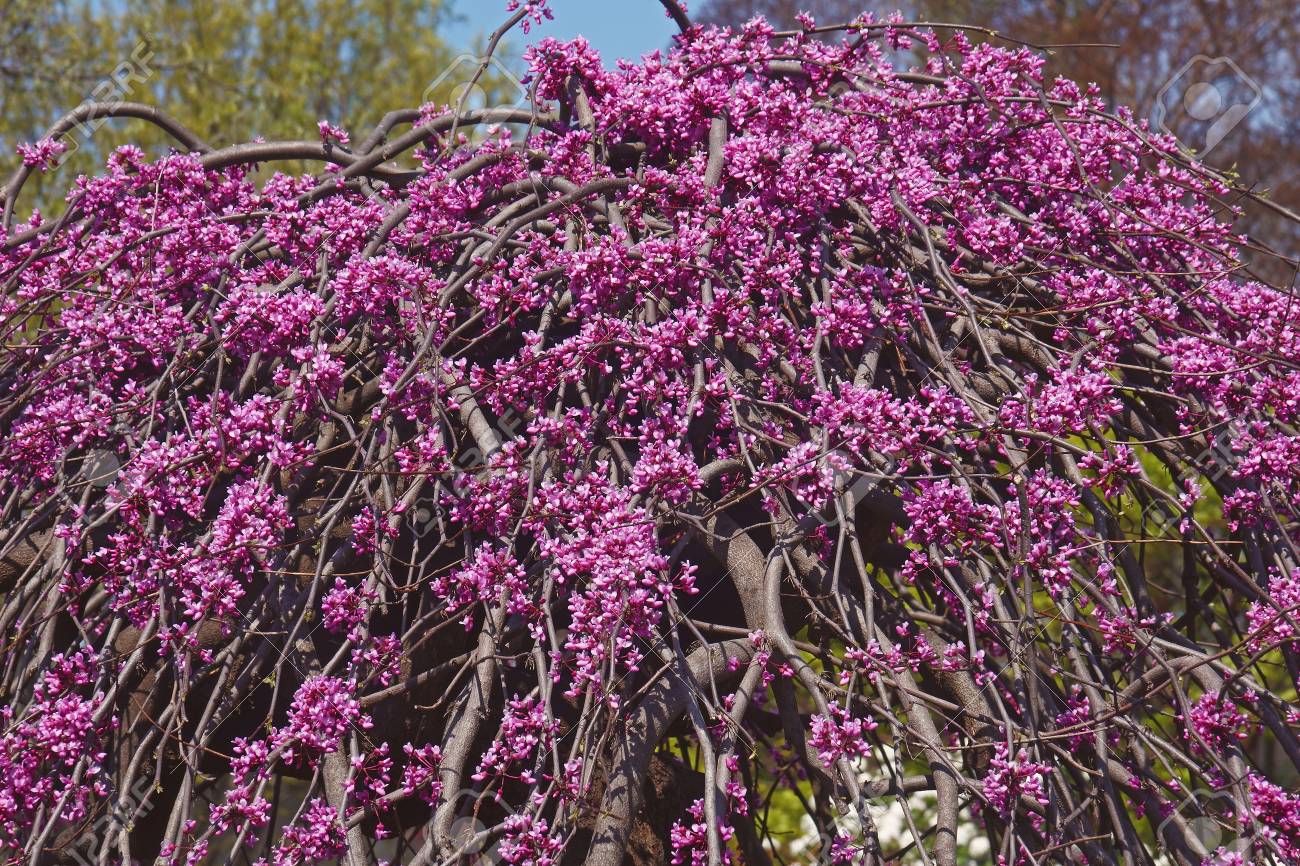
What if you could have a weeping tree that actually thrives in New England? RUBY FALLS WEEPING REDBUD is that rare find—a plant that combines the graceful, fountain-like habit gardeners dream about with the cold-hardy toughness Connecticut demands. This cultivar takes the native Eastern redbud and reimagines it as a living sculpture, with deep burgundy foliage that catches light like stained glass and delicate pink flowers that emerge before the leaves each spring.
What it looks like
RUBY FALLS is a compact, weeping deciduous tree that rarely exceeds 6 feet in height but spreads wider, creating a naturally cascading form. The new growth emerges in a stunning deep burgundy—almost wine-colored—before gradually maturing to a rich, dark reddish-green that persists through summer. What makes this selection truly special is that unlike standard CERCIS CANADENSIS varieties, the color stays vibrant rather than fading to standard green.
In mid-spring, before the foliage fully expands, the bare branches become utterly magical. Tiny, pea-shaped flowers in mauve-pink cluster directly along the stems in that characteristic redbud fashion. The effect is understated but unmistakably elegant—nothing like the showiness of a cherry, but with a quiet, refined beauty that speaks to those who appreciate subtlety in their gardens.
Growing it in your garden
RUBY FALLS WEEPING REDBUD succeeds in Zones 5-9, making it perfectly suited to Connecticut gardens. While redbud gets a reputation for being finicky, this cultivar is genuinely forgiving in New England when you give it what it loves: well-draining soil and a site with afternoon shade protection during our hottest Augusts.
Plant it where you can see it up close—near a patio, along a walkway, or as a focal point in a mixed border. The weeping habit means it needs some space to express itself without bumping into other plants. It won’t tolerate wet feet year-round, so avoid the lowest spots in your garden where spring meltwater collects. But established plants handle our typical spring moisture fine. Think of it as preferring “moist” over “soggy.”
Through the seasons
Spring is when RUBY FALLS shows off most obviously—those pink blossoms literally stop people mid-walk. By late May, the burgundy foliage has unfurled completely, and the tree becomes a textural accent in the garden, that deep color creating contrast against lighter-leaved companions.
Summer finds it settling into a quieter role, the weeping form softening hardscape edges and providing gentle shade beneath its canopy. The foliage holds that rich color without significant fading, which is where this cultivar genuinely outperforms standard CERCIS CANADENSIS in most regions.
Fall is modest—the leaves turn a warm yellow-gold before dropping, nothing dramatic, but pleasant. Winter reveals the elegant branching structure, and frankly, if you position it right, that weeping silhouette against snow is architectural and beautiful.
Where it shines
This is your solution if you’ve been hunting for a weeping tree that actually tolerates New England winters. Use it as a specimen in a foundation planting where you want year-round interest without enormous scale. It’s perfect for smaller properties—those of us without an acre can still have that graceful, weeping form.
Consider it for shade gardens too. While it prefers some direct morning sun, afternoon shade in Connecticut’s increasingly hot summers keeps both the foliage color and the plant itself happier. It also works beautifully in contemporary gardens where its sculptural branching can be appreciated, and in cottage gardens where that delicate pink spring display feels right at home.
Perfect companions
Plant shade-tolerant hostas beneath RUBY FALLS for foliage contrast, or choose spring ephemerals like hellebores and bleeding heart that perform the same spring show and then fade as the redbud takes over visually. Evergreen companions—perhaps a dwarf Japanese holly or boxwood—give you winter structure and make the weeping form more apparent when deciduous everything else is bare.
Paired with woodland ferns and coral bells, RUBY FALLS creates a sophisticated small-shade-garden ecosystem that works from April straight through October.
Care tips
Water regularly the first two seasons until the root system establishes—this matters more in RUBY FALLS than in some tougher plants. Prune only to remove dead wood or shape if necessary; this tree’s natural form is part of its appeal. No serious pests trouble it in Connecticut, though you might see Japanese beetles in exceptionally hot years—they’re rarely a real problem.
Fertilizer is unnecessary if your soil is reasonably decent. This isn’t a plant that demands or even wants heavy feeding.
Quick facts
- Hardiness Zone: 5-9
- Mature Height & Spread: 6 feet tall, 8-10 feet wide
- Bloom Season: Mid-spring (April-May)
- Light Requirements: Full sun to part shade (afternoon shade preferred in hot regions)
- Water Needs: Moderate; prefers well-draining soil, not wet conditions
- Available at: Both our retail and wholesale locations