Description
CHAMAECYPARIS OBTUSA ‘WELLS’
If you’ve been searching for a conifer that brings architectural elegance to your garden without taking over the entire block, Wells Hinoki Cypress is the answer you’ve been waiting for. This isn’t your typical evergreen—it’s a sculptural masterpiece that earns its place in any Connecticut landscape, whether you’re designing a Japanese-inspired garden, creating a focal point in a mixed border, or softening the corner of your home’s foundation. With feathery, fern-like foliage that catches the light in the most magical way, this refined beauty proves that good things really do come in smaller packages.
What it looks like
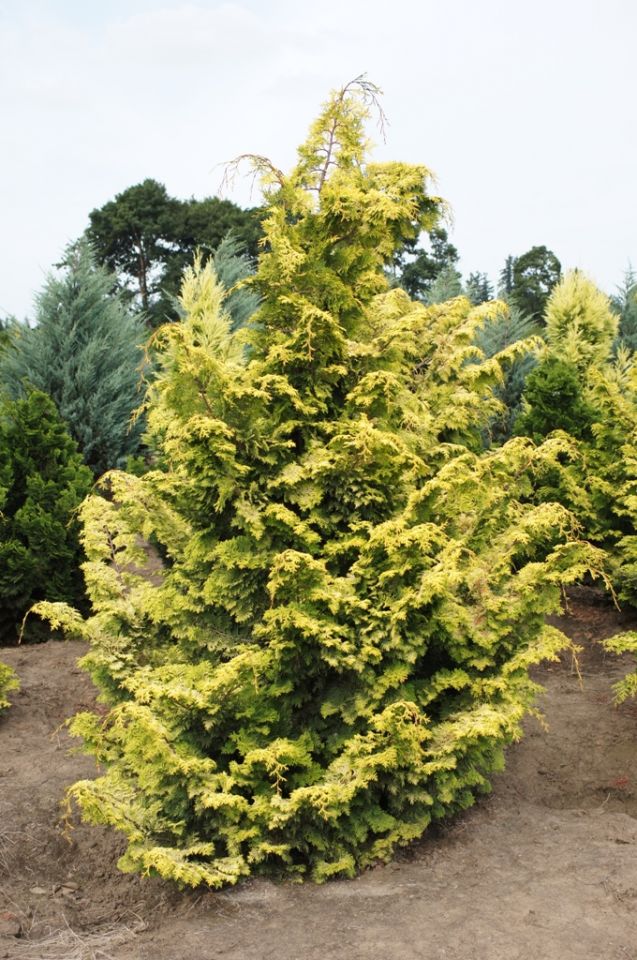
Wells Hinoki Cypress is a study in graceful restraint. This dwarf cultivar develops a dense, conical form with soft, thread-like foliage that’s finer and more delicate than most conifers you’ll encounter. The feathery sprays of bright yellow-green foliage create an almost cloud-like texture that’s a joy to touch and observe. Unlike coarser evergreens, Wells maintains a refined appearance year-round, with foliage that can develop subtle bronze undertones during cold New England winters, adding another layer of visual interest to your landscape. At maturity, it remains compact and manageable—a quality that makes it perfect for gardeners who want impact without maintenance headaches. The overall effect is one of effortless sophistication.
Growing it in your garden
Wells Hinoki Cypress is surprisingly accommodating for a plant that looks this refined. In Connecticut, it thrives in locations with bright, dappled light to full sun, though afternoon shade during our hot, dry summers is genuinely appreciated. Well-draining soil is essential—this plant dislikes sitting in wet feet, so if your garden tends to retain moisture, amend with compost and consider raised beds or mounded planting. Once established, Wells develops a strong root system and handles Connecticut’s variable weather patterns with admirable grace. It’s not a plant that demands constant fussing; rather, it rewards good planning with years of reliable performance. The key is getting the fundamentals right at planting time, and then letting it do what it does best: grow into a beautiful, sculptural presence in your landscape.
Through the seasons
Spring brings fresh, bright yellow-green growth that makes you realize why this plant deserves a prominent placement in your garden. Throughout summer, the feathery foliage maintains its soft texture and luminous quality, casting delicate shadows that change throughout the day. Fall and winter are when Wells truly shows its character—the foliage can deepen to bronze or warm copper tones, creating a striking contrast against snow and evergreen companions. This seasonal color shift isn’t dramatic or jarring; it’s subtle and sophisticated, the kind of thing that makes you stop and really look at your garden. Come spring, the cycle begins again with that fresh yellow-green emergence.
Where it shines
Wells Hinoki Cypress is perfect for situations where you want visual impact without overwhelming a space. Use it as a specimen plant in a rock garden or Japanese-inspired landscape, where its refined form and delicate foliage can be fully appreciated. It’s stunning in containers on a patio or entryway—the soft foliage moving gently in the breeze is absolutely mesmerizing. In mixed borders, Wells adds year-round structure and an elegant vertical accent that plays beautifully with broadleaf plants, shade lovers, and flowering perennials. It’s also an excellent choice for foundation plantings where you want something more interesting than the typical cookie-cutter evergreens. Smaller landscapes in Connecticut’s suburban communities particularly benefit from Wells’ compact mature size.
Perfect companions
Wells pairs beautifully with other woodland plants and shade-loving perennials. Japanese maples create a stunning combination, echoing the delicate foliage texture while offering complementary colors. Hostas, hellebores, and shade-tolerant ferns create a sophisticated understory. In sunnier locations, pair Wells with ornamental grasses like feather reed grass or blue fescue—the soft textures complement each other wonderfully. Dwarf flowering shrubs like rhododendrons and azaleas work well nearby, and small-fruiting dogwoods or hollies provide striking seasonal interest without competing for visual dominance.
Care tips
Water regularly during the first growing season and during dry spells—this is particularly important here in Connecticut, where our summers can be unpredictable. Once established, Wells is quite drought-tolerant, though consistent moisture keeps it looking its best. No pruning is necessary; this plant naturally develops its refined form. A light mulch layer helps retain soil moisture and keeps roots cool. Avoid planting in areas prone to standing water or ice melt accumulation. If winter foliage browning occurs, simply accept it as part of the plant’s seasonal character—it’s not a sign of problems.
Quick facts
- Hardiness Zone: 4–8 (thrives throughout Connecticut)
- Mature Height & Spread: 8–12 feet tall, 3–4 feet wide at maturity
- Bloom Season: Non-flowering; evergreen foliage
- Light Requirements: Full sun to bright, dappled shade; afternoon shade appreciated in summer
- Water Needs: Moderate; prefers consistently moist but well-draining soil; drought-tolerant once established
- Available at: Both our retail and wholesale locations