Description
JUNIPERUS VIRGINIANA
The Eastern Red Cedar has been quietly holding up the backbone of New England landscapes for centuries—a tree so essential that early colonists built their homes and ships from its heartwood. But here’s what most gardeners don’t realize: this native conifer isn’t just historically important or structurally sound. It’s one of the most elegant, hardworking, and genuinely beautiful trees you can plant in Connecticut. Its feathery blue-green foliage catches light in a way that makes it glow, especially on those gray New England afternoons when everything else looks a bit tired. And unlike many evergreens that demand fussy conditions, this one simply settles in and thrives.
What it looks like
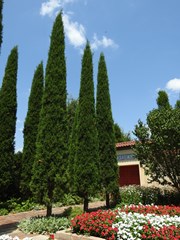
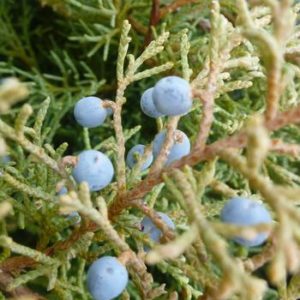
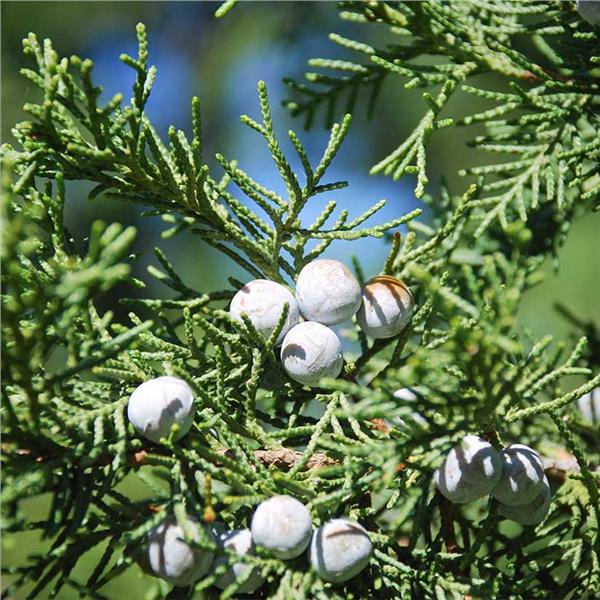
Eastern Red Cedar is a study in refined elegance. Young trees are densely pyramidal, with soft, finely-textured foliage that ranges from silvery-blue to rich green (often displaying both colors on the same plant). As it matures, it develops a more columnar or naturally sculptural form, depending on the cultivar you choose. In late autumn and early winter, something magical happens: the foliage takes on coppery-bronze and wine-colored tones, a subtle shift that adds warmth to the winter landscape. The berries—actually modified cones—are powdery blue and beloved by cedar waxwings and juncos. The aromatic heartwood darkens to a rich reddish-brown, and you’ll catch that distinctive, clean cedar scent whenever branches are brushed or pruned.
Growing it in your garden
This is where Eastern Red Cedar really shines for Connecticut gardeners. It’s drought-tolerant once established, making it perfect for those dry, sandy soils or spots where you’re tired of hand-watering all summer. It loves full sun and actually prefers well-drained soil—no coddling required. Plant it in spring or fall, water it in well during the first year, and then step back. It’s genuinely low-maintenance in a way that feels almost luxurious in a world where so many plants demand constant attention. The tree is immune to the deer browsing that plagues so many native plants, and it handles Connecticut’s temperature swings without flinching. Whether you’re gardening in the rocky soils of the shoreline or the clay-heavy areas inland, Eastern Red Cedar adapts with grace.
Through the seasons
Spring brings soft new growth that’s almost feathery in texture, with an apple-green freshness. Summer shows off the mature foliage in all its silvery-blue glory—the light reflection is genuinely striking against darker backgrounds. Fall is when the color shift occurs, deepening to bronze and purple tones that persist through winter. Those blue berries persist well into winter too, and you’ll see flocks of cedar waxwings arriving to feast on them come late autumn. This tree essentially looks good twelve months a year, which is rare enough to be worth mentioning.
Where it shines
Eastern Red Cedar is perfect as a specimen tree where you want year-round interest and architectural form. Plant it along the edge of your property for a living screen that’s far more elegant than a fence, or use the columnar varieties to frame an entryway or accentuate height in a border. It’s exceptional for wildlife gardens—the berries feed birds, and the dense foliage provides shelter. In coastal Connecticut gardens, it’s actually salt-tolerant, making it one of your better choices for windy, exposed sites near the water. It also works beautifully in native plant gardens or in naturalistic mixed borders where its fine texture contrasts with broadleaf plants.
Perfect companions
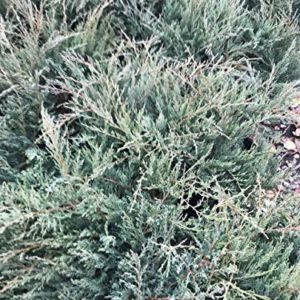
The fine texture of Eastern Red Cedar is the ultimate complementary plant. Pair it with bold-foliaged neighbors like oakleaf hydrangea or native viburnums. Evergreen ferns at its base create a sophisticated underplanting. Low-growing junipers, sedum, and ornamental grasses work beautifully around its base, especially if you want to emphasize the dry-site qualities of the plant. For year-round interest, plant nearby deciduous trees like serviceberry or redbud that will add spring color while still allowing the cedar’s winter form to shine.
Care tips
Eastern Red Cedar truly asks for very little. Water regularly during the first growing season—this is your main job as the tree establishes a deep root system. After that, it’s essentially on its own unless you’re experiencing severe drought. Avoid planting in poorly drained soil or heavy clay that stays wet, as this can lead to root rot. Little to no pruning is needed unless you want to remove lower branches for a tree-form effect or maintain a tighter shape. If you notice the occasional branch dieback, it’s likely from a scale insect—a simple horticultural oil spray in late winter handles this. Otherwise, this tree is disease and pest-resistant in Connecticut gardens.
Quick facts
- Hardiness Zone: 2-9 (completely winter-hardy throughout Connecticut)
- Mature Height & Spread: 40-50 feet tall, 8-20 feet wide (varies by cultivar; compact varieties available)
- Bloom Season: Spring (inconspicuous flowers); berries ripen fall-winter
- Light Requirements: Full sun (6+ hours daily)
- Water Needs: Low to moderate; drought-tolerant once established
- Available at: Both our retail and wholesale locations