Robinson Crabapple

MALUS ‘ROBINSON’

The Robinson Crabapple is Connecticut’s answer to the gardener who refuses to compromise. If you want a tree that’s attractive every single season, that feeds the birds when they need it most, that handles our unpredictable New England springs without throwing a tantrum, and that delivers reliable color from spring blooms through winter berries—this is your tree. It’s one of those rare plants that makes you wonder why you waited so long to plant it.

What it looks like

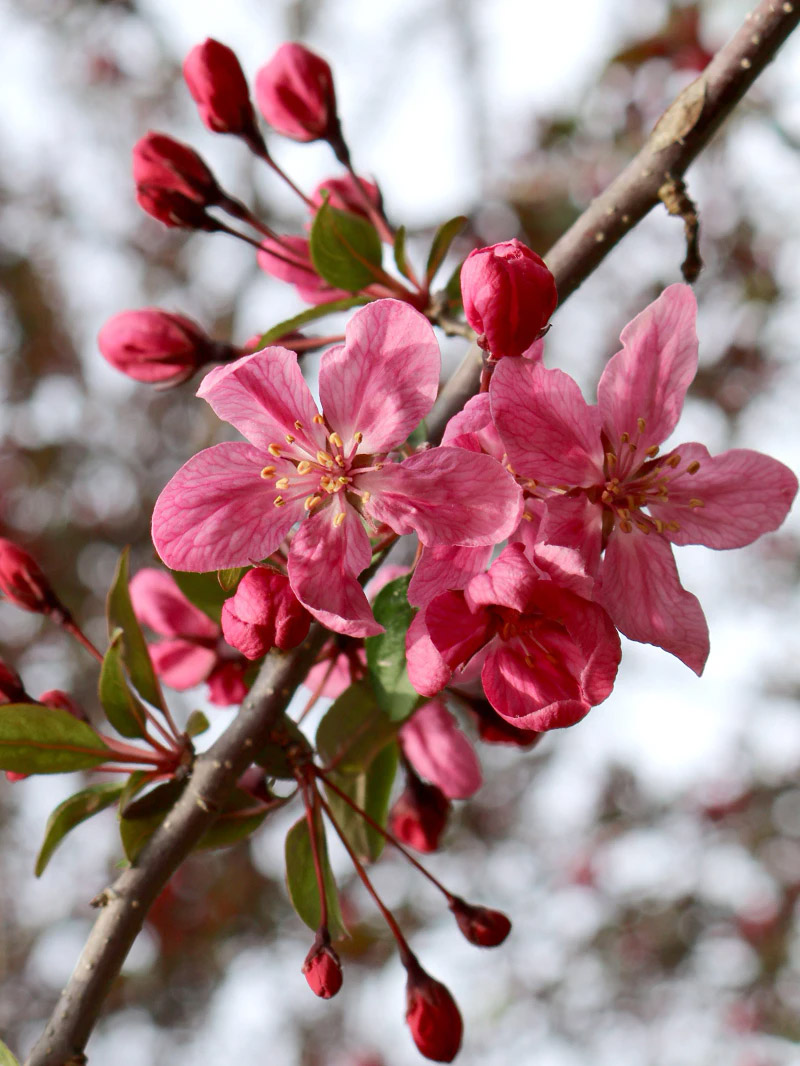
Robinson Crabapple grows into a graceful, vase-shaped tree with an upright, spreading habit that fits naturally into the Connecticut landscape. In spring, it erupts with deep pink buds that open to masses of pink flowers—not the pale, wishy-washy pink of some ornamentals, but a real, garden-stopping pink that brings joy after our long winters. The flowers don’t last forever (nothing does), but they’re followed by glossy, deep green foliage that looks healthy and vibrant all summer long.

Here’s where Robinson really distinguishes itself: the fruit. In fall, this tree produces abundant small apples in a rich burgundy-red, about the size of a marble. These aren’t ornamental in the sense of being fake-looking; they’re genuine, beautiful fruit that persists well into winter, feeding songbirds when natural food sources are scarce. It’s the kind of thoughtful generosity you want in your garden.

Growing it in your garden

Robinson Crabapple is refreshingly obliging about its growing conditions. It prefers full sun—at least six hours daily—and well-draining soil, but it’s flexible enough to handle the reality of most Connecticut gardens. Unlike some ornamental trees that seem personally offended by our climate, Robinson takes our spring freezes, summer humidity, and variable weather in stride.

This tree has excellent disease resistance, which matters enormously in New England where apple scab and cedar-apple rust can plague less resistant varieties. You won’t find yourself constantly battling fungal issues or wondering if you should have chosen something else. It establishes itself fairly quickly once planted and doesn’t demand constant attention to look its best.

Through the seasons

Spring brings that dependable show of deep pink flowers—a moment of unambiguous joy in the garden. Summer offers a sturdy framework of attractive foliage that provides light dappled shade without making the area feel dark or oppressive. Fall is when Robinson Crabapple truly earns its place: as other trees fade, this one is covered in deep red fruit that practically glows in the autumn light. Even as temperatures drop and leaves fall, those berries persist, adding color and structure to the winter garden.

In winter, when the foliage has dropped, you can appreciate the tree’s solid, well-proportioned branching structure. It’s not a dramatic architectural statement like some ornamentals, but rather a quietly competent presence—exactly what you want in a multi-season tree.

Where it shines

Robinson Crabapple works beautifully as a specimen tree in the home landscape, where you can appreciate its habit and seasonal changes. It’s equally wonderful in groupings of three or five for a more naturalistic feel. In wildlife gardens, it’s invaluable—the flowers attract pollinators in spring, and the persistent fruit feeds cardinals, cedar waxwings, and robins when winter food is scarce.

Consider it for properties where you want year-round visual interest without requiring high maintenance. It’s especially good for gardeners who’ve felt disappointed by ornamental crabapples that either get disease every year or lose their fruit by November.

Perfect companions

Robinson Crabapple looks wonderful underplanted with native shade-tolerant perennials like Autumn Fern or Jacob’s Ladder. Pair it with flowering shrubs like Oakleaf Hydrangea for complementary bloom times. Evergreens like Eastern Red Cedar provide winter structure and create a nice color contrast with the red fruit. For a spring combination, underplant with shade-tolerant spring bulbs like Scilla or Hellebores that bloom before the tree leafs out fully.

Care tips

Plant Robinson in spring or fall in Connecticut, giving it a location with good air circulation to encourage healthy foliage. Water regularly during establishment—roughly the first two growing seasons—then it becomes quite drought-tolerant once settled. Minimal pruning is needed; remove any crossing branches or dead wood in late winter, but otherwise let its natural shape develop.

You don’t need to thin the fruit. Some gardeners find the abundance charming; if you prefer fewer apples, light thinning in early summer is possible but not necessary for tree health.

Quick facts

  • Hardiness Zone: 4-8 (well-suited to Connecticut)
  • Mature Height & Spread: 20-25 feet tall and wide
  • Bloom Season: Late April to May
  • Light Requirements: Full sun (6+ hours daily)
  • Water Needs: Moderate; drought-tolerant once established
  • Available at: Both our retail and wholesale locations
Robinson Crabapple

Category:

Fantastic pink flowers and red fruit set. Good disease resistance.

Zoning: 4-7
Mature Height and Spread: 15-20’ & 25-30’

Description

Robinson Crabapple

MALUS ‘ROBINSON’

The Robinson Crabapple is Connecticut’s answer to the gardener who refuses to compromise. If you want a tree that’s attractive every single season, that feeds the birds when they need it most, that handles our unpredictable New England springs without throwing a tantrum, and that delivers reliable color from spring blooms through winter berries—this is your tree. It’s one of those rare plants that makes you wonder why you waited so long to plant it.

What it looks like

Robinson Crabapple grows into a graceful, vase-shaped tree with an upright, spreading habit that fits naturally into the Connecticut landscape. In spring, it erupts with deep pink buds that open to masses of pink flowers—not the pale, wishy-washy pink of some ornamentals, but a real, garden-stopping pink that brings joy after our long winters. The flowers don’t last forever (nothing does), but they’re followed by glossy, deep green foliage that looks healthy and vibrant all summer long.

Here’s where Robinson really distinguishes itself: the fruit. In fall, this tree produces abundant small apples in a rich burgundy-red, about the size of a marble. These aren’t ornamental in the sense of being fake-looking; they’re genuine, beautiful fruit that persists well into winter, feeding songbirds when natural food sources are scarce. It’s the kind of thoughtful generosity you want in your garden.

Growing it in your garden

Robinson Crabapple is refreshingly obliging about its growing conditions. It prefers full sun—at least six hours daily—and well-draining soil, but it’s flexible enough to handle the reality of most Connecticut gardens. Unlike some ornamental trees that seem personally offended by our climate, Robinson takes our spring freezes, summer humidity, and variable weather in stride.

This tree has excellent disease resistance, which matters enormously in New England where apple scab and cedar-apple rust can plague less resistant varieties. You won’t find yourself constantly battling fungal issues or wondering if you should have chosen something else. It establishes itself fairly quickly once planted and doesn’t demand constant attention to look its best.

Through the seasons

Spring brings that dependable show of deep pink flowers—a moment of unambiguous joy in the garden. Summer offers a sturdy framework of attractive foliage that provides light dappled shade without making the area feel dark or oppressive. Fall is when Robinson Crabapple truly earns its place: as other trees fade, this one is covered in deep red fruit that practically glows in the autumn light. Even as temperatures drop and leaves fall, those berries persist, adding color and structure to the winter garden.

In winter, when the foliage has dropped, you can appreciate the tree’s solid, well-proportioned branching structure. It’s not a dramatic architectural statement like some ornamentals, but rather a quietly competent presence—exactly what you want in a multi-season tree.

Where it shines

Robinson Crabapple works beautifully as a specimen tree in the home landscape, where you can appreciate its habit and seasonal changes. It’s equally wonderful in groupings of three or five for a more naturalistic feel. In wildlife gardens, it’s invaluable—the flowers attract pollinators in spring, and the persistent fruit feeds cardinals, cedar waxwings, and robins when winter food is scarce.

Consider it for properties where you want year-round visual interest without requiring high maintenance. It’s especially good for gardeners who’ve felt disappointed by ornamental crabapples that either get disease every year or lose their fruit by November.

Perfect companions

Robinson Crabapple looks wonderful underplanted with native shade-tolerant perennials like Autumn Fern or Jacob’s Ladder. Pair it with flowering shrubs like Oakleaf Hydrangea for complementary bloom times. Evergreens like Eastern Red Cedar provide winter structure and create a nice color contrast with the red fruit. For a spring combination, underplant with shade-tolerant spring bulbs like Scilla or Hellebores that bloom before the tree leafs out fully.

Care tips

Plant Robinson in spring or fall in Connecticut, giving it a location with good air circulation to encourage healthy foliage. Water regularly during establishment—roughly the first two growing seasons—then it becomes quite drought-tolerant once settled. Minimal pruning is needed; remove any crossing branches or dead wood in late winter, but otherwise let its natural shape develop.

You don’t need to thin the fruit. Some gardeners find the abundance charming; if you prefer fewer apples, light thinning in early summer is possible but not necessary for tree health.

Quick facts

  • Hardiness Zone: 4-8 (well-suited to Connecticut)
  • Mature Height & Spread: 20-25 feet tall and wide
  • Bloom Season: Late April to May
  • Light Requirements: Full sun (6+ hours daily)
  • Water Needs: Moderate; drought-tolerant once established
  • Available at: Both our retail and wholesale locations