ROSA RUGOSA

If you’ve been searching for a plant that handles coastal salt spray, sandy soils, and New England’s temperamental weather without complaint, Beach Rose is your answer. This tough-as-nails shrub laughs in the face of conditions that would make other roses wilt in defeat. Yet somehow, it manages to be absolutely beautiful while doing it—wrinkled emerald foliage, crinkled petals in shades of pink and magenta, and the kind of fragrance that makes you stop mid-garden tour just to breathe it in.

What it looks like

Beach Rose is a deciduous shrub with a naturally rounded, somewhat spreading habit that feels refreshingly informal. Its most distinctive feature is the foliage: deeply veined, almost quilted leaves with a soft, crinkled texture (rugosa means “wrinkled” in Latin, and the name fits perfectly). The leaves emerge bright green and age to a handsome blue-green, then transition to burnished gold and crimson in fall—a seasonal show that shouldn’t be underestimated.

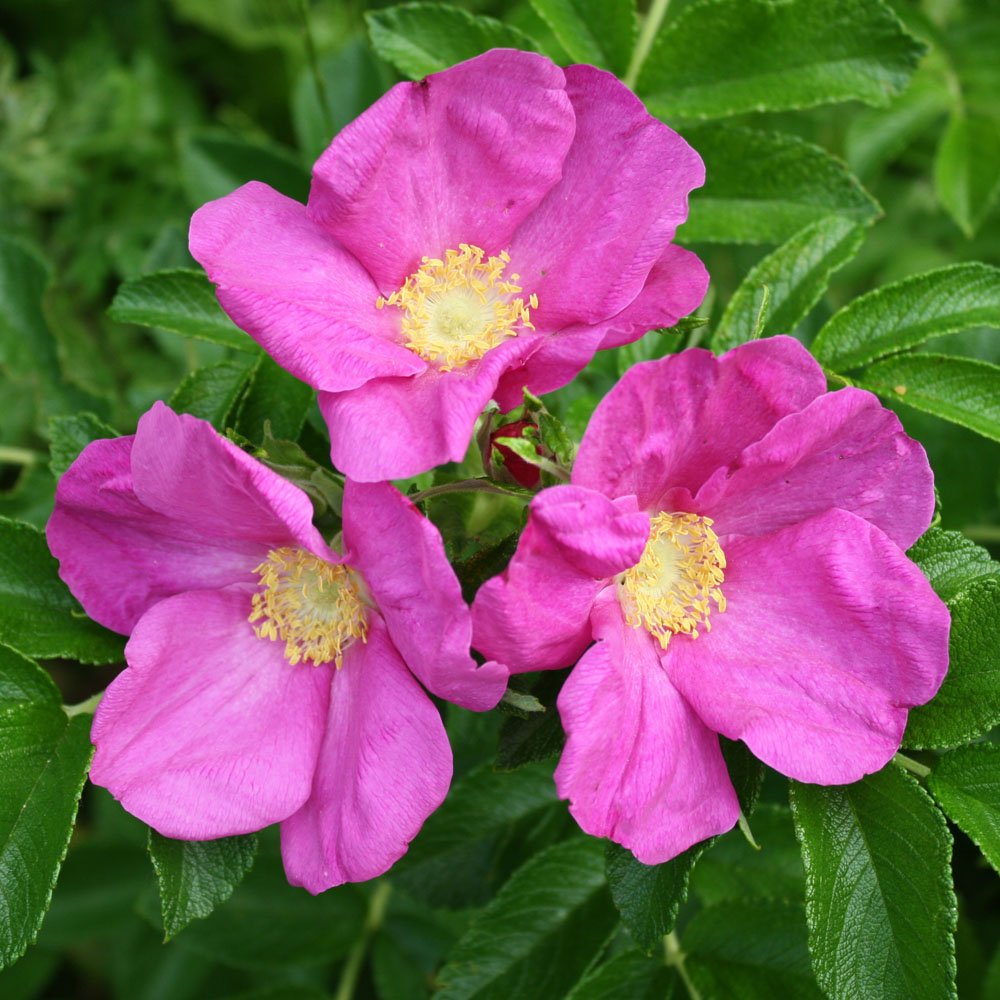
The flowers are the stars, though. Simple, open-faced blooms in shades of pink, magenta, or pure white appear in succession throughout summer, each one packed with fragrance that carries on the breeze. Many varieties follow up their flowers with hips—plump, orange-red seed pods that persist into winter and feed hungry birds when food is scarce. These hips are actually edible and vitamin C-rich if you’re inclined to make tea from them.

Growing it in your garden

Beach Rose was practically made for Connecticut gardeners. It’s native to coastal regions of Asia and was naturalized along New England’s shorelines generations ago, so it understands our climate intimately. Plant it in full sun to part shade—it’ll perform best with at least six hours of direct light daily, but it won’t be fussy if your garden is shadier. Unlike fancier rose varieties, ROSA RUGOSA doesn’t demand rich, perfectly amended soil. In fact, it thrives in poor to average soil and actually prefers it. Sandy, gravelly, or even somewhat acidic soil? Perfect. Soggy clay? It’ll adapt. Salty spray from coastal winds? Bring it on.

Space plants 4 to 6 feet apart if you’re creating a hedge or mass planting—they’re vigorous and will fill in nicely. They’re also excellent for erosion control on banks and challenging sites where you need something dependable.

Through the seasons

Spring arrives quietly with Beach Rose; new leaves emerge fresh and clean. By early summer, flower buds swell and the first blooms appear, often continuing sporadically all season long if you deadhead spent flowers. Mid-summer is peak bloom time, with the air heavy with fragrance. If you’re growing a variety that produces hips, late summer and fall become a second show as those gorgeous orange-red fruits develop and ripen. The foliage puts on its own autumn performance—some varieties turn brilliant yellow, others shift to deep reds and purples. Winter finds the plant bare and sculptural, the architectural branching structure and persistent hips creating textural interest against snow.

Where it shines

Beach Rose is at home in coastal gardens, naturally, but it’s equally valuable inland throughout Connecticut. Plant it as a flowering hedge along property lines—it’s dense enough to offer privacy and fragrant enough to make the boundary pleasant. Use it to stabilize slopes or sandy banks. Plant it in tough corner spots where other ornamentals have failed. It’s wonderful in cottage gardens, mixed borders, and anywhere you want casual, abundant bloom without fussy maintenance. The suckering habit that some gardeners find problematic can actually be an asset if you’re looking to create a dense screen or stabilize a difficult slope.

Perfect companions

Pair Beach Rose with other tough, salt-tolerant plants for a resilient composition. Bayberry, Northern Bayberry, and Japanese Black Pine echo its toughness. Ornamental grasses like Little Bluestem and Prairie Dropseed complement the informal habit beautifully. Low-growing perennials such as Catmint and Russian Sage dance nicely around its base. For seasonal color contrast, try underplanting with spring bulbs—Daffodils and Tulips emerge before Beach Rose leafs out fully.

Care tips

Here’s where ROSA RUGOSA earns its reputation: it barely needs any. Water regularly during establishment (the first season), then taper off—it’s drought-tolerant once settled. Pruning can be as simple as cutting it back hard in early spring to control size and maintain vigor, or you can let it grow naturally and only remove dead or crossing canes. Fertilizer? Not necessary, though a modest application of balanced fertilizer in spring won’t hurt. Pests and diseases that plague other roses—Japanese beetles, black spot, powdery mildew—largely ignore Beach Rose. If you do notice Japanese beetles, pick them off by hand in early morning and drop them in soapy water. Simple as that.

Quick facts

  • Hardiness Zone: 2–9
  • Mature Height & Spread: 3–6 feet tall and 4–6 feet wide, depending on variety
  • Bloom Season: Early summer through fall, with sporadic repeat blooms
  • Light Requirements: Full sun to part shade
  • Water Needs: Low to moderate; drought-tolerant once established
  • Available at: Both our retail and wholesale locations
Beach Rose

Category:

An aggressive ground cover shrub producing reddish-pink flowers. Salt tolerant.

Zoning: 2-7
Mature Height and Spread: 4-6’
Pot Size (gallons), Height: #2 #3

Description

ROSA RUGOSA

If you’ve been searching for a plant that handles coastal salt spray, sandy soils, and New England’s temperamental weather without complaint, Beach Rose is your answer. This tough-as-nails shrub laughs in the face of conditions that would make other roses wilt in defeat. Yet somehow, it manages to be absolutely beautiful while doing it—wrinkled emerald foliage, crinkled petals in shades of pink and magenta, and the kind of fragrance that makes you stop mid-garden tour just to breathe it in.

What it looks like

Beach Rose is a deciduous shrub with a naturally rounded, somewhat spreading habit that feels refreshingly informal. Its most distinctive feature is the foliage: deeply veined, almost quilted leaves with a soft, crinkled texture (rugosa means “wrinkled” in Latin, and the name fits perfectly). The leaves emerge bright green and age to a handsome blue-green, then transition to burnished gold and crimson in fall—a seasonal show that shouldn’t be underestimated.

The flowers are the stars, though. Simple, open-faced blooms in shades of pink, magenta, or pure white appear in succession throughout summer, each one packed with fragrance that carries on the breeze. Many varieties follow up their flowers with hips—plump, orange-red seed pods that persist into winter and feed hungry birds when food is scarce. These hips are actually edible and vitamin C-rich if you’re inclined to make tea from them.

Growing it in your garden

Beach Rose was practically made for Connecticut gardeners. It’s native to coastal regions of Asia and was naturalized along New England’s shorelines generations ago, so it understands our climate intimately. Plant it in full sun to part shade—it’ll perform best with at least six hours of direct light daily, but it won’t be fussy if your garden is shadier. Unlike fancier rose varieties, ROSA RUGOSA doesn’t demand rich, perfectly amended soil. In fact, it thrives in poor to average soil and actually prefers it. Sandy, gravelly, or even somewhat acidic soil? Perfect. Soggy clay? It’ll adapt. Salty spray from coastal winds? Bring it on.

Space plants 4 to 6 feet apart if you’re creating a hedge or mass planting—they’re vigorous and will fill in nicely. They’re also excellent for erosion control on banks and challenging sites where you need something dependable.

Through the seasons

Spring arrives quietly with Beach Rose; new leaves emerge fresh and clean. By early summer, flower buds swell and the first blooms appear, often continuing sporadically all season long if you deadhead spent flowers. Mid-summer is peak bloom time, with the air heavy with fragrance. If you’re growing a variety that produces hips, late summer and fall become a second show as those gorgeous orange-red fruits develop and ripen. The foliage puts on its own autumn performance—some varieties turn brilliant yellow, others shift to deep reds and purples. Winter finds the plant bare and sculptural, the architectural branching structure and persistent hips creating textural interest against snow.

Where it shines

Beach Rose is at home in coastal gardens, naturally, but it’s equally valuable inland throughout Connecticut. Plant it as a flowering hedge along property lines—it’s dense enough to offer privacy and fragrant enough to make the boundary pleasant. Use it to stabilize slopes or sandy banks. Plant it in tough corner spots where other ornamentals have failed. It’s wonderful in cottage gardens, mixed borders, and anywhere you want casual, abundant bloom without fussy maintenance. The suckering habit that some gardeners find problematic can actually be an asset if you’re looking to create a dense screen or stabilize a difficult slope.

Perfect companions

Pair Beach Rose with other tough, salt-tolerant plants for a resilient composition. Bayberry, Northern Bayberry, and Japanese Black Pine echo its toughness. Ornamental grasses like Little Bluestem and Prairie Dropseed complement the informal habit beautifully. Low-growing perennials such as Catmint and Russian Sage dance nicely around its base. For seasonal color contrast, try underplanting with spring bulbs—Daffodils and Tulips emerge before Beach Rose leafs out fully.

Care tips

Here’s where ROSA RUGOSA earns its reputation: it barely needs any. Water regularly during establishment (the first season), then taper off—it’s drought-tolerant once settled. Pruning can be as simple as cutting it back hard in early spring to control size and maintain vigor, or you can let it grow naturally and only remove dead or crossing canes. Fertilizer? Not necessary, though a modest application of balanced fertilizer in spring won’t hurt. Pests and diseases that plague other roses—Japanese beetles, black spot, powdery mildew—largely ignore Beach Rose. If you do notice Japanese beetles, pick them off by hand in early morning and drop them in soapy water. Simple as that.

Quick facts

  • Hardiness Zone: 2–9
  • Mature Height & Spread: 3–6 feet tall and 4–6 feet wide, depending on variety
  • Bloom Season: Early summer through fall, with sporadic repeat blooms
  • Light Requirements: Full sun to part shade
  • Water Needs: Low to moderate; drought-tolerant once established
  • Available at: Both our retail and wholesale locations