American Hornbeam

CARPINUS CAROLINIANA

If you’ve been searching for something that handles wet soil, deep shade, and Connecticut winters without complaint, while still delivering genuine four-season beauty, the American Hornbeam might just be your answer. This understated native tree doesn’t demand attention—it earns it, quietly becoming one of the most reliable and elegant additions you can make to a New England garden.

What it looks like

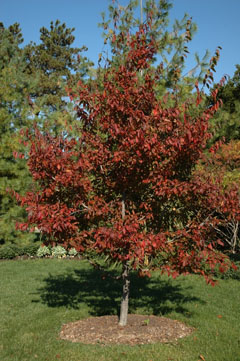
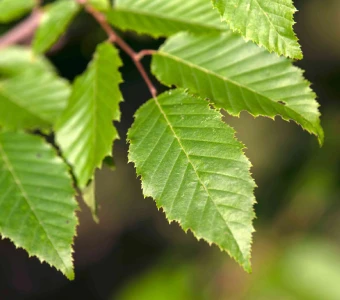
American Hornbeam is delicate in appearance but deceptively tough. Its smooth, muscular gray bark is the real showstopper—it looks almost like the flexed arms of an athlete, which is why some gardeners call it “musclewood.” The bark remains attractive year-round, becoming especially striking in winter when the tree is bare. The leaves are small and finely textured, creating an airy, refined canopy that never feels heavy or oppressive. In spring, tiny dangling catkins add movement and interest, while fall transforms the foliage into shades of orange, red, and burgundy that can rival any ornamental specimen.

Growing it in your garden

Here’s what makes American Hornbeam special: it’s genuinely adaptable. While it naturally loves moist soils—think the edges of Connecticut’s swamps and stream banks—it adjusts beautifully to suburban gardens. Plant it in part shade to full shade, which makes it invaluable for those tricky northeast-facing corners or under the canopy of larger trees. It won’t thrive in bone-dry spots, but it handles clay, loam, and even compacted soil with grace. This is a tree that looks like it belongs in a naturalistic garden, yet it’s refined enough for formal landscapes.

Through the seasons

Spring arrives with soft catkins that dangle like tiny, chartreuse charms. The emerging leaves are a fresh lime-green, creating an almost ethereal effect as light filters through. Summer brings that fine-textured canopy in deep green, casting a gentle, dappled shade that’s perfect for shade-loving plants beneath. Fall is when American Hornbeam really shines—the foliage turns reliably orange and burgundy, and while it doesn’t hold leaves as long as a Sugar Maple, the color is often more nuanced and complex. Winter reveals the architectural grace of those muscular gray branches and the persistent small winged fruits (samaras) that catch the light.

Where it shines

American Hornbeam is at its best in moist garden settings—along property edges, near rain gardens, or in areas where water naturally collects after spring snow melt. It’s perfect as a multi-stemmed understory tree, creating a natural, woodland feel in residential settings. Because it tolerates shade so well, it’s ideal for areas where you want filtered light but still need a tree’s presence and structure. It also works beautifully in native plant gardens, where it provides food and shelter for Connecticut wildlife while requiring minimal fussing.

Perfect companions

Think in layers with American Hornbeam. Beneath it, plant shade-tolerant favorites like Christmas Fern, Wild Ginger, and Hellebores. Pair it with other native understory trees like Eastern Redbud or Serviceberry for a naturalistic grouping. In spring, underplant with native ephemerals like Trillium and Bloodroot—they’ll bloom before the American Hornbeam’s canopy fully leafs out. For nearby shrubs, consider Oakleaf Hydrangea, native Azaleas, or Viburnum species that share its preference for moist, woodland-edge conditions.

Care tips

American Hornbeam needs very little once established. Water regularly during its first year to help roots develop deeply. It’s naturally pest and disease-resistant in New England gardens—no spraying, no fussing. Pruning is rarely necessary; the tree naturally grows into an attractive shape. Avoid heavy fertilizing; these trees evolved in Connecticut’s woods without supplementation, and they prefer it that way. In times of drought, water occasionally, but most years our New England rainfall provides what it needs.

Quick facts

  • Hardiness Zone: 3–9 (thrives in Connecticut)
  • Mature Height & Spread: 20–30 feet tall, 15–20 feet wide
  • Bloom Season: Spring (catkins); colorful fall foliage
  • Light Requirements: Part shade to full shade
  • Water Needs: Medium to moist; adaptable to average moisture
  • Available at: Both our retail and wholesale locations

American Hornbeam

New leaves emerge reddish-purple, changing to dark green, then turn yellow to orange-red in the fall, offering a kaleidoscope of color throughout the year.

Trunk Diameter: 2.5-3″

Description

American Hornbeam

CARPINUS CAROLINIANA

If you’ve been searching for something that handles wet soil, deep shade, and Connecticut winters without complaint, while still delivering genuine four-season beauty, the American Hornbeam might just be your answer. This understated native tree doesn’t demand attention—it earns it, quietly becoming one of the most reliable and elegant additions you can make to a New England garden.

What it looks like

American Hornbeam is delicate in appearance but deceptively tough. Its smooth, muscular gray bark is the real showstopper—it looks almost like the flexed arms of an athlete, which is why some gardeners call it “musclewood.” The bark remains attractive year-round, becoming especially striking in winter when the tree is bare. The leaves are small and finely textured, creating an airy, refined canopy that never feels heavy or oppressive. In spring, tiny dangling catkins add movement and interest, while fall transforms the foliage into shades of orange, red, and burgundy that can rival any ornamental specimen.

Growing it in your garden

Here’s what makes American Hornbeam special: it’s genuinely adaptable. While it naturally loves moist soils—think the edges of Connecticut’s swamps and stream banks—it adjusts beautifully to suburban gardens. Plant it in part shade to full shade, which makes it invaluable for those tricky northeast-facing corners or under the canopy of larger trees. It won’t thrive in bone-dry spots, but it handles clay, loam, and even compacted soil with grace. This is a tree that looks like it belongs in a naturalistic garden, yet it’s refined enough for formal landscapes.

Through the seasons

Spring arrives with soft catkins that dangle like tiny, chartreuse charms. The emerging leaves are a fresh lime-green, creating an almost ethereal effect as light filters through. Summer brings that fine-textured canopy in deep green, casting a gentle, dappled shade that’s perfect for shade-loving plants beneath. Fall is when American Hornbeam really shines—the foliage turns reliably orange and burgundy, and while it doesn’t hold leaves as long as a Sugar Maple, the color is often more nuanced and complex. Winter reveals the architectural grace of those muscular gray branches and the persistent small winged fruits (samaras) that catch the light.

Where it shines

American Hornbeam is at its best in moist garden settings—along property edges, near rain gardens, or in areas where water naturally collects after spring snow melt. It’s perfect as a multi-stemmed understory tree, creating a natural, woodland feel in residential settings. Because it tolerates shade so well, it’s ideal for areas where you want filtered light but still need a tree’s presence and structure. It also works beautifully in native plant gardens, where it provides food and shelter for Connecticut wildlife while requiring minimal fussing.

Perfect companions

Think in layers with American Hornbeam. Beneath it, plant shade-tolerant favorites like Christmas Fern, Wild Ginger, and Hellebores. Pair it with other native understory trees like Eastern Redbud or Serviceberry for a naturalistic grouping. In spring, underplant with native ephemerals like Trillium and Bloodroot—they’ll bloom before the American Hornbeam’s canopy fully leafs out. For nearby shrubs, consider Oakleaf Hydrangea, native Azaleas, or Viburnum species that share its preference for moist, woodland-edge conditions.

Care tips

American Hornbeam needs very little once established. Water regularly during its first year to help roots develop deeply. It’s naturally pest and disease-resistant in New England gardens—no spraying, no fussing. Pruning is rarely necessary; the tree naturally grows into an attractive shape. Avoid heavy fertilizing; these trees evolved in Connecticut’s woods without supplementation, and they prefer it that way. In times of drought, water occasionally, but most years our New England rainfall provides what it needs.

Quick facts

  • Hardiness Zone: 3–9 (thrives in Connecticut)
  • Mature Height & Spread: 20–30 feet tall, 15–20 feet wide
  • Bloom Season: Spring (catkins); colorful fall foliage
  • Light Requirements: Part shade to full shade
  • Water Needs: Medium to moist; adaptable to average moisture
  • Available at: Both our retail and wholesale locations