Description

JUNIPERUS SCOPULORUM ‘BLUE ARROW’
Imagine a narrow exclamation point of silvery-blue pushing skyward through your garden—that’s Blue Arrow Juniper. This columnar evergreen is the answer for gardeners who need vertical drama without sacrificing precious garden space. It’s the kind of plant that makes you stop and think, “Why don’t more people know about this?” Whether you’re screening an unsightly view, framing an entryway, or creating architectural interest in a mixed border, Blue Arrow delivers year-round, needle-thin elegance.
What it looks like
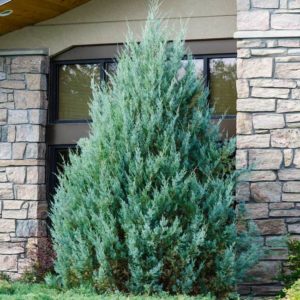
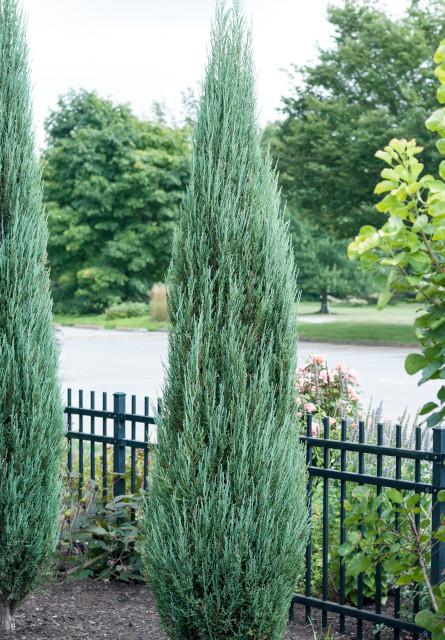
Blue Arrow is a study in refined minimalism. This cultivar of Rocky Mountain juniper grows in a narrow, columnar form—sometimes described as pencil-thin, though it’s not quite that extreme. The foliage is a striking silvery-blue year-round, maintaining that cool, sophisticated color even through Connecticut’s coldest winters. The needles are soft and feathery, arranged in delicate, upright sprays that create an almost ethereal quality. Unlike some junipers that can look harsh or heavy, Blue Arrow feels lighter, more refined. It grows slowly and steadily, eventually reaching impressive heights while remaining slender enough to tuck into tight spaces.
Growing it in your garden
Here’s what makes Blue Arrow such a dream for New England gardeners: it’s tough as nails. This juniper laughs at our temperature swings, our humidity, and our occasional drought spells. Plant it in full sun—and it really does prefer all six hours or more—where it’ll thrive without complaint. Blue Arrow isn’t fussy about soil type; it actually prefers well-drained conditions and won’t appreciate heavy clay sitting around its roots. If your soil tends toward moisture-retentive, amend it with some sand or gravel at planting time. Once established, this is a wonderfully low-maintenance plant that asks very little of you.
Through the seasons
What’s remarkable about Blue Arrow is its consistency. Spring brings new growth in the same silvery-blue tone, so there’s no awkward color transition—just a gradual expansion of that cool blue-gray presence. Summer finds it growing steadily, unfazed by heat or humidity. Fall and winter are where this juniper really shines. While deciduous trees around it turn and drop their leaves, Blue Arrow maintains its perfect columnar form and that beautiful blue coloration, sometimes taking on subtle purple undertones in the deepest cold. It provides structure and color when the garden needs it most, acting as a living anchor through the dormant season.
Where it shines
Think vertical—that’s where Blue Arrow belongs. Plant it as a specimen to punctuate a landscape, creating focal points and drawing the eye upward. Pair multiples in a row for a modern, formal screen that provides privacy without the bulk of traditional evergreen hedges. It’s exceptional in containers (imagine that silvery column anchoring your entry courtyard), and it works beautifully in contemporary gardens where clean lines and architectural plants are celebrated. Because it stays narrow, you can use it in spaces where broader evergreens wouldn’t fit, like along fences or nestled between other plants. In rock gardens or xeriscapes, it’s a sculptural element that looks equally at home.
Perfect companions
Blue Arrow’s cool blue tones create stunning contrasts. Plant it near golden foliage plants like Juniperus horizontalis ‘Aurea’ or golden-leaved conifers for a striking color play. Its columnar form looks especially elegant rising from spreading groundcovers or perennials with softer textures—try ARMERIA, creeping sedums, or ornamental grasses like FESTUCA. For seasonal interest nearby, pair it with plants that offer their own drama—burgundy Japanese maples, variegated shrubs, or even ornamental conifers in contrasting shapes create dynamic vignettes. In mixed borders, let Blue Arrow provide the vertical punctuation while lower-growing plants fill in around its base.
Care tips
Plant Blue Arrow in full sun for best color; it can tolerate part sun but will be less vivid. Water regularly during its first growing season to establish a deep root system—this is your investment period. After establishment, it’s remarkably drought-tolerant, though an occasional deep watering during Connecticut’s hot summers helps it perform beautifully. Pruning is minimal; this juniper naturally maintains its columnar shape. If you notice any branches getting out of line, a light trim keeps it tidy. Avoid planting where snow might pile against it, as heavy snow weight can occasionally damage the narrow form. Well-drained soil prevents root rot, the only real health issue to watch for in our humid Northeast climate.
Quick facts
- Hardiness Zone: Zones 3-7 (thrives throughout Connecticut)
- Mature Height & Spread: 20-30 feet tall × 2-3 feet wide
- Bloom Season: Non-flowering (evergreen conifer)
- Light Requirements: Full sun (6+ hours daily)
- Water Needs: Low to moderate; drought-tolerant once established
- Available at: Both our retail and wholesale locations