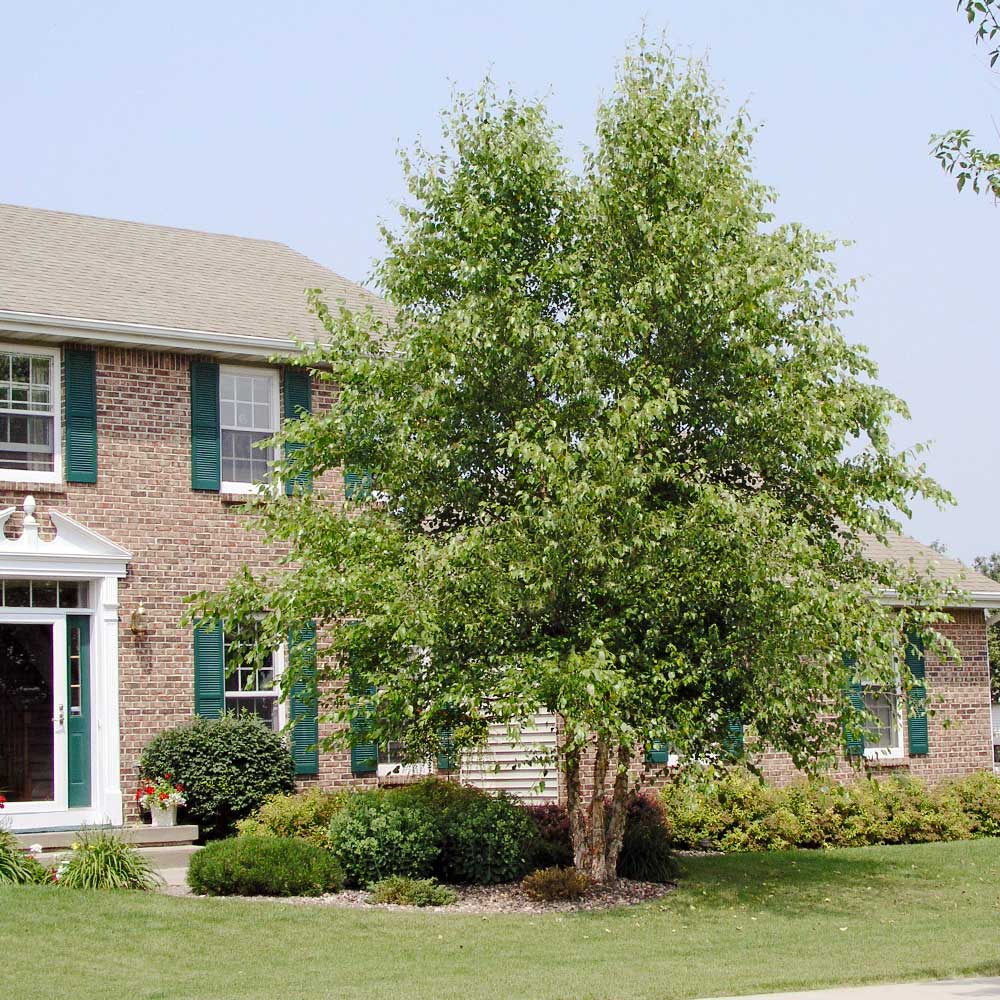
BETULA NIGRA ‘DUHEAT’

What if you could have the graceful, peeling bark that makes birches so beloved, but without the headaches? The Duo Heat River Birch is the answer gardeners in Connecticut have been waiting for. This cultivar takes everything wonderful about river birches—the exfoliating cinnamon and cream bark, the fine-textured foliage, the elegant branching structure—and adds remarkable resilience to our unpredictable New England climate. Unlike many birch varieties that struggle with pests and disease in humid summers, Duo Heat was specifically selected for superior resistance to the bronze birch borer and birch leaf miner. That means less worry and more years of enjoying this stunning tree.

What it looks like

Duo Heat is a showstopper year-round, but the bark is truly the star. As the tree matures, the outer bark naturally exfoliates in papery sheets, revealing warm layers of cinnamon, cream, and tan beneath. It’s the kind of detail that catches your eye in winter when the rest of the landscape has gone quiet. The foliage is delicate and refined—small, oval leaves that emerge a soft green and shift to brilliant golden yellow come autumn. The overall form is gracefully upright with a naturally attractive branching pattern that doesn’t require heavy pruning to look good. This is a tree that knows how to make an entrance.

Growing it in your garden

River birches are more adaptable than their reputation suggests, and Duo Heat is particularly forgiving. While it loves moisture and performs beautifully along stream banks and in rain gardens, it’s also surprisingly drought-tolerant once established, which is helpful during our increasingly unpredictable Connecticut summers. Give it full sun to partial shade—it’ll thrive in either, though you’ll get the most vibrant fall color and densest canopy in full sun. The key is planting it in well-draining soil. It’s not fussy about pH and actually prefers slightly acidic conditions, which aligns perfectly with much of Connecticut’s native soil. Unlike some birches, Duo Heat has shown genuine toughness in our zone 6 winters, recovering reliably year after year.

Through the seasons

Spring arrives with soft yellow-green foliage and dangling catkins that add delicate texture. By early summer, the canopy has filled in completely, providing dappled, cooling shade—perfect for sitting beneath on hot afternoons. Summer is when you’ll appreciate the pest resistance most; while other birches might be struggling, yours remains healthy and vibrant. Fall is spectacular, with leaves turning a clear golden yellow that seems to glow in afternoon light. Winter reveals the true character of the tree—that gorgeous exfoliating bark becomes the focal point, creating visual interest in the dormant garden and providing subtle warmth to winter landscapes.

Where it shines

Plant Duo Heat as a specimen tree where its bark can be appreciated from a distance, or position it near a patio or deck where you can admire those papery layers up close. It’s exceptional along water features—streams, ponds, rain gardens—where it combines beauty with practical erosion control. The partial shade it provides is ideal for underplanting with shade-tolerant perennials and shrubs. It also works beautifully as part of a naturalized woodland edge or as a graceful accent in modern landscapes where its vertical branching pattern reads as clean and architectural.

Perfect companions

Underplant your Duo Heat with shade-loving perennials like Heuchera, Astilbe, and native ferns. Nearby, Oakleaf Hydrangea and Winterberry create a complementary layered effect. The tree’s delicate canopy allows enough light beneath for shade shrubs like Viburnum and Leucothoe to flourish. Consider adding drifts of spring bulbs like Trillium or Helleborus for early season interest before the tree’s shade deepens.

Care tips

Water regularly during the first year while the root system establishes—especially important during Connecticut’s occasional summer dry spells. A 2-3 inch layer of mulch around the base helps retain moisture and moderates soil temperature, which river birches appreciate. Prune only to remove any crossing or damaged branches; Duo Heat’s natural form is its best feature. Because this cultivar is selected for pest resistance, you’ll rarely need to spray or treat for the bronze birch borer or birch leaf miner that plague other varieties. That’s the whole point—less fussing, more enjoying.

Quick facts

  • Hardiness Zone: 4-9 (thrives throughout Connecticut)
  • Mature Height & Spread: 40-50 feet tall, 25-35 feet wide
  • Bloom Season: Spring (catkins); peak bark interest in winter
  • Light Requirements: Full sun to partial shade
  • Water Needs: Moderate to high; prefers consistent moisture but tolerates established dryness
  • Available at: Both our retail and wholesale locations
Duo Heat river Birch

Category:

Easily grown average, medium to wet soils in full sun to part shade. River birch is perhaps the most culturally adaptable and heat tolerant of the birches. Prefers moist, acidic, fertile soils including semi-aquatic conditions, but also tolerates drier soils

Pot Size (gallons), Height: 10-12′

Description

BETULA NIGRA ‘DUHEAT’

What if you could have the graceful, peeling bark that makes birches so beloved, but without the headaches? The Duo Heat River Birch is the answer gardeners in Connecticut have been waiting for. This cultivar takes everything wonderful about river birches—the exfoliating cinnamon and cream bark, the fine-textured foliage, the elegant branching structure—and adds remarkable resilience to our unpredictable New England climate. Unlike many birch varieties that struggle with pests and disease in humid summers, Duo Heat was specifically selected for superior resistance to the bronze birch borer and birch leaf miner. That means less worry and more years of enjoying this stunning tree.

What it looks like

Duo Heat is a showstopper year-round, but the bark is truly the star. As the tree matures, the outer bark naturally exfoliates in papery sheets, revealing warm layers of cinnamon, cream, and tan beneath. It’s the kind of detail that catches your eye in winter when the rest of the landscape has gone quiet. The foliage is delicate and refined—small, oval leaves that emerge a soft green and shift to brilliant golden yellow come autumn. The overall form is gracefully upright with a naturally attractive branching pattern that doesn’t require heavy pruning to look good. This is a tree that knows how to make an entrance.

Growing it in your garden

River birches are more adaptable than their reputation suggests, and Duo Heat is particularly forgiving. While it loves moisture and performs beautifully along stream banks and in rain gardens, it’s also surprisingly drought-tolerant once established, which is helpful during our increasingly unpredictable Connecticut summers. Give it full sun to partial shade—it’ll thrive in either, though you’ll get the most vibrant fall color and densest canopy in full sun. The key is planting it in well-draining soil. It’s not fussy about pH and actually prefers slightly acidic conditions, which aligns perfectly with much of Connecticut’s native soil. Unlike some birches, Duo Heat has shown genuine toughness in our zone 6 winters, recovering reliably year after year.

Through the seasons

Spring arrives with soft yellow-green foliage and dangling catkins that add delicate texture. By early summer, the canopy has filled in completely, providing dappled, cooling shade—perfect for sitting beneath on hot afternoons. Summer is when you’ll appreciate the pest resistance most; while other birches might be struggling, yours remains healthy and vibrant. Fall is spectacular, with leaves turning a clear golden yellow that seems to glow in afternoon light. Winter reveals the true character of the tree—that gorgeous exfoliating bark becomes the focal point, creating visual interest in the dormant garden and providing subtle warmth to winter landscapes.

Where it shines

Plant Duo Heat as a specimen tree where its bark can be appreciated from a distance, or position it near a patio or deck where you can admire those papery layers up close. It’s exceptional along water features—streams, ponds, rain gardens—where it combines beauty with practical erosion control. The partial shade it provides is ideal for underplanting with shade-tolerant perennials and shrubs. It also works beautifully as part of a naturalized woodland edge or as a graceful accent in modern landscapes where its vertical branching pattern reads as clean and architectural.

Perfect companions

Underplant your Duo Heat with shade-loving perennials like Heuchera, Astilbe, and native ferns. Nearby, Oakleaf Hydrangea and Winterberry create a complementary layered effect. The tree’s delicate canopy allows enough light beneath for shade shrubs like Viburnum and Leucothoe to flourish. Consider adding drifts of spring bulbs like Trillium or Helleborus for early season interest before the tree’s shade deepens.

Care tips

Water regularly during the first year while the root system establishes—especially important during Connecticut’s occasional summer dry spells. A 2-3 inch layer of mulch around the base helps retain moisture and moderates soil temperature, which river birches appreciate. Prune only to remove any crossing or damaged branches; Duo Heat’s natural form is its best feature. Because this cultivar is selected for pest resistance, you’ll rarely need to spray or treat for the bronze birch borer or birch leaf miner that plague other varieties. That’s the whole point—less fussing, more enjoying.

Quick facts

  • Hardiness Zone: 4-9 (thrives throughout Connecticut)
  • Mature Height & Spread: 40-50 feet tall, 25-35 feet wide
  • Bloom Season: Spring (catkins); peak bark interest in winter
  • Light Requirements: Full sun to partial shade
  • Water Needs: Moderate to high; prefers consistent moisture but tolerates established dryness
  • Available at: Both our retail and wholesale locations