Description
AMELANCHIER CANADENSIS
If you’ve been searching for something that handles wet soil, deep shade, and Connecticut winters without complaint—while somehow looking elegant doing it—stop searching. Shadbow Serviceberry is the answer you didn’t know you needed. This native shrub-to-small-tree hybrid is one of the most graceful, multi-season performers you can plant, and it thrives in conditions where many ornamentals simply give up. Native to our region’s woodland edges and stream banks, it’s built for New England and genuinely prefers our climate to anywhere else.
What it looks like
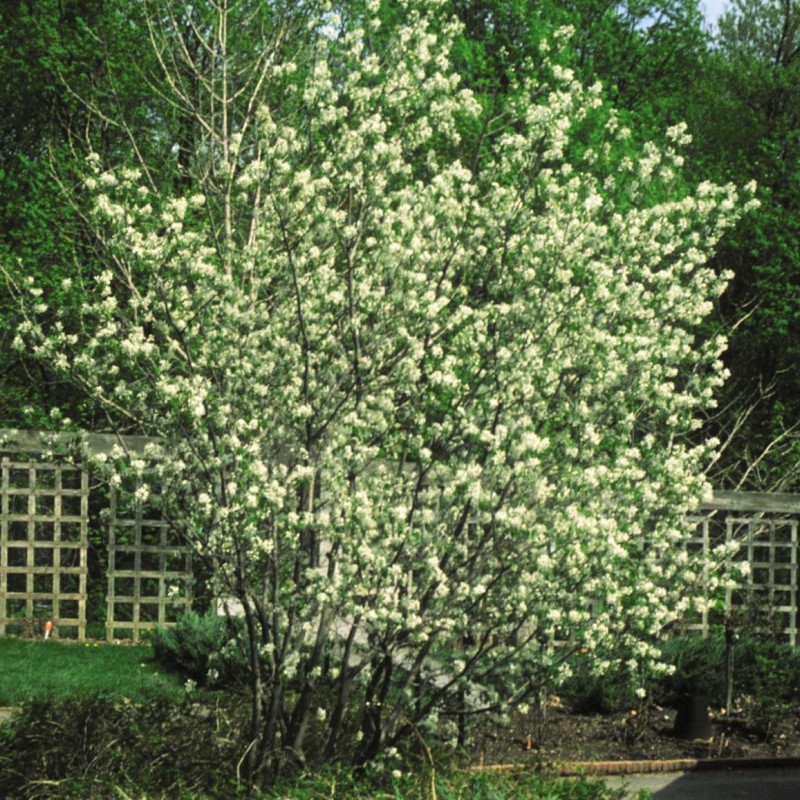
Shadbow presents itself with an understated elegance that reveals new details as seasons change. In early spring—often before the trees have leafed out—it produces abundant clusters of delicate, white flower petals that seem to float against bare branches. The blooms are airy and loose, never heavy or showy, which somehow makes them more beautiful. The flowers are followed by small, round berries that start out red, then turn a deep purple-black as they ripen in early summer. These berries are actually edible (birds and humans both love them), and they persist on the plant for weeks, creating a gentle vertical accent in the garden.
The foliage emerges with a lovely bronze-copper tone before maturing to a soft green throughout the growing season. The leaves are fine-textured and somewhat narrow, giving the plant an airy appearance even when fully leafed out. In fall, Shadbow turns into a surprise: brilliant shades of orange, red, and sometimes purple transform the plant into a quiet show-stopper.
Growing it in your garden
This is where Shadbow really earns its place in Connecticut gardens. It’s genuinely happy in part shade to full shade, making it perfect for the north side of your house or under the high canopy of mature trees. Unlike many flowering shrubs that demand sun, Shadbow performs beautifully in dappled woodland conditions. It also accepts a wide range of soil types—including the notoriously difficult wet, clay-heavy soils common in New England. Plant it where water pools in spring, and it thrives. Plant it in acidic woodland soil, and it thrives. This adaptability makes it invaluable for problem areas.
It naturally grows as a multi-stemmed shrub but can be pruned to a single-stem small tree form if you prefer. Either way, the growth habit is graceful and naturally architectural, requiring minimal pruning to look its best.
Through the seasons
Spring arrives early with Shadbow. Those ethereal white flowers are often among the first signs of the season—sometimes appearing while snow patches still linger. Early pollinators absolutely rely on this plant, making it ecologically valuable as well as beautiful.
Summer brings those delicious berries (you might want to share with the birds) and fresh, clean foliage. The plant settles into a quiet beauty, serving as a perfect backdrop for other shade-garden players.
Fall is when Shadbow reveals its secret passion: those warm, glowing autumn colors appear reliably year after year, providing weeks of color in the understory garden.
Winter shows off the plant’s structure—those graceful, multi-branching stems become visible, creating visual interest even when deciduous.
Where it shines
Shadbow belongs in woodland gardens and shade borders. It’s perfect for stabilizing slopes and managing water runoff in wet areas. Plant it under tall oak or hickory trees where few other flowering shrubs dare venture. It’s exceptional along property lines and woodland edges, where it can grow naturally without fighting the conditions. Because it’s native to our region, it also creates habitat for native butterflies, bees, and birds—it’s as good for your ecosystem as it is for your landscape.
Perfect companions
Pair Shadbow with other woodland-loving plants: creeping woodland ferns, coral bells (HEUCHERA), native jack-in-the-pulpit, and spring ephemerals like bloodroot and trillium. It works beautifully with other native shrubs like Winterberry Holly and Spicebush. In shade gardens, it provides height and structure that balances lower-growing hostas, hellebores, and bleeding hearts.
Care tips
Shadbow is genuinely low-maintenance. Water regularly during the first season after planting, then let nature handle most of the irrigation in established plantings—which is exactly why it’s so perfect for Connecticut. Avoid heavy pruning; light maintenance pruning can shape the plant, but it looks best when allowed to develop its natural form. No serious pests or diseases trouble this native plant. It rarely needs fertilizing in established woodland settings where it has decomposing leaf matter to feed from.
Quick facts
- Hardiness Zone: Zones 4-9
- Mature Height & Spread: 15-25 feet tall, 8-15 feet wide (can be maintained smaller with pruning)
- Bloom Season: Early spring (April-May)
- Light Requirements: Part shade to full shade (also tolerates full sun)
- Water Needs: Moderate; highly tolerant of wet soils and seasonal flooding
- Available at: Both our retail and wholesale locations