Description
BETULA PENDULA ‘TROST’S DWARF’
If you’ve been eyeing those graceful birch trees in European gardens but worried about having enough space, Trost’s Dwarf European White Birch is the elegant solution you’ve been waiting for. This charming cultivar delivers all the romantic appeal of a full-size birch—that striking white bark, the delicate branching pattern, the gentle movement of leaves in a breeze—but in a refined, manageable size that fits perfectly into Connecticut gardens where space is precious. It’s the kind of tree that makes people stop and ask what you’re growing.
What it looks like
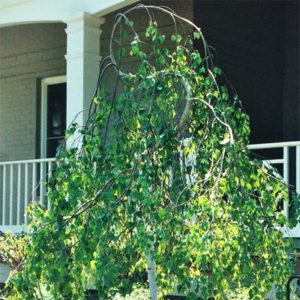
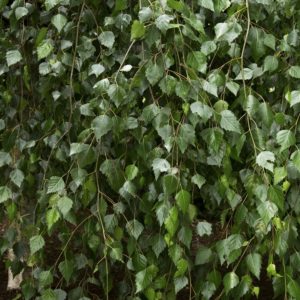
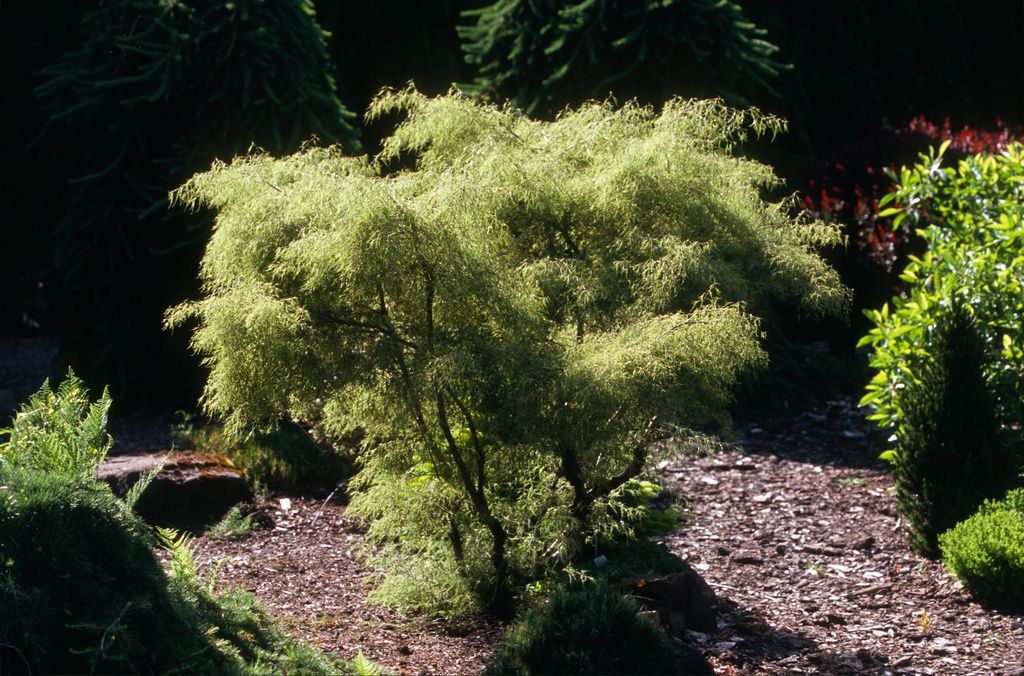
Trost’s Dwarf is a study in understated elegance. The signature white trunk, which practically glows in winter sunlight, is the obvious showstopper. But look closer and you’ll notice the exquisitely fine branching structure—more delicate and refined than its larger cousins—creating an almost lacy silhouette even when leafless. Come spring and summer, the small, triangular leaves emerge fresh green and flutter at the slightest breeze, casting a dancing pattern of light and shadow across your garden. In autumn, those leaves turn a soft, buttery yellow. The overall form is naturally upright and narrow, almost columnar, making it perfect for tight spaces.
Growing it in your garden
Here’s the wonderful news: birches are New England natives, and BETULA PENDULA ‘TROST’S DWARF’ has proven itself reliably hardy through Connecticut winters. What makes it thrive in our region is consistent moisture and cool roots. In practice, this means planting it where you can give it regular water, especially during dry spells in summer. Morning sun with afternoon shade is ideal in our hot Connecticut summers, though it can handle more sun in areas with good air circulation. Unlike some birches, this cultivar shows good disease resistance when given proper spacing and air flow, which helps prevent the birch borers and fungi that plague stressed trees. Plant it where you can tuck it into a mixed border or use it as a graceful focal point, but not crammed against a wall or other plants.
Through the seasons
Winter is when this tree truly shines. Without leaves to distract, the luminous white bark becomes the main attraction, especially dramatic against evergreens or on gray winter days. Spring brings that flutter of tiny emerging leaves and a sense of renewal. Summer is about enjoying the dappled shade and the gentle movement of foliage—it’s the tree that makes you want to sit beneath it with a book. Fall transforms those leaves to golden yellow, a subtle but lovely transition that doesn’t demand attention the way some ornamentals do. Then the cycle returns to winter’s architectural beauty.
Where it shines
This is the birch for gardens where a full-size specimen would overwhelm the space. Trost’s Dwarf excels as a focal point in a small urban garden or as part of a carefully composed mixed border. It’s stunning as a specimen planted to be viewed from a window or sitting area, where its winter silhouette and summer movement can be fully appreciated. Because of its narrow form, it works beautifully in tight spots where you might otherwise plant a columnar juniper or similar narrow conifer. Try it at the corner of a garden path or as a backdrop to shorter plantings—its delicate trunk won’t create dense shade, so plants below will still get adequate light.
Perfect companions
Plant shade-tolerant underplantings that appreciate some moisture: Japanese painted fern, hellebores, hostas, and brunnera all make excellent companions that share the birch’s preference for cool, consistent moisture. For a more naturalistic planting, combine it with other shade plants like coral bells and astilbe. Evergreens like boxwood or dwarf conifers provide year-round structure and make the birch’s white bark pop even more. Avoid planting too closely with aggressive competitors for water and nutrients.
Care tips
The key to a long, healthy life for this birch is consistency. Water regularly, especially during the first few years and during Connecticut’s dry summers. A layer of mulch (a few inches, keeping it away from the trunk) helps maintain soil moisture and keeps roots cool. Prune only if absolutely necessary, and only in late summer or fall—birches bleed sap if pruned in spring. Watch for any signs of bronze birch borer damage (small holes in the trunk or branch dieback) and address promptly by improving growing conditions and removing affected branches. In most situations, a healthy tree that isn’t drought-stressed will fend off pests and diseases just fine.
Quick facts
- Hardiness Zone: 2-7
- Mature Height & Spread: 25-30 feet tall, 8-12 feet wide
- Bloom Season: Spring catkins (not showy)
- Light Requirements: Full sun to part shade; afternoon shade in hot climates
- Water Needs: Regular moisture; prefers consistent water
- Available at: Both our retail and wholesale locations