Description

BETULA PENDULA ‘YOUNGII’
There’s something almost magical about a weeping birch—the way its delicate branches cascade like a green fountain, the papery white bark that glows in winter light, the sense of movement even on a still day. Betula pendula ‘Youngii’, the Youngii Weeping Birch, is Connecticut’s answer to the gardener who wants drama without demanding effort. This is a tree that earns its place in your landscape through pure presence, not fussiness.
What it looks like
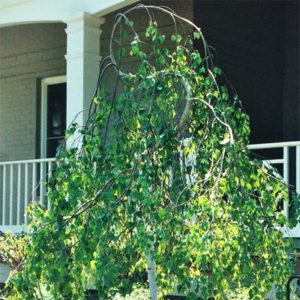
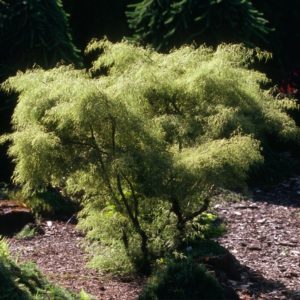
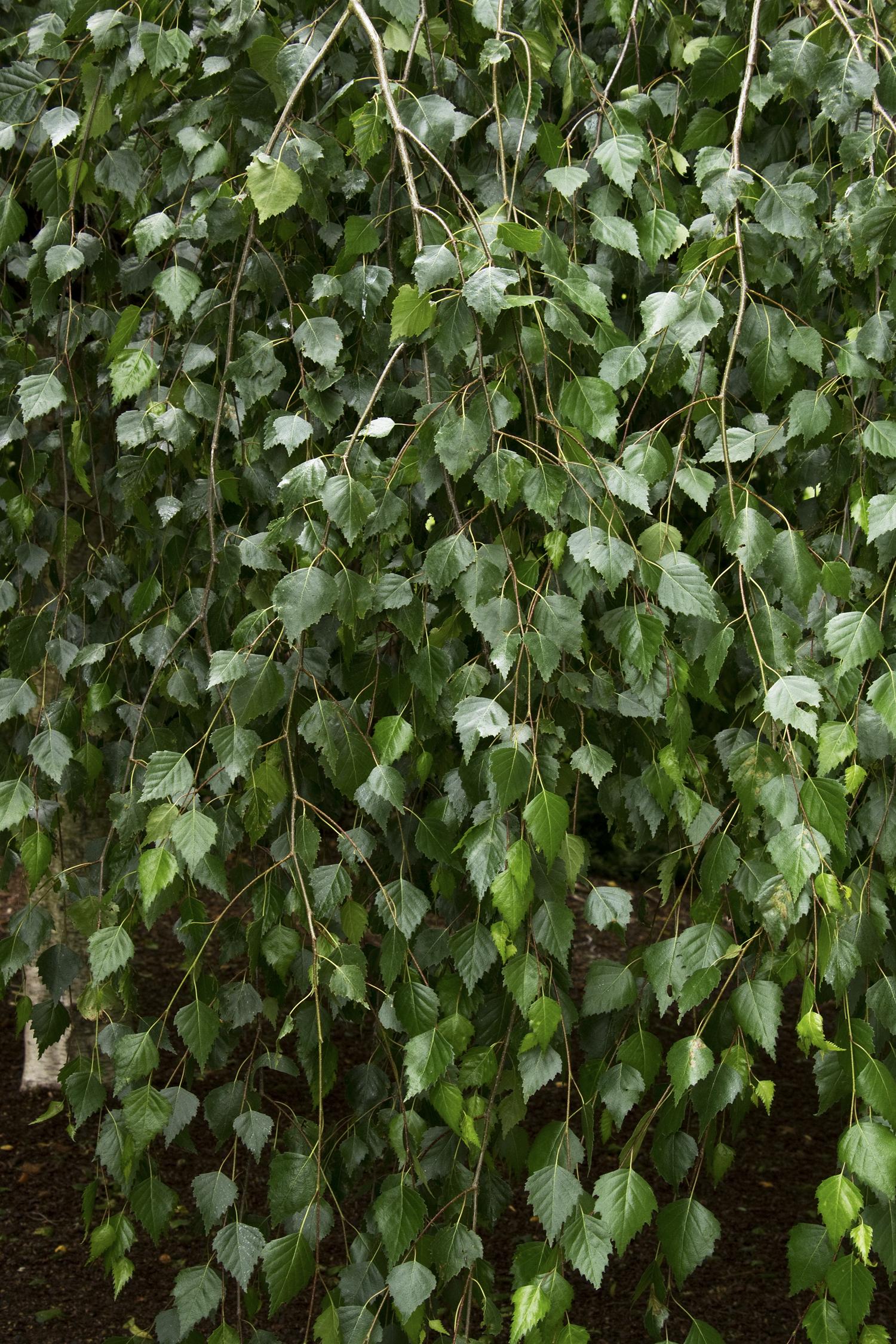
The Youngii Weeping Birch is an exercise in elegant understatement. Its pendulous branches sweep gracefully downward, creating a weeping habit that’s more refined than theatrical. The canopy forms a dense, fountain-like mound of tiny, diamond-shaped leaves that flutter with the slightest breeze. The foliage emerges a soft, lime-tinged green in spring, deepens to a fresh medium green through summer, then turns a luminous golden yellow come autumn.
What really steals the show, though, is the bark. As the tree matures, it develops that characteristic papery white trunk and branches that birch lovers cherish—especially striking when snow clings to the limbs or winter sun hits it at an angle. The fine texture of the bark contrasts beautifully with the delicate foliage, creating visual interest even when the leaves have fallen.
Growing it in your garden
Youngii Weeping Birch adapts surprisingly well to Connecticut’s climate and soil conditions. It prefers full sun to partial shade—give it at least four to six hours of direct sunlight daily for the best branch structure and that coveted bright bark color. The tree is remarkably unfussy about soil, thriving in sandy, loamy, or even slightly acidic conditions that characterize much of New England.
What it does appreciate is consistent moisture, especially during the first couple of seasons after planting. Birches are somewhat shallow-rooted, so mulching around the base helps keep roots cool and reduces transplant stress. This tree has excellent cold hardiness and handles Connecticut’s winters without complaint.
Through the seasons
Spring arrives with tiny, delicate catkins appearing before the leaves fully emerge—a subtle but charming detail. By late spring, the tree is in full leaf, creating that elegant weeping silhouette that defines its character. Summer is when the Youngii truly shines as a specimen tree, its fountain-like form providing filtered shade and gentle movement throughout the growing season.
Autumn transforms it into something special. That golden-yellow fall color is reliably stunning in Connecticut, often lasting several weeks. Winter reveals the architecture of the tree and showcases the beautiful white bark—especially dramatic after a fresh snowfall or on a crisp morning when frost catches the papery trunk.
Where it shines
This is a tree for prominent placement, where its weeping form can be appreciated. It excels as a specimen tree in the corner of a small lot, along the edge of a patio, or as a focal point in a larger landscape. The graceful branching creates an almost living sculpture that looks beautiful from any angle and in any season.
Because of its moderate mature size, it fits comfortably into residential landscapes where a full-size shade tree might overwhelm. It’s equally at home in contemporary gardens, naturalistic settings, or more formal landscape designs—its elegance is genuinely versatile.
Perfect companions
The Youngii Weeping Birch works beautifully with understated companions. Plant it near shade-tolerant perennials like Hellebores, Epimediums, or early spring bulbs that appreciate the filtered light beneath its canopy. Ornamental grasses with a softer texture—think Panicum or Miscanthus—echo the tree’s graceful movement at ground level. For contrast, pair it with broadleaf evergreens like Boxwoods or Hollies that provide year-round substance when the birch is bare.
Care tips
Youngii Weeping Birch is genuinely low-maintenance once established. Water regularly during the first year after planting, then deeply but less frequently in subsequent years. Prune only to remove dead or damaged branches; this tree’s natural form is its greatest asset, so resist the urge to reshape it. Monitor for birch leaf miner in mid-summer—it’s a common Connecticut pest—but often requires no intervention on healthy, well-watered trees.
Avoid wounding the bark unnecessarily, as birches are somewhat susceptible to damage from lawn equipment. Keep the area around the tree clear and use a string trimmer carefully, or better yet, mulch to eliminate mowing near the trunk.
Quick facts
- Hardiness Zone: 2-7 (thrives throughout Connecticut)
- Mature Height & Spread: 25-35 feet tall, 15-25 feet wide
- Bloom Season: Spring catkins; fall foliage color
- Light Requirements: Full sun to partial shade (4-6 hours direct sun)
- Water Needs: Moderate; consistent moisture during establishment
- Available at: Both our retail and wholesale locations