Autumn Fern

DRYOPTERIS ERYTHROSORA

What if one plant could bring the rich, warm tones of autumn to your garden year-round, without waiting for September? The Autumn Fern does exactly that—it’s a fern that breaks all the rules about what ferns are “supposed” to look like. While most ferns fade into whispers of green, this beauty emerges with coppery-red new fronds that gradually deepen into glossy, dark green mature foliage. It’s like having a perpetual seasonal transition happening right in your shade garden, and once you plant one, you’ll wonder how you ever gardened without it.

What it looks like

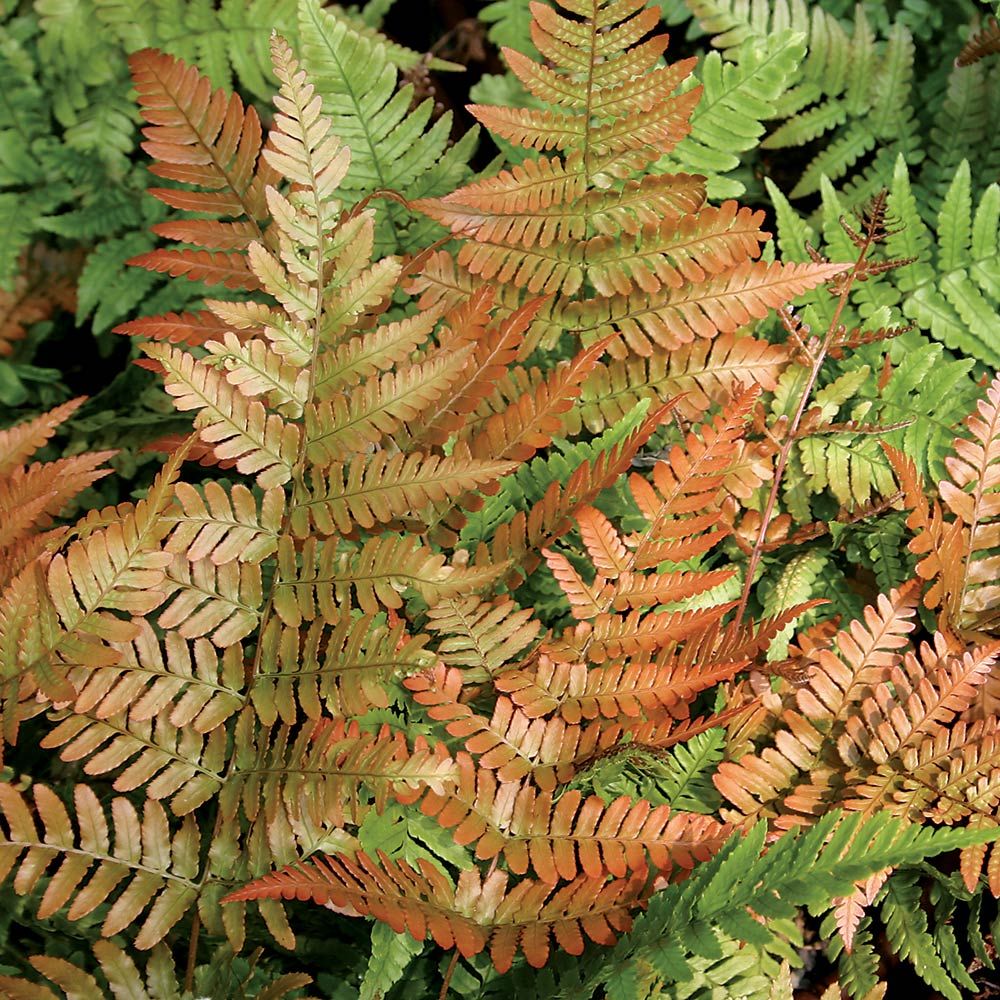
The Autumn Fern is an evergreen fern with a distinctly tropical appearance that somehow thrives in New England gardens. Each frond is finely divided and delicately textured, reaching about 24 inches long and creating an airy, fountain-like mound. Here’s where the magic happens: new fronds emerge in shades of copper, rose, and burgundy—sometimes with a coppery sheen that seems almost metallic in the right light. As they mature, they transition to a rich, deep green while maintaining that glossy finish. The overall plant grows into a compact, somewhat upright mound, rarely exceeding 24 to 30 inches in height, making it perfect for those tight garden corners or containers.

Growing it in your garden

In Connecticut, the Autumn Fern (DRYOPTERIS ERYTHROSORA) is best grown as a semi-evergreen to evergreen perennial in zones 5b through 11, though it appreciates some protection in our colder winter months. Plant it in dappled shade or partial shade—those spots under mature trees or on the east side of structures where morning sun filters through. It’s not fussy about soil, but it does prefer something that doesn’t dry out completely. Think rich, organic, well-draining soil amended with plenty of compost. In New England, this often means choosing a location where it gets consistent moisture during our growing season without sitting in standing water come spring snowmelt.

Through the seasons

Spring is when the Autumn Fern really steals the show. As temperatures warm and new growth emerges, those copper and rust tones appear in waves throughout the plant, creating a display that rivals flowering perennials. Summer sees the fronds mature into their dark, leathery green state—a reliable presence in the shade garden when everything else is looking tired from heat and humidity. Fall and winter are where this plant earns its name. While other ferns die back, the Autumn Fern holds its color and texture, though the new growth may take on deeper bronze undertones. In milder Connecticut winters, you’ll likely retain your foliage; in harsher years, it may be knocked back but will reliably return.

Where it shines

This is the fern for shade gardeners who are tired of playing it safe with plain green. Use it in woodland gardens, along shaded walkways, or in that difficult spot under mature oaks where regular ferns seem to fade into the background. It’s exceptional in containers on shaded patios, where you can really appreciate those color-changing fronds up close. Plant it in drifts along a north-facing foundation, combine it with hostas and bleeding heart, or tuck it into mixed shade borders where its fine texture contrasts beautifully with broader-leaved companions. It’s also one of the few ferns that brings enough visual interest to hold its own even when not blooming—because ferns don’t bloom, this textural color change is its main event.

Perfect companions

Pair the Autumn Fern with Japanese forest grasses for a combination of textures and colors. Hellebores bloom nearby while the fern provides cooling foliage presence. Hostas with blue or yellow-tinged leaves create striking color contrast with those copper fronds. Add some shade-loving perennials like coral bells (HEUCHERA), which echo those warm tones, or creeping phlox for spring interest at ground level. Even paired with simple shade stalwarts like pachysandra, the Autumn Fern becomes the star of the show.

Care tips

In Connecticut gardens, mulch around your Autumn Fern with 2 to 3 inches of shredded bark or compost to help retain moisture and protect roots during cold winters. Water regularly during establishment and throughout dry spells—ferns prefer consistent moisture, though not waterlogged conditions. In colder parts of Connecticut, consider applying extra mulch before winter to protect the crown. There’s no need to fertilize heavily; a light application of balanced fertilizer in early spring is all it needs. Unlike many ferns, the Autumn Fern doesn’t require fussing with humidity in our naturally moist New England climate. If fronds are damaged by harsh winter weather, simply trim them away in spring and let new growth take over.

Quick facts

  • Hardiness Zone: Zones 5b–11 (semi-evergreen in zone 5)
  • Mature Height & Spread: 24–30 inches tall and wide
  • Bloom Season: N/A (grown for foliage)
  • Light Requirements: Dappled to partial shade
  • Water Needs: Consistently moist, well-draining soil
  • Available at: Both our retail and wholesale locations

Autumn Fern

A bold and beautiful choice for shady borders and woodland gardens. A stunning dwarf fern with a flush of young papery fronds that emerge a copper-red color, then mature to a deep green.

Description

Autumn Fern

DRYOPTERIS ERYTHROSORA

What if one plant could bring the rich, warm tones of autumn to your garden year-round, without waiting for September? The Autumn Fern does exactly that—it’s a fern that breaks all the rules about what ferns are “supposed” to look like. While most ferns fade into whispers of green, this beauty emerges with coppery-red new fronds that gradually deepen into glossy, dark green mature foliage. It’s like having a perpetual seasonal transition happening right in your shade garden, and once you plant one, you’ll wonder how you ever gardened without it.

What it looks like

The Autumn Fern is an evergreen fern with a distinctly tropical appearance that somehow thrives in New England gardens. Each frond is finely divided and delicately textured, reaching about 24 inches long and creating an airy, fountain-like mound. Here’s where the magic happens: new fronds emerge in shades of copper, rose, and burgundy—sometimes with a coppery sheen that seems almost metallic in the right light. As they mature, they transition to a rich, deep green while maintaining that glossy finish. The overall plant grows into a compact, somewhat upright mound, rarely exceeding 24 to 30 inches in height, making it perfect for those tight garden corners or containers.

Growing it in your garden

In Connecticut, the Autumn Fern (DRYOPTERIS ERYTHROSORA) is best grown as a semi-evergreen to evergreen perennial in zones 5b through 11, though it appreciates some protection in our colder winter months. Plant it in dappled shade or partial shade—those spots under mature trees or on the east side of structures where morning sun filters through. It’s not fussy about soil, but it does prefer something that doesn’t dry out completely. Think rich, organic, well-draining soil amended with plenty of compost. In New England, this often means choosing a location where it gets consistent moisture during our growing season without sitting in standing water come spring snowmelt.

Through the seasons

Spring is when the Autumn Fern really steals the show. As temperatures warm and new growth emerges, those copper and rust tones appear in waves throughout the plant, creating a display that rivals flowering perennials. Summer sees the fronds mature into their dark, leathery green state—a reliable presence in the shade garden when everything else is looking tired from heat and humidity. Fall and winter are where this plant earns its name. While other ferns die back, the Autumn Fern holds its color and texture, though the new growth may take on deeper bronze undertones. In milder Connecticut winters, you’ll likely retain your foliage; in harsher years, it may be knocked back but will reliably return.

Where it shines

This is the fern for shade gardeners who are tired of playing it safe with plain green. Use it in woodland gardens, along shaded walkways, or in that difficult spot under mature oaks where regular ferns seem to fade into the background. It’s exceptional in containers on shaded patios, where you can really appreciate those color-changing fronds up close. Plant it in drifts along a north-facing foundation, combine it with hostas and bleeding heart, or tuck it into mixed shade borders where its fine texture contrasts beautifully with broader-leaved companions. It’s also one of the few ferns that brings enough visual interest to hold its own even when not blooming—because ferns don’t bloom, this textural color change is its main event.

Perfect companions

Pair the Autumn Fern with Japanese forest grasses for a combination of textures and colors. Hellebores bloom nearby while the fern provides cooling foliage presence. Hostas with blue or yellow-tinged leaves create striking color contrast with those copper fronds. Add some shade-loving perennials like coral bells (HEUCHERA), which echo those warm tones, or creeping phlox for spring interest at ground level. Even paired with simple shade stalwarts like pachysandra, the Autumn Fern becomes the star of the show.

Care tips

In Connecticut gardens, mulch around your Autumn Fern with 2 to 3 inches of shredded bark or compost to help retain moisture and protect roots during cold winters. Water regularly during establishment and throughout dry spells—ferns prefer consistent moisture, though not waterlogged conditions. In colder parts of Connecticut, consider applying extra mulch before winter to protect the crown. There’s no need to fertilize heavily; a light application of balanced fertilizer in early spring is all it needs. Unlike many ferns, the Autumn Fern doesn’t require fussing with humidity in our naturally moist New England climate. If fronds are damaged by harsh winter weather, simply trim them away in spring and let new growth take over.

Quick facts

  • Hardiness Zone: Zones 5b–11 (semi-evergreen in zone 5)
  • Mature Height & Spread: 24–30 inches tall and wide
  • Bloom Season: N/A (grown for foliage)
  • Light Requirements: Dappled to partial shade
  • Water Needs: Consistently moist, well-draining soil
  • Available at: Both our retail and wholesale locations