Description

HYDRANGEA PANICULATA ‘BOBO’
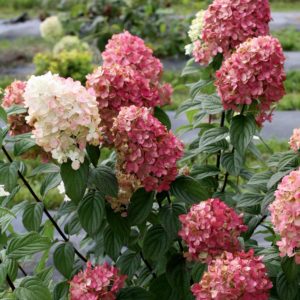
Here’s the honest truth about Bobo Hydrangea: it’s the plant that makes you look like a gardening genius without requiring any gardening genius. This is the hydrangea that does everything right without asking for much in return—and it does it all season long, from early summer through the first hard frost. If you’ve ever felt intimidated by hydrangeas, Bobo is your answer. It’s compact, manageable, forgiving, and absolutely loaded with flowers that transform from creamy white to dusty rose to coppery burgundy as the season progresses.
What it looks like
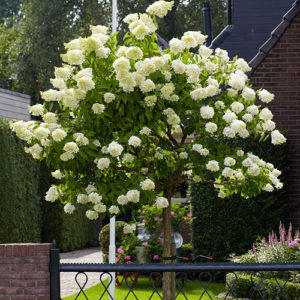
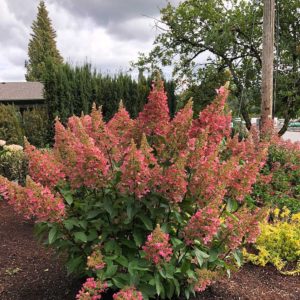
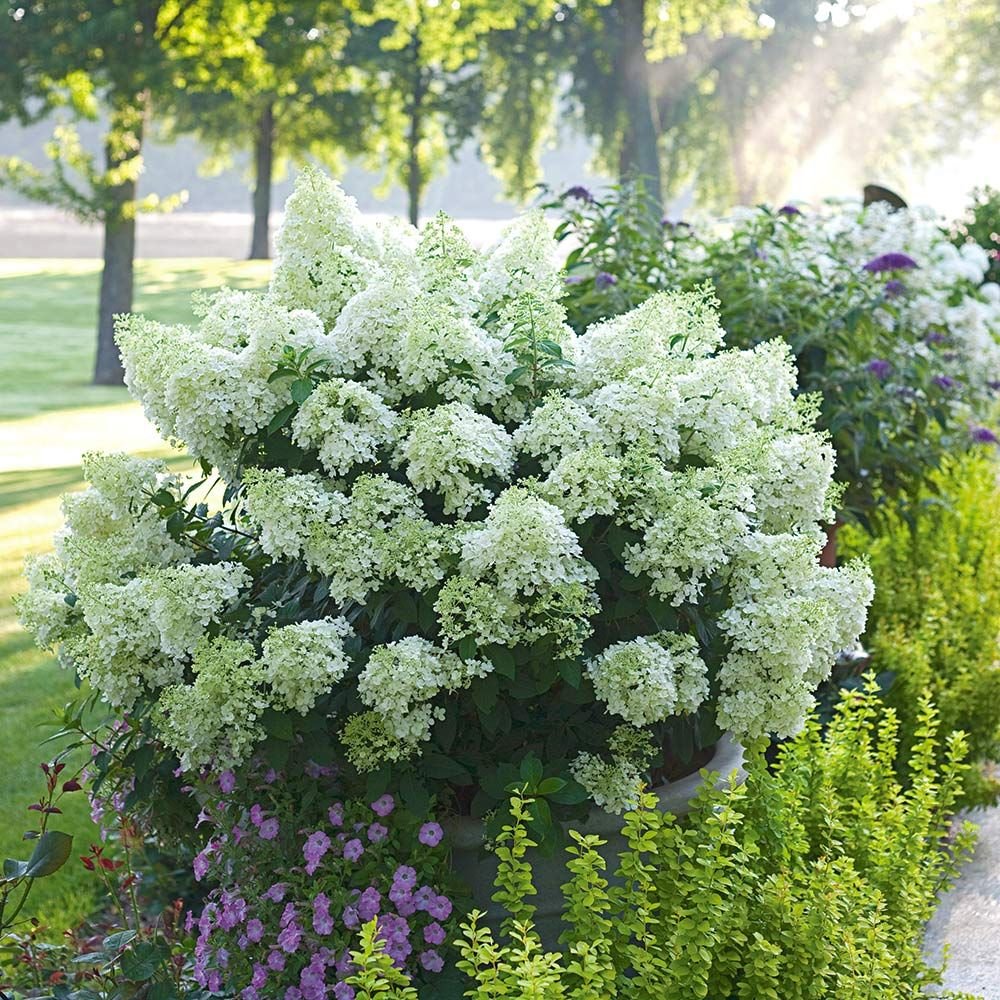
Bobo is a panicle hydrangea that grows into a neat, naturally compact mound—think small, tidy shrub rather than sprawling giant. The flower clusters are those distinctive elongated panicles that panicle hydrangeas are famous for, but here they’re perfectly proportioned for smaller gardens. The blooms open white or pale cream in July and gradually shift into warmer tones as summer moves toward fall. By September, you’re looking at deep rose-pink flowers with almost burgundy undertones, creating a color show that rivals the best autumn performers. The foliage is a dark, attractive green throughout the growing season, providing a solid backbone to the garden even before the flowers steal the show.
Growing it in your garden
Connecticut’s humid summers and unpredictable spring weather are no problem for Bobo. This hydrangea flowers on new growth, which means even if a late frost nips your buds—something we New Englanders know too well—the plant will simply push out new flowers later in the season. You won’t lose your bloom potential. Plant Bobo in a spot with at least four hours of direct sun; six to eight hours is even better for maximum flowering. It tolerates partial shade but will produce fewer flowers. The soil should be well-draining but moisture-retentive—basically, healthy garden soil amended with some compost. Bobo doesn’t demand acidic soil the way bigleaf hydrangeas do, making it far more flexible for different Connecticut yard conditions.
Through the seasons
Spring arrives with Bobo offering fresh, clean foliage and a tidy silhouette that doesn’t dominate the garden bed. Early summer brings the first flower buds, and by July you’ll have open blooms that practically glow in the garden. Throughout July and August, the flowers keep coming strong, and here’s where Bobo truly shines: instead of fading, those blooms intensify in color. As temperatures cool in September, the transformation accelerates—those white flowers become rose, then deeper pink, then burgundy. Many gardeners love leaving the flower heads on the plant into late autumn and even winter for dried interest. The coppery tones against October and November skies are genuinely beautiful. Come spring, pruning Bobo is refreshingly simple—just cut it back to about 12 to 18 inches from the ground, and it bounces back fuller and bushier than before.
Where it shines
Bobo is the perfect solution for foundation plantings where you need color without bulk. It works beautifully in mixed borders, cottage gardens, and anywhere you want reliable flowers without an oversized shrub taking over. Because it stays compact, it’s ideal for smaller properties—there’s no constant battling with an overgrown monster. It’s also excellent in containers, which means you can tuck it onto a patio or deck and enjoy those color changes up close. In group plantings of three or five, Bobo creates impact without looking chaotic. And if you live in a newer Connecticut home with limited garden space, this is the hydrangea that finally gives you what you’ve been wanting.
Perfect companions
Bobo’s compact nature makes it easy to pair with other plants. Early-season bloomers like catmint or Russian sage provide color when Bobo is still leafing out, then gracefully step aside as the hydrangea takes center stage. Underplant it with soft bloomers like daylilies or coreopsis for continuous color. Ornamental grasses like Karl Foerster feather reed grass echo the vertical lines of the panicles and add movement. Even evergreen companions like dwarf Alberta spruce or boxwood work well, providing year-round structure around Bobo’s seasonal drama.
Care tips
Water regularly during the first season to establish a strong root system, then taper back once established—Bobo is quite drought-tolerant once settled in. Consistent moisture during hot, dry Connecticut summers will produce fuller flowers, but this plant won’t guilt you if you forget to water during a busy week. Deadheading isn’t necessary; in fact, letting the flowers age on the plant and transition through their color palette is half the fun. If you want a tidy appearance through winter, cut off the dried panicles in late November. Bobo rarely suffers from pests or diseases, and it’s naturally resistant to the fungal issues that sometimes plague hydrangeas in humid New England summers.
Quick facts
- Hardiness Zone: 3-8 (perfect for all of Connecticut)
- Mature Height & Spread: 3-4 feet tall and wide
- Bloom Season: July through October
- Light Requirements: Full sun to part sun (4+ hours direct sunlight)
- Water Needs: Moderate; regular moisture for best results
- Available at: Both our retail and wholesale locations