Description

HYDRANGEA PANICULATA
Here’s the honest truth about tree-form hydrangeas: they’re the garden equivalent of having your cake and eating it too. You get the full-sized shrub impact—that commanding presence that makes a garden feel intentional and mature—but in a form that’s easier to place, prune, and appreciate up close. A HYDRANGEA PANICULATA trained as a tree transforms from a nice plant into a landscape statement, especially when those massive flower plumes start their late-summer show. This is the version of hydrangea that stops neighbors mid-jog and makes visitors ask, “What IS that?”
What it looks like
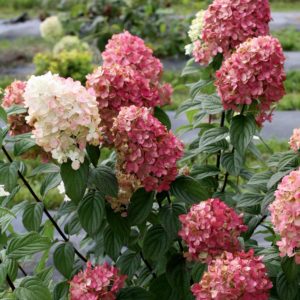
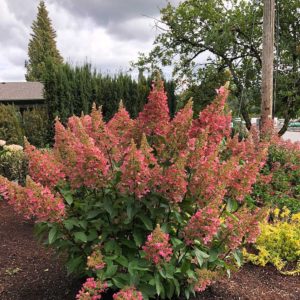
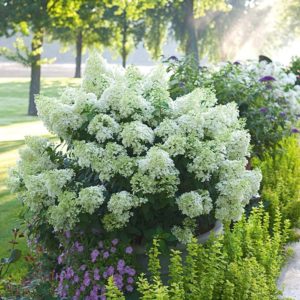
Imagine a well-branched, sturdy tree with a clean trunk topped by a canopy that erupts into enormous, cone-shaped flower clusters come late summer. The blooms start creamy white and gradually flush with pink, deepening to rust and burgundy as fall arrives—essentially giving you a months-long color show in one plant. The leaves are a handsome, unfussy green that lets the flowers take center stage. A mature tree-form HYDRANGEA PANICULATA reaches about 8 to 10 feet tall with a roughly equal spread, creating a focal point that’s imposing without being overbearing. Even in winter, the branching structure has an architectural quality worth admiring.
Growing it in your garden
Tree-form hydrangeas are remarkably forgiving plants, which is probably why gardeners throughout Connecticut have embraced them so enthusiastically. They’re not fussy about soil type—acidic or alkaline, clay or sandy—and they don’t demand perfect drainage the way some woody plants do. They’ll grow in full sun (which actually intensifies those color changes) or partial shade, though you’ll get the best flowering in sunnier spots. The panicle hydrangeas are also tougher than their big-leaf cousins when it comes to New England winters; they flower on new wood, meaning winter damage won’t erase your entire show. Plant in spring or fall with consistent water during the establishment year, and you’re basically set.
Through the seasons
Spring brings fresh, clean foliage and the promise of what’s coming. By early summer, you’ll notice flower buds forming at branch tips—these tight, compact clusters that don’t yet hint at their future magnificence. Late July and August are when the magic happens: those cone-shaped panicles expand dramatically, gradually shifting from ivory to blush pink, then deepening through various shades of mauve and burgundy. The show peaks in September and October, just when you might be tired of traditional summer flowers. By late fall, the dried seed heads develop a papery, almost sculptural beauty that carries through winter and into early spring before pruning.
Where it shines
Use a tree-form hydrangea as an accent specimen in a perennial bed—it’s tall enough to anchor the composition without completely shadowing nearby plantings. Position it where afternoon light catches those late-season flowers, especially as they deepen into their burgundy tones. The tree form makes it perfect for smaller properties where you want visual impact without sprawl; the clear trunk lets you use the space underneath for shade-tolerant groundcovers or hostas. It’s equally at home as a specimen in a foundation planting or flanking an entryway. And because the flowers appear late in the season, it pairs beautifully with spring bulbs and early-season bloomers that have already finished their show.
Perfect companions
Underplant your tree hydrangea with shade-tolerant companions like Japanese forest grass or variegated hostas to create layers of interest. Nearby, consider finer-textured plants like Russian sage or artemisia to provide textural contrast—the hydrangea’s bold flower cones will look even more impressive next to delicate, feathery foliage. Late-blooming coneflowers and black-eyed Susans extend the season and echo the late-summer garden energy. For fall interest, add ornamental grasses with seed heads that catch light similarly to the hydrangea’s dried flowers.
Care tips
Tree-form hydrangeas appreciate consistent moisture during their first year, but once established, they’re quite drought-tolerant. Pruning is straightforward: in late winter or earliest spring, cut back the previous season’s growth to create that nicely shaped canopy. Remove any crossing branches and shape it to your preference. Some gardeners cut quite hard for bushier flowering; others prefer a more open, naturally branched look. Either way, you won’t hurt it. Deadheading isn’t necessary, especially since those fading blooms add autumn color. A light application of balanced fertilizer in spring supports vigorous growth, though established plants rarely need supplemental feeding.
Quick facts
- Hardiness Zone: 3-8 (Perfect for Connecticut)
- Mature Height & Spread: 8-10 feet tall, 6-8 feet wide
- Bloom Season: Late July through October
- Light Requirements: Full sun to partial shade (best flowering in 6+ hours of sun)
- Water Needs: Moderate; consistent moisture during establishment, drought-tolerant once established
- Available at: Both our retail and wholesale locations