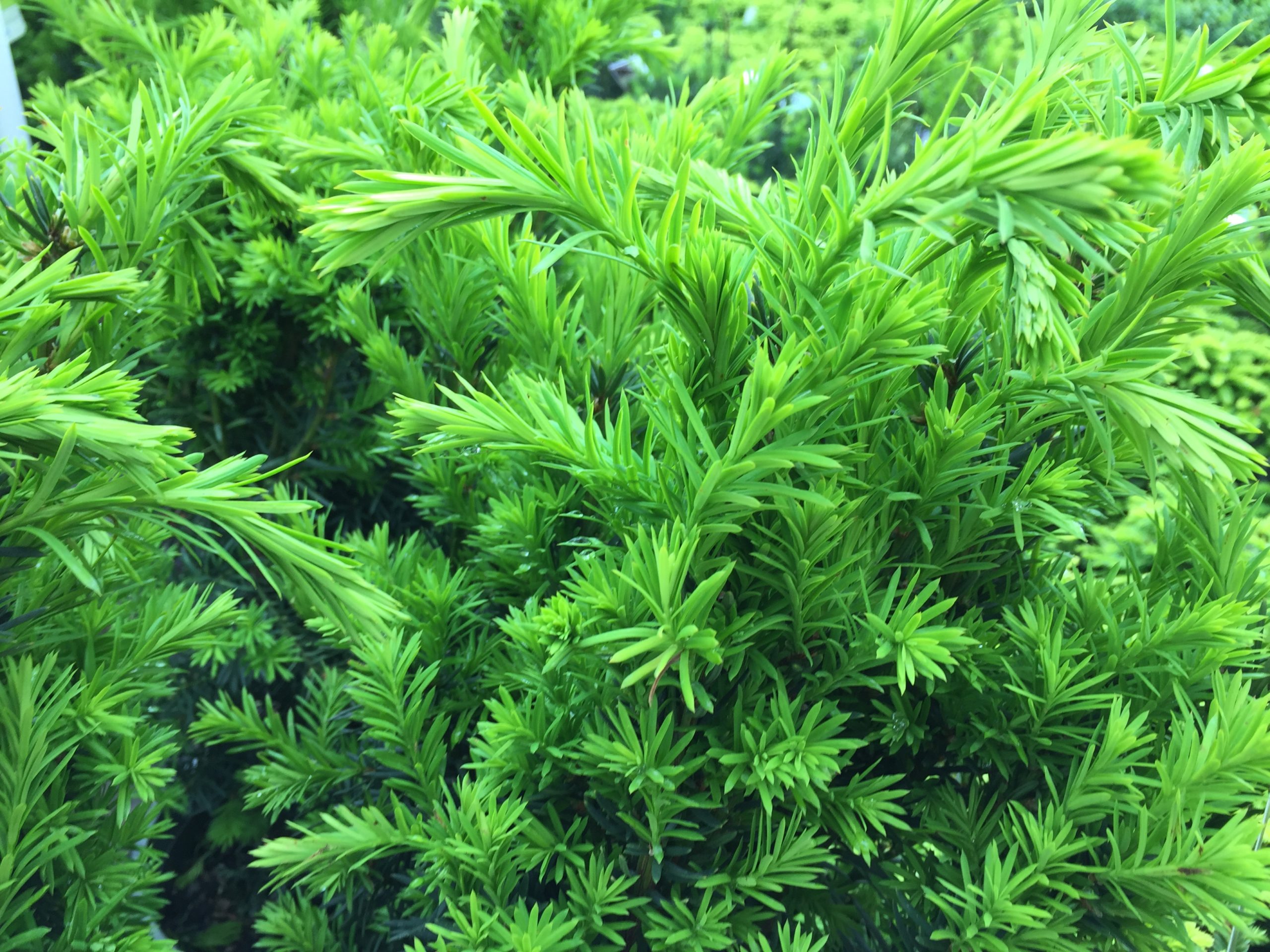
TAXUS X MEDIA ‘DENSIFORMIS’

If you’ve been searching for something that handles wet soil, deep shade, and Connecticut winters without complaint, while also looking absolutely architectural doing it—Densiformis Yew is your answer. This is the workhorse of the evergreen world, the plant that doesn’t ask for much but delivers consistent, year-round drama. Unlike its more demanding relatives, TAXUS X MEDIA ‘DENSIFORMIS’ thrives in conditions where other plants throw in the towel, making it an unsung hero for New England gardeners who refuse to compromise on substance or style.

What it looks like

Densiformis Yew presents itself as a dense, columnar evergreen with a distinctly formal bearing. Its rich, dark green needles are fine-textured and tightly packed along the stems, creating that satisfying architectural quality that makes it look equally at home in a contemporary garden or a traditional landscape. The plant’s natural habit is upright and narrow—almost pencil-like—without requiring constant pruning to maintain its shape. It’s the kind of plant that makes you feel like you have design skills you don’t actually possess. The foliage stays that deep, forest green year-round, never bronzing or fading even in the harshest Connecticut winters.

Growing it in your garden

What makes Densiformis Yew exceptional is its flexibility. Yes, it prefers afternoon shade and appreciates afternoon protection from intense summer heat, but it’s genuinely happy in full shade—something many evergreens will only tolerate grudgingly. It’s also one of the rare evergreens that won’t sulk in wet conditions; in fact, it performs admirably in poorly drained soils where other plants develop root rot. This makes it invaluable for those tricky low spots in your yard or areas that stay damp longer than you’d like.

Plant it in spring or early fall, spacing according to its mature width. Unlike some yews that demand perfect drainage, TAXUS X MEDIA ‘DENSIFORMIS’ is remarkably forgiving about soil composition—it’ll grow in sandy soil, clay, loam, or almost anything in between. If you amend your planting hole with compost, your yew will reward you with even better growth, but honestly, it’s not a dealbreaker if you don’t.

Through the seasons

Spring brings subtle elongation of the stems as new growth emerges in a slightly brighter shade of green before deepening to match the rest of the plant. Summer is when Densiformis Yew truly earns its place in the landscape—while other plants wilt or fade, this yew maintains its impeccable composure in the Connecticut heat and humidity. Fall and winter are where this plant becomes genuinely indispensable. While deciduous trees shed their leaves and summer-blooming perennials disappear, your Densiformis Yew stands sentinel, providing structure, substance, and visual interest when the garden needs it most. It’s the anchor that holds everything together during the bleakest months.

Where it shines

This is the plant for formal hedges, foundation plantings, and evergreen screens. Use it to frame entries, to define garden rooms, or to create vertical punctuation in mixed borders. Because it tolerates shade so well, it’s perfect for north-facing walls or under the drip line of large trees where most plants struggle. In wet areas of your property—near downspout drainage, in rain garden designs, or in naturally boggy spots—Densiformis Yew outperforms almost every other columnar evergreen. It’s also your answer if you want evergreen structure without the fussiness of boxwood or the potential disease issues that plague some other narrow-form evergreens.

Perfect companions

Pair Densiformis Yew with shade-loving deciduous shrubs like oakleaf hydrangea or viburnums that will soften its formal lines. Underplant it with shade-tolerant groundcovers like European ginger or sweet woodruff. In sunnier spots, combine it with other upright evergreens like Emerald Green arborvitae or with flowering shrubs that bloom in spring or summer—the yew provides the perfect evergreen backdrop that never competes for attention. It also works beautifully as a focal point among hostas, hellebores, and other shade perennials.

Care tips

Water regularly the first year after planting to establish a strong root system, then water during dry spells. Once established, Densiformis Yew is remarkably self-sufficient. Prune only to maintain shape or to remove damaged growth; light pruning in late spring keeps it looking tidy. Avoid heavy pruning in late summer or fall, which can encourage tender new growth vulnerable to winter damage. That’s genuinely it—no special fertilizer needed, no particular disease concerns, no drama. This is a set-it-and-forget-it plant that actually deserves the phrase.

Quick facts

  • Hardiness Zone: 4–7
  • Mature Height & Spread: 12–15 feet tall, 3–4 feet wide
  • Bloom Season: Evergreen; insignificant flowers
  • Light Requirements: Partial shade to full shade; tolerates sun
  • Water Needs: Moderate; tolerates wet soil exceptionally well
  • Available at: Both our retail and wholesale locations.

Densiformis Yew

Category:

Dense, low, spreading shrub is an excellent basic foundation planting for a hedge, screen or border. The dark green foliage backs scarlet-colored, berry-like cones.

Zoning: 4-7
Mature Height and Spread: 3-4’ & 4-8’

Description

TAXUS X MEDIA ‘DENSIFORMIS’

If you’ve been searching for something that handles wet soil, deep shade, and Connecticut winters without complaint, while also looking absolutely architectural doing it—Densiformis Yew is your answer. This is the workhorse of the evergreen world, the plant that doesn’t ask for much but delivers consistent, year-round drama. Unlike its more demanding relatives, TAXUS X MEDIA ‘DENSIFORMIS’ thrives in conditions where other plants throw in the towel, making it an unsung hero for New England gardeners who refuse to compromise on substance or style.

What it looks like

Densiformis Yew presents itself as a dense, columnar evergreen with a distinctly formal bearing. Its rich, dark green needles are fine-textured and tightly packed along the stems, creating that satisfying architectural quality that makes it look equally at home in a contemporary garden or a traditional landscape. The plant’s natural habit is upright and narrow—almost pencil-like—without requiring constant pruning to maintain its shape. It’s the kind of plant that makes you feel like you have design skills you don’t actually possess. The foliage stays that deep, forest green year-round, never bronzing or fading even in the harshest Connecticut winters.

Growing it in your garden

What makes Densiformis Yew exceptional is its flexibility. Yes, it prefers afternoon shade and appreciates afternoon protection from intense summer heat, but it’s genuinely happy in full shade—something many evergreens will only tolerate grudgingly. It’s also one of the rare evergreens that won’t sulk in wet conditions; in fact, it performs admirably in poorly drained soils where other plants develop root rot. This makes it invaluable for those tricky low spots in your yard or areas that stay damp longer than you’d like.

Plant it in spring or early fall, spacing according to its mature width. Unlike some yews that demand perfect drainage, TAXUS X MEDIA ‘DENSIFORMIS’ is remarkably forgiving about soil composition—it’ll grow in sandy soil, clay, loam, or almost anything in between. If you amend your planting hole with compost, your yew will reward you with even better growth, but honestly, it’s not a dealbreaker if you don’t.

Through the seasons

Spring brings subtle elongation of the stems as new growth emerges in a slightly brighter shade of green before deepening to match the rest of the plant. Summer is when Densiformis Yew truly earns its place in the landscape—while other plants wilt or fade, this yew maintains its impeccable composure in the Connecticut heat and humidity. Fall and winter are where this plant becomes genuinely indispensable. While deciduous trees shed their leaves and summer-blooming perennials disappear, your Densiformis Yew stands sentinel, providing structure, substance, and visual interest when the garden needs it most. It’s the anchor that holds everything together during the bleakest months.

Where it shines

This is the plant for formal hedges, foundation plantings, and evergreen screens. Use it to frame entries, to define garden rooms, or to create vertical punctuation in mixed borders. Because it tolerates shade so well, it’s perfect for north-facing walls or under the drip line of large trees where most plants struggle. In wet areas of your property—near downspout drainage, in rain garden designs, or in naturally boggy spots—Densiformis Yew outperforms almost every other columnar evergreen. It’s also your answer if you want evergreen structure without the fussiness of boxwood or the potential disease issues that plague some other narrow-form evergreens.

Perfect companions

Pair Densiformis Yew with shade-loving deciduous shrubs like oakleaf hydrangea or viburnums that will soften its formal lines. Underplant it with shade-tolerant groundcovers like European ginger or sweet woodruff. In sunnier spots, combine it with other upright evergreens like Emerald Green arborvitae or with flowering shrubs that bloom in spring or summer—the yew provides the perfect evergreen backdrop that never competes for attention. It also works beautifully as a focal point among hostas, hellebores, and other shade perennials.

Care tips

Water regularly the first year after planting to establish a strong root system, then water during dry spells. Once established, Densiformis Yew is remarkably self-sufficient. Prune only to maintain shape or to remove damaged growth; light pruning in late spring keeps it looking tidy. Avoid heavy pruning in late summer or fall, which can encourage tender new growth vulnerable to winter damage. That’s genuinely it—no special fertilizer needed, no particular disease concerns, no drama. This is a set-it-and-forget-it plant that actually deserves the phrase.

Quick facts

  • Hardiness Zone: 4–7
  • Mature Height & Spread: 12–15 feet tall, 3–4 feet wide
  • Bloom Season: Evergreen; insignificant flowers
  • Light Requirements: Partial shade to full shade; tolerates sun
  • Water Needs: Moderate; tolerates wet soil exceptionally well
  • Available at: Both our retail and wholesale locations.