Description
TAXUS X MEDIA ‘HICKSII’
If you need a plant that stands at attention like a living exclamation point—delivering year-round structure, evergreen reliability, and that polished look that makes gardens feel intentional—Hick’s Yew is here to answer the call. This columnar beauty doesn’t shout for attention; it commands respect through quiet, architectural elegance. In Connecticut gardens, where strong vertical lines can anchor the entire landscape design, this yew proves itself invaluable season after season.
What it looks like
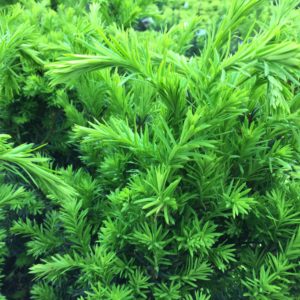
Hick’s Yew grows in a distinctly narrow, upright form that rarely exceeds 12 inches in width even at maturity. The foliage is rich, deep evergreen—so dark it’s almost jewel-toned—with tiny, soft needles arranged in flattened sprays. New growth emerges in fresh shades of lighter green, creating subtle visual interest within the column. In late summer and fall, female plants produce tiny bright red arils (berry-like structures) that persist through winter, providing unexpected color and food for birds. The overall effect is simultaneously formal and natural, structured yet never stiff.
Growing it in your garden
TAXUS X MEDIA ‘HICKSII’ is a hybrid yew that inherits the best traits from both parents: the hardiness of Japanese yew and the columnar form that gardeners crave. It’s genuinely cold-hardy throughout Connecticut, thriving in zones 4 to 7. Unlike some columnar evergreens that struggle with our New England winters, Hick’s Yew takes the cold in stride. It prefers well-draining soil—this is non-negotiable—so amend heavy clay with compost before planting. Full sun to partial shade works beautifully; in our region, afternoon shade actually protects the foliage from winter burn caused by harsh sun and wind reflected off snow.
Through the seasons
Spring awakens the yew with new, slightly lighter growth at the branch tips, refreshing the column without dramatically changing its appearance. Summer sees the foliage settle into that deep, luxurious green while the plant quietly grows. Fall is when female plants reveal those gleaming red arils—a lovely surprise if you weren’t expecting them. Winter is where this yew truly earns its place: while deciduous trees stand bare, TAXUS X MEDIA ‘HICKSII’ remains a steadfast vertical anchor, its color unchanged, its form unwavering. In heavy snow, the narrow profile means less damage than broader evergreens face.
Where it shines
Use Hick’s Yew as a living exclamation point at the corner of beds, flanking an entry, or punctuating the end of a long border. It’s perfect for creating formal allées—plant pairs on either side of a walkway for that stately, European garden feel. It also works wonderfully in narrow spaces where a spreading shrub would overwhelm the area. Mixed into perennial borders, a column of dark yew provides structure that makes flowering plants appear more vibrant by contrast. Corner plantings of three or five yews create striking visual rhythm and are particularly effective in contemporary garden designs.
Perfect companions
Pair Hick’s Yew with broad-leaved evergreens like BUXUS (boxwood) to echo its formal quality but with different texture. Chartreuse-foliaged plants like SPIRAEA ‘LIMEMOUND’ create stunning contrast against that deep green. For seasonal interest around the base, try shade-tolerant shade perennials like HEUCHERA or HELLEBORUS. In sunny spots, SEDUM ‘AUTUMN JOY’ and ornamental grasses like CALAMAGROSTIS offer movement and late-season color that plays beautifully against the yew’s stillness.
Care tips
Water regularly during the first two growing seasons—this establishes deep roots that become more drought-tolerant once established. Mulch with 2-3 inches of compost around the base, keeping it a few inches from the trunk. Pruning is rarely necessary; the yew naturally maintains its columnar form. If you do want to prune, do it in late winter or very early spring before new growth emerges, and use hand pruners rather than hedge shears to preserve the natural appearance. All parts of yew are toxic, so site it away from areas where small children or pets might nibble, though they’re generally unappealing to browse. Watch for spider mites in dry conditions—increase air circulation if you notice yellowing needles.
Quick facts
- Hardiness Zone: 4-7
- Mature Height & Spread: 15-20 feet tall, 12-15 inches wide
- Bloom Season: Late summer; red arils persist through winter
- Light Requirements: Full sun to partial shade
- Water Needs: Moderate; prefers well-draining soil
- Available at: Both our retail and wholesale locations