Description
PICEA PUNGENS ‘GLOBOSA’
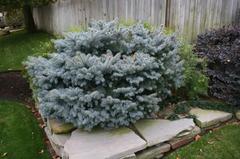
Imagine a living sculpture that never needs pruning into shape—it simply arrives at your garden already knowing exactly what it wants to be. The Globe Blue Spruce is that rare plant: a naturally perfect sphere of steel-blue needles that transforms even the most ordinary landscape into something architectural and intentional. If you’ve driven past those stunning conical evergreens and thought “that’s nice, but I want something with more personality,” this is your answer.
What it looks like
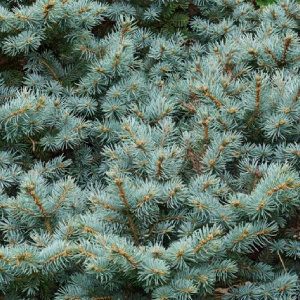
This compact spruce is a study in geometric perfection. Its dense, naturally globular form creates a tidy mound of silvery-blue needles that hold their color year-round, even through Connecticut’s harshest winters. The needles have that distinctive spruce prickle—you’ll want to brush your hand across them just to feel the satisfying texture. Unlike its lanky cousins, the Globe Blue Spruce doesn’t grow tall and skinny; it grows wide and confident. The branching is dense right down to the soil line, with no awkward bare legs to apologize for.
Growing it in your garden
This spruce is remarkably forgiving about where you plant it, which is refreshing news for anyone tired of finicky conifers. It prefers full sun—at least six hours daily—where it’ll develop that rich blue coloration. In partial shade, it’s still beautiful, just slightly less vibrant. The real key to success is well-draining soil. Unlike some evergreens that tolerate poor conditions, the Globe Blue Spruce appreciates soil that’s been amended with compost and drains freely. Soggy roots in spring are its only real enemy; otherwise, this is a resilient, low-maintenance plant.
Plant in spring or early fall to give it time to establish before extreme temperatures arrive. Space it with mature size in mind—you don’t want to crowd it, because part of its beauty is that unobstructed globe shape. Once it’s settled in, you can pretty much leave it alone.
Through the seasons
Spring arrives quietly with new growth that’s slightly lighter than the existing foliage, creating subtle color gradations within the sphere. By early summer, that new growth hardens off and blends seamlessly into the whole. There are no showy flowers here—this plant is all about the architecture of its form and the steady presence of those blue-gray needles.
Summer is when you really appreciate what you’ve planted. While deciduous shrubs around it might be drooping from heat, the Globe Blue Spruce stands unaffected, a cool oasis of evergreen color. Fall means nothing changes—no leaf drop, no autumn performance, just steady constancy. Winter is where this plant truly shines. When everything else is brown and sleeping, the Globe Blue Spruce’s blue-gray color becomes even more pronounced against snow, and its compact form prevents the splaying and damage that affects more open-branched conifers.
Where it shines
This is the perfect plant for anchoring a foundation, framing an entryway, or creating focal points in a garden bed. Use it in groups of odd numbers—three or five Globe Blue Spruces planted in a line creates a modern, sophisticated statement that feels intentional rather than accidental. It’s outstanding in containers, too, though you’ll want to ensure the pot is substantial enough and well-draining. It’s also an excellent choice for small to medium gardens where full-size evergreens would overwhelm the space.
If you’re designing a contemporary landscape or a cottage garden with structure, this spruce works beautifully. It pairs as well with a modern house as it does with a classic New England colonial.
Perfect companions
Plant the Globe Blue Spruce as the anchor and build around it with contrasting textures and colors. The chartreuse foliage of Japanese Forest Grass (HAKONECHLOA MACRA ‘AUREOLA’) provides brilliant color contrast. Pair it with low-growing shade-tolerant plants like Coral Bells (HEUCHERA) in deep burgundy for drama, or soft Lamb’s Ear (STACHYS) in silvery-gray to echo the spruce’s cool tones. Spreading junipers at ground level create layers without competing for space. Spring bulbs like Crocus and Scilla emerge happily in the spring sun before the garden fully leafs out.
Care tips
Water regularly during the first growing season—aim for about an inch per week from rainfall or irrigation. Once established (after year two), it’s quite drought-tolerant. No pruning is necessary; let it grow into its naturally perfect shape. If you want to encourage even denser branching, you can lightly trim new growth in spring, but honestly, most gardeners find it looks best left completely alone. Check soil moisture in late fall; water deeply if autumn has been dry, as conifers can desiccate over Connecticut winters if they go dormant thirsty.
Quick facts
- Hardiness Zone: 3-8
- Mature Height & Spread: 10-13 feet tall and wide (slow-growing)
- Bloom Season: Non-flowering evergreen
- Light Requirements: Full sun to partial shade
- Water Needs: Moderate; prefers well-draining soil
- Available at: Both our retail and wholesale locations