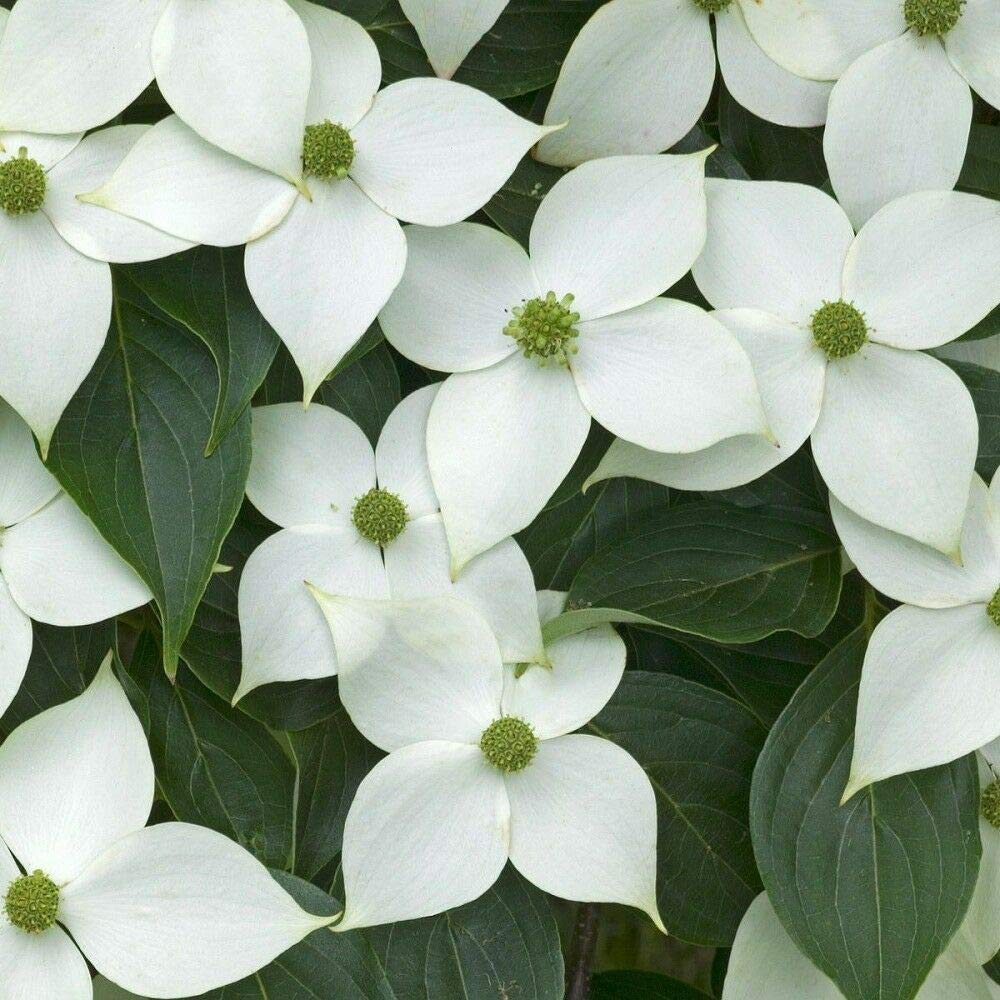
CORNUS KOUSA

The Korean Dogwood is Connecticut’s answer to elegance without the fuss. While its more famous cousin, the flowering dogwood, demands coddling and prayer, CORNUS KOUSA shrugs off our humid summers, laughs at our bitter winters, and rewards you with four seasons of genuine garden drama. If you’ve been burned by dogwoods before—or if you simply want a tree that performs reliably year after year without becoming a pest management project—this is the one.

What it looks like

Unlike the horizontal branching pattern of native dogwoods, CORNUS KOUSA grows in a graceful, somewhat pyramidal form with layered limbs that create a tiered effect even when bare. The star-shaped white bracts (those aren’t actually flowers—they’re modified leaves) appear in late spring, creating such a profusion of bloom that the entire canopy seems to glow. Each bract is pointed and delicate, giving the tree an almost ethereal quality. The dark green summer foliage takes on burgundy and purple tones come autumn, making it a stunning performer through fall. In winter, the exfoliating bark—a patchwork of tan, gray, and brown—adds architectural interest to the winter landscape.

Growing it in your garden

Here’s what makes CORNUS KOUSA such a reliable choice for New England gardens: it’s inherently tougher than its reputation suggests. Yes, it prefers well-draining soil and afternoon shade in our hottest areas, but it adapts beautifully to Connecticut’s variable conditions. Plant it where it receives dappled light or morning sun, and it will flourish. Unlike some ornamentals that require perfect conditions, this tree actually seems to thrive on a bit of adversity. Our neutral to slightly acidic soils suit it perfectly, and once established, it handles dry periods far better than you’d expect for something so refined-looking.

Through the seasons

Spring is when CORNUS KOUSA truly announces itself. The bracts emerge after the leaves have leafed out—typically mid to late May in Connecticut—creating a cloud of white that peaks in early June. Summer brings that glossy, healthy green canopy that makes even young trees look mature and purposeful. By midsummer, you’ll notice something delightful: the developing fruit. Those distinctive raspberry-like drupes start appearing, turning pink and then red as fall approaches. They’re edible (though not particularly tasty), and birds absolutely adore them. Autumn foliage ranges from subtle burgundy to deep purple-red, depending on the individual tree and the season. Winter reveals the structure you’ve been cultivating all along—a graceful branching pattern and that beautiful bark.

Where it shines

CORNUS KOUSA excels as a specimen tree where you want year-round interest without the drama of something like a Japanese maple. It’s perfect for the edge of a woodland garden, where dappled shade mimics its native forest habitat. Use it to anchor a mixed border, to frame a view from a patio, or as a focal point in a smaller yard where you need something that earns its space all twelve months. In naturalistic gardens, it bridges the gap between the manicured and the wild, looking equally at home in a cottage garden or a contemporary landscape. It’s also forgiving enough to work in less-than-perfect microclimates—that tricky spot where afternoon sun hits but where soil stays somewhat moist.

Perfect companions

Plant CORNUS KOUSA with shade-loving perennials like hellebores, epimedium, and woodland phlox to soften its base. Pair it with other reliable northeastern shrubs like oakleaf hydrangea and panicle hydrangea for a succession of summer and fall interest. Native ferns and sedges make excellent understory companions, and spring bulbs (particularly hellebores and trilliums) create a carpet of interest before the tree leafs out. For year-round structure, combine it with evergreens like mountain laurel or rhododendrons that won’t compete with its branching pattern.

Care tips

Water regularly during establishment—typically the first two growing seasons—but don’t create boggy conditions. A 2-3 inch layer of mulch keeps roots cool and moist without waterlogging them. Pruning is rarely necessary; CORNUS KOUSA naturally develops an attractive form. If you do need to remove branches, do it in late winter before growth begins. Fertilizer isn’t usually needed in established landscapes, especially if you’re adding mulch annually. Monitor for the occasional scale insect or spider mite during stressful droughts, but this tree is remarkably pest-resistant compared to its native cousins.

Quick facts

  • Hardiness Zone: 5-8
  • Mature Height & Spread: 20-30 feet tall and 15-25 feet wide
  • Bloom Season: Late May to early June
  • Light Requirements: Full sun to part shade (afternoon shade in hot areas)
  • Water Needs: Moderate; prefers well-draining soil, somewhat drought-tolerant once established
  • Available at: Both our retail and wholesale locations.

Korean Dogwood

Category:

Boasts yellow-white flowers in late Spring providing edible red fruit in fall.

Zoning: 5-8
Mature Height and Spread: 20-25’
Pot Size (gallons), Height: 5-6’, 7-8’ Clump, 8-10’ Clump, 10-12’ Clump
Trunk Diameter: 2”, 3”,

Description

CORNUS KOUSA

The Korean Dogwood is Connecticut’s answer to elegance without the fuss. While its more famous cousin, the flowering dogwood, demands coddling and prayer, CORNUS KOUSA shrugs off our humid summers, laughs at our bitter winters, and rewards you with four seasons of genuine garden drama. If you’ve been burned by dogwoods before—or if you simply want a tree that performs reliably year after year without becoming a pest management project—this is the one.

What it looks like

Unlike the horizontal branching pattern of native dogwoods, CORNUS KOUSA grows in a graceful, somewhat pyramidal form with layered limbs that create a tiered effect even when bare. The star-shaped white bracts (those aren’t actually flowers—they’re modified leaves) appear in late spring, creating such a profusion of bloom that the entire canopy seems to glow. Each bract is pointed and delicate, giving the tree an almost ethereal quality. The dark green summer foliage takes on burgundy and purple tones come autumn, making it a stunning performer through fall. In winter, the exfoliating bark—a patchwork of tan, gray, and brown—adds architectural interest to the winter landscape.

Growing it in your garden

Here’s what makes CORNUS KOUSA such a reliable choice for New England gardens: it’s inherently tougher than its reputation suggests. Yes, it prefers well-draining soil and afternoon shade in our hottest areas, but it adapts beautifully to Connecticut’s variable conditions. Plant it where it receives dappled light or morning sun, and it will flourish. Unlike some ornamentals that require perfect conditions, this tree actually seems to thrive on a bit of adversity. Our neutral to slightly acidic soils suit it perfectly, and once established, it handles dry periods far better than you’d expect for something so refined-looking.

Through the seasons

Spring is when CORNUS KOUSA truly announces itself. The bracts emerge after the leaves have leafed out—typically mid to late May in Connecticut—creating a cloud of white that peaks in early June. Summer brings that glossy, healthy green canopy that makes even young trees look mature and purposeful. By midsummer, you’ll notice something delightful: the developing fruit. Those distinctive raspberry-like drupes start appearing, turning pink and then red as fall approaches. They’re edible (though not particularly tasty), and birds absolutely adore them. Autumn foliage ranges from subtle burgundy to deep purple-red, depending on the individual tree and the season. Winter reveals the structure you’ve been cultivating all along—a graceful branching pattern and that beautiful bark.

Where it shines

CORNUS KOUSA excels as a specimen tree where you want year-round interest without the drama of something like a Japanese maple. It’s perfect for the edge of a woodland garden, where dappled shade mimics its native forest habitat. Use it to anchor a mixed border, to frame a view from a patio, or as a focal point in a smaller yard where you need something that earns its space all twelve months. In naturalistic gardens, it bridges the gap between the manicured and the wild, looking equally at home in a cottage garden or a contemporary landscape. It’s also forgiving enough to work in less-than-perfect microclimates—that tricky spot where afternoon sun hits but where soil stays somewhat moist.

Perfect companions

Plant CORNUS KOUSA with shade-loving perennials like hellebores, epimedium, and woodland phlox to soften its base. Pair it with other reliable northeastern shrubs like oakleaf hydrangea and panicle hydrangea for a succession of summer and fall interest. Native ferns and sedges make excellent understory companions, and spring bulbs (particularly hellebores and trilliums) create a carpet of interest before the tree leafs out. For year-round structure, combine it with evergreens like mountain laurel or rhododendrons that won’t compete with its branching pattern.

Care tips

Water regularly during establishment—typically the first two growing seasons—but don’t create boggy conditions. A 2-3 inch layer of mulch keeps roots cool and moist without waterlogging them. Pruning is rarely necessary; CORNUS KOUSA naturally develops an attractive form. If you do need to remove branches, do it in late winter before growth begins. Fertilizer isn’t usually needed in established landscapes, especially if you’re adding mulch annually. Monitor for the occasional scale insect or spider mite during stressful droughts, but this tree is remarkably pest-resistant compared to its native cousins.

Quick facts

  • Hardiness Zone: 5-8
  • Mature Height & Spread: 20-30 feet tall and 15-25 feet wide
  • Bloom Season: Late May to early June
  • Light Requirements: Full sun to part shade (afternoon shade in hot areas)
  • Water Needs: Moderate; prefers well-draining soil, somewhat drought-tolerant once established
  • Available at: Both our retail and wholesale locations.